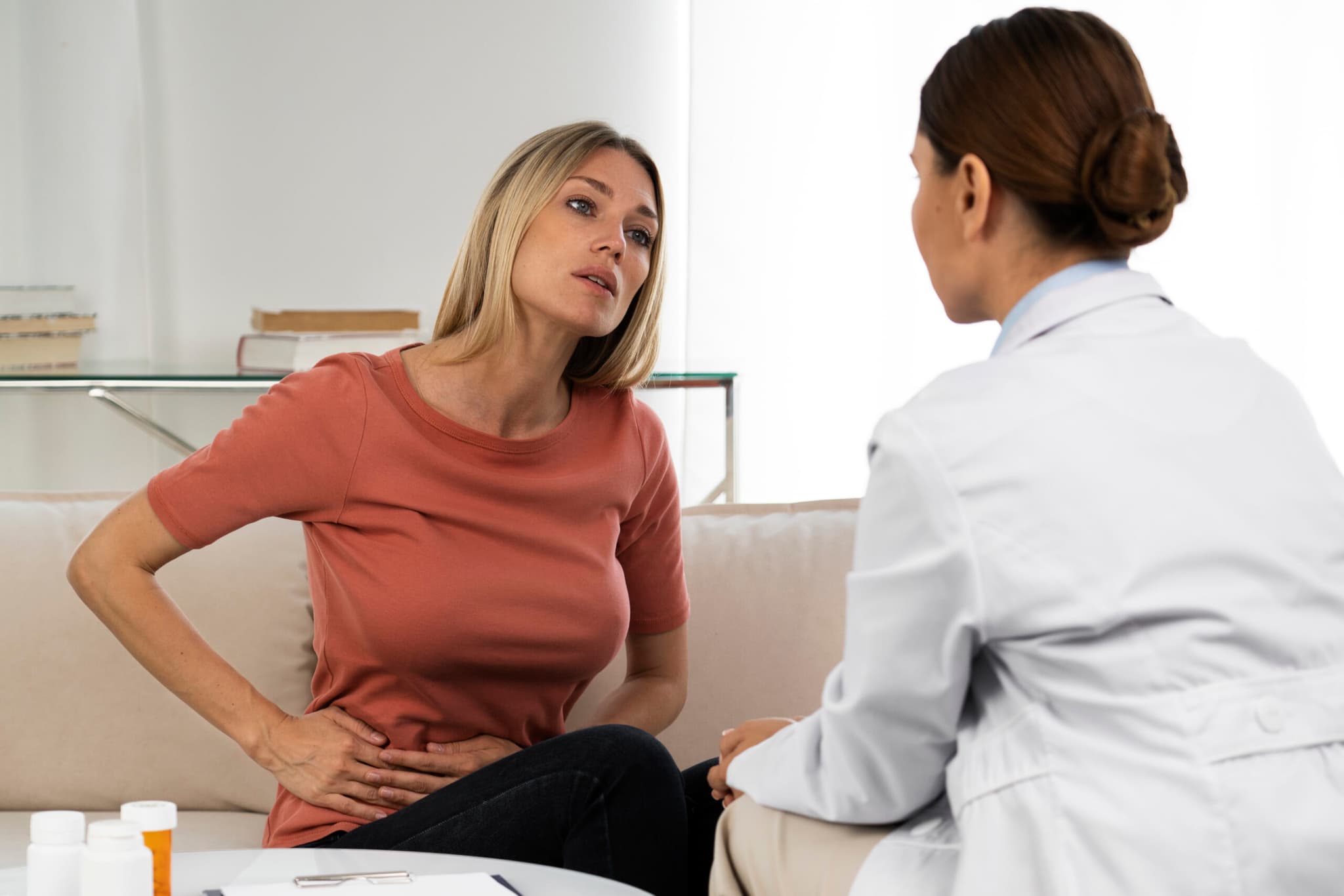


You have been told period pain is normal for as long as you have had periods. But you are the one who cancels plans, who has a system for getting through the first day, who has been sent home from work or school and has stopped mentioning it because the answer is always the same. At some point you stopped asking whether this is what everyone deals with and started assuming you simply tolerate it worse.
The distinction that matters here is one you were probably never given. Clinicians separate period pain into two categories. Primary means pain caused by the normal process of menstruation itself. Secondary means pain caused by an underlying condition affecting the uterus or pelvis. They can feel similar. They are managed completely differently, and secondary pain does not improve by tolerating it better.
At Seamless Medical Centers, Dr. Zagum Bhatti, Board-Certified Interventional Radiologist and Founder & Chief Medical Officer of Seamless Medical Centers, the pattern seen repeatedly is women arriving after a decade of severe pain that was never investigated, because each individual clinician they mentioned it to gave a reasonable answer to a question that was never fully asked.
Why Some Women’s Cramps Are Genuinely Worse
Period pain comes from the uterus contracting to shed its lining, driven by naturally occurring compounds that make the muscle tighten and temporarily reduce its own blood supply. Our guide to what period cramps feel like covers that mechanism and what falls within the typical range. The question here is different: why the same process produces manageable discomfort in one woman and something disabling in another.
Part of the answer is that the level of those compounds varies between women, and higher levels produce stronger, more prolonged contractions and more intense pain. This is a genuine physiological difference rather than a difference in stoicism, and it is worth stating plainly because so many women have concluded the opposite about themselves.
It is worth dispensing with a few explanations women are commonly offered, because they misdirect. Severe period pain is not a consequence of being unfit, of stress, of diet, or of not having had children. Those factors can influence how pain is experienced, as they do with any pain, but they do not create fibroids, adenomyosis, or endometriosis. Being told to manage stress when you have an underlying structural condition is advice aimed at the wrong target, and it is one of the more common reasons years pass without investigation.
The other part of the answer is that in a significant number of women, something else is contributing. When the uterus has to contract against physical resistance, or when there is more lining to shed than usual, or when tissue is present where it should not be, the contractions work harder and the pain increases accordingly. That is the secondary category, and it is the one worth identifying.
Primary and Secondary Period Pain
Primary period pain typically begins within a year or two of your first period, arrives with bleeding or just before, lasts a day or two, and stays fairly consistent from year to year. It often eases somewhat in the twenties and after pregnancy. It responds reasonably to standard measures, and while it can be genuinely unpleasant, its pattern is stable.
Secondary period pain behaves differently, and the differences are recognisable. It often begins later in life rather than in adolescence. It tends to worsen over years rather than remaining stable. It frequently starts several days before bleeding and continues after it stops. It responds less well to what previously worked, and it commonly arrives alongside other changes — heavier bleeding, larger clots, pelvic pressure, pain during intercourse, or bowel and bladder symptoms.
That last point is the most useful practical signal. Pain that has changed, in a woman whose bleeding has also changed, is the combination that most reliably indicates something structural. Our guide to heavy menstrual bleeding sets out where the bleeding thresholds sit, and our guide to period cramps that are getting worse covers the trajectory in more detail.
Secondary Dysmenorrhea: When Pain Has an Underlying Cause
Several conditions produce secondary period pain, and they are managed differently enough that identifying which applies genuinely changes what happens next.
Fibroids can make the uterus contract more forcefully against physical resistance and increase the amount of lining shed each cycle, intensifying both bleeding and pain. Where a fibroid also enlarges the uterus, there may be a background ache present throughout the month that worsens during menstruation. Our uterine fibroids condition overview covers the background.
Adenomyosis, in which lining tissue grows into the muscular wall of the uterus, characteristically produces heavy bleeding with significant pain, and the pain is frequently the more prominent complaint. Endometriosis produces pain that often begins several days before bleeding and may involve the bowel, bladder, or intercourse, and it is notoriously slow to be diagnosed. Pelvic inflammatory disease, uterine polyps, and an intrauterine device can each contribute in different ways.
Referred pain complicates the picture, because severe uterine pain is frequently felt in the lower back, hips, and thighs rather than only in the abdomen. That is normal wiring rather than a separate problem, and our guide to back and hip pain during your period covers it. It is worth mentioning where you feel pain as well as how much, since the distribution is part of the picture.
When Severe Pain Should Be Investigated
The threshold is lower than most women assume. Pain that stops you working, that sends you back to bed, that requires you to plan your month around it, or that no longer responds to what used to manage it is reason enough. You do not need to have failed at anything or waited a particular length of time.
Specific patterns that warrant evaluation: pain that has been getting steadily worse over recent years; pain that begins days before bleeding and persists after it stops; pain accompanied by bleeding that has become heavier or more clot-forming; pain during intercourse or bowel movements; and pain that began later in life rather than in adolescence.
It is worth naming the anxiety that severe pain can produce. This is not a reason to assume the worst — the large majority of severe period pain traces back to common, treatable gynecological conditions of the kind described above — but pain that is severe, worsening, or accompanied by a change in your bleeding is a reason to be assessed rather than to keep absorbing it. Sudden severe pain that is unlike your usual pattern, particularly with fever or faintness, should be assessed urgently rather than waiting.
How Severe Period Pain Is Evaluated

Are You a Candidate for UFE?
If you answer "yes" to any of these questions, you may be a candidate for this treatment.
Call Now — (409) 213-9575Your information is protected under HIPAA. We will never share your data.
Evaluation begins with history, and the history carries most of the information. A pelvic examination and ultrasound establish whether fibroids or polyps are present and can show features suggesting adenomyosis. Where the picture is unclear, MRI distinguishes adenomyosis from fibroids more reliably. Endometriosis frequently does not show on imaging at all, which is one reason a normal scan does not close the question. Our guide to how fibroids are diagnosed sets out the sequence.
Describe impact rather than intensity. A number out of ten means different things to different people and is easy to discount. Saying that you missed two days of work last month, that you now take pain relief on a schedule rather than when needed, or that you have stopped making plans in the first week of your cycle communicates something specific and much harder to overlook.
One further point about how this conversation tends to go. Women who have had severe pain for years often describe it calmly, because they have been living with it long enough to discuss it without distress, and that calm can be misread as the pain being mild. If that applies to you, say explicitly that you have adapted to it rather than that it is manageable. The two sound similar and mean entirely different things.
Say what you have already tried and for how long. Standard pain relief that used to work and no longer does is a meaningful change. So is needing more of it than you once did. These are facts about trajectory rather than complaints, and they are the sort of thing women routinely leave out for fear of sounding demanding.
What Treatment Changes
Where pain is primary, management is aimed at the pain itself, and your gynecologist or general practitioner is the right person to guide which category of treatment fits your situation. Where pain is secondary, treating the underlying condition is what changes the picture, and managing the pain alone tends to produce diminishing returns over the years.
Where fibroids are contributing, treatment that reduces fibroid volume addresses both the bleeding and the force of the contractions. Uterine fibroid embolization blocks the arterial supply so the fibroids shrink over the months that follow, preserving the uterus and avoiding surgery. Our overview of how uterine fibroid embolization works and who it helps covers candidacy, and our comparisons of UFE and hysterectomy and UFE and myomectomy set out the alternatives.
For appropriate candidates, many patients experience meaningful improvement in bleeding and associated pain. Individual results may vary. Where adenomyosis or endometriosis is the main driver, the treatment path differs, and that is a real reason not to assume fibroids explain everything simply because a scan found them. Establishing which condition is producing which symptom is what makes any treatment decision meaningful rather than approximate.
Frequently Asked Questions About Severe Period Pain
Why are my period cramps so bad?
Levels of the compounds driving uterine contractions vary between women, which produces genuinely different pain from the same process. In a significant number of women an underlying condition such as fibroids, adenomyosis, or endometriosis is also contributing, which is what evaluation establishes.
What is the difference between primary and secondary period pain?
Primary pain is caused by the normal process of menstruation, usually begins in adolescence, and stays fairly stable. Secondary pain is caused by an underlying condition, often begins later, and tends to worsen over time. They can feel similar but are managed differently.
Is it normal for period pain to feel like labor?
Some women describe cramping of that intensity, and the mechanism is related since both involve strong uterine contractions. Pain of that severity is worth evaluating rather than accepting, particularly if it has developed over recent years or comes with heavier bleeding.
Why do my cramps not respond to pain relief anymore?
Reduced response to what previously worked is one of the more reliable signals of a secondary cause. It suggests the underlying situation has changed rather than that you have become less tolerant, and it is a reasonable trigger for evaluation.
Can severe period pain damage anything long term?
The pain itself is not causing damage, but the conditions that produce secondary pain can progress, and heavy bleeding alongside it can deplete your iron over time. That is the more practical reason not to leave severe pain unexplained for years.
Why does my period pain start days before bleeding?
Pain beginning several days before bleeding is more characteristic of secondary causes, endometriosis in particular, than of primary period pain, which typically arrives with bleeding or shortly before. It is a detail worth mentioning specifically.
At what point should I see someone about period pain?
When it stops you working, sleeping, or going about your usual routine; when it no longer responds to what used to help; when it has been getting worse over recent years; or when it occurs alongside bleeding that has become heavier or longer.
Is UFE appropriate if I want to become pregnant?
Uterine fibroid embolization is generally not recommended as a first-line option for women planning future pregnancy; myomectomy is typically preferred in that situation. It also treats fibroids specifically and is not the treatment for adenomyosis or endometriosis.
Talk to a Specialist About Your Symptoms
If period pain has been shaping your month for years and nobody has looked into why, Contact Seamless Medical Centers to discuss your options. An evaluation establishes what is driving your symptoms and what can reasonably be done about it.
Phone: 409-213-9575
Address: 3300 Jimmy Johnson Blvd, Suite #130, Port Arthur, Texas 77642
Medical Disclaimer
Individual results may vary. This information is for educational purposes only and should not replace professional medical advice. Treatment decisions should be made in consultation with qualified healthcare providers.
Published by Seamless Medical Centers | Clinical information reflects the expertise of Dr. Zagum Bhatti, MD, Board-Certified Interventional Radiologist, Founder of Seamless Medical Centers.
Why Choose Seamless Medical Centers?
- Minimally Invasive: Most procedures require only a small incision and are performed as outpatient services.
- Expert Care: Board-certified interventional radiologists with extensive training and experience.
- Faster Recovery: Less downtime compared to traditional surgery, getting you back to your life sooner.
- Advanced Technology: State-of-the-art imaging and treatment equipment for precise, effective care.
- Patient-Centered: Personalized treatment plans tailored to your unique needs and goals.
Published by Seamless Medical Centers
Clinical information on this site is based on the expertise of Zagum Bhatti, M.D. — Board Certified in Interventional Radiology/Diagnostic Radiology (American Board of Radiology), dual-fellowship-trained (Neuroradiology; Vascular & Interventional Radiology, Rush University Medical Center), former Assistant Professor of VIR at UTHealth Houston, and Founder & Chief Medical Officer of Seamless Medical Centers.Read Dr. Bhatti’s full profile →
Why Choose Seamless Medical Centers?
- Minimally Invasive: Most procedures require only a small incision and are performed as outpatient services.
- Expert Care: Board-certified interventional radiologists with extensive training and experience.
- Faster Recovery: Less downtime compared to traditional surgery, getting you back to your life sooner.
- Advanced Technology: State-of-the-art imaging and treatment equipment for precise, effective care.
- Patient-Centered: Personalized treatment plans tailored to your unique needs and goals.