
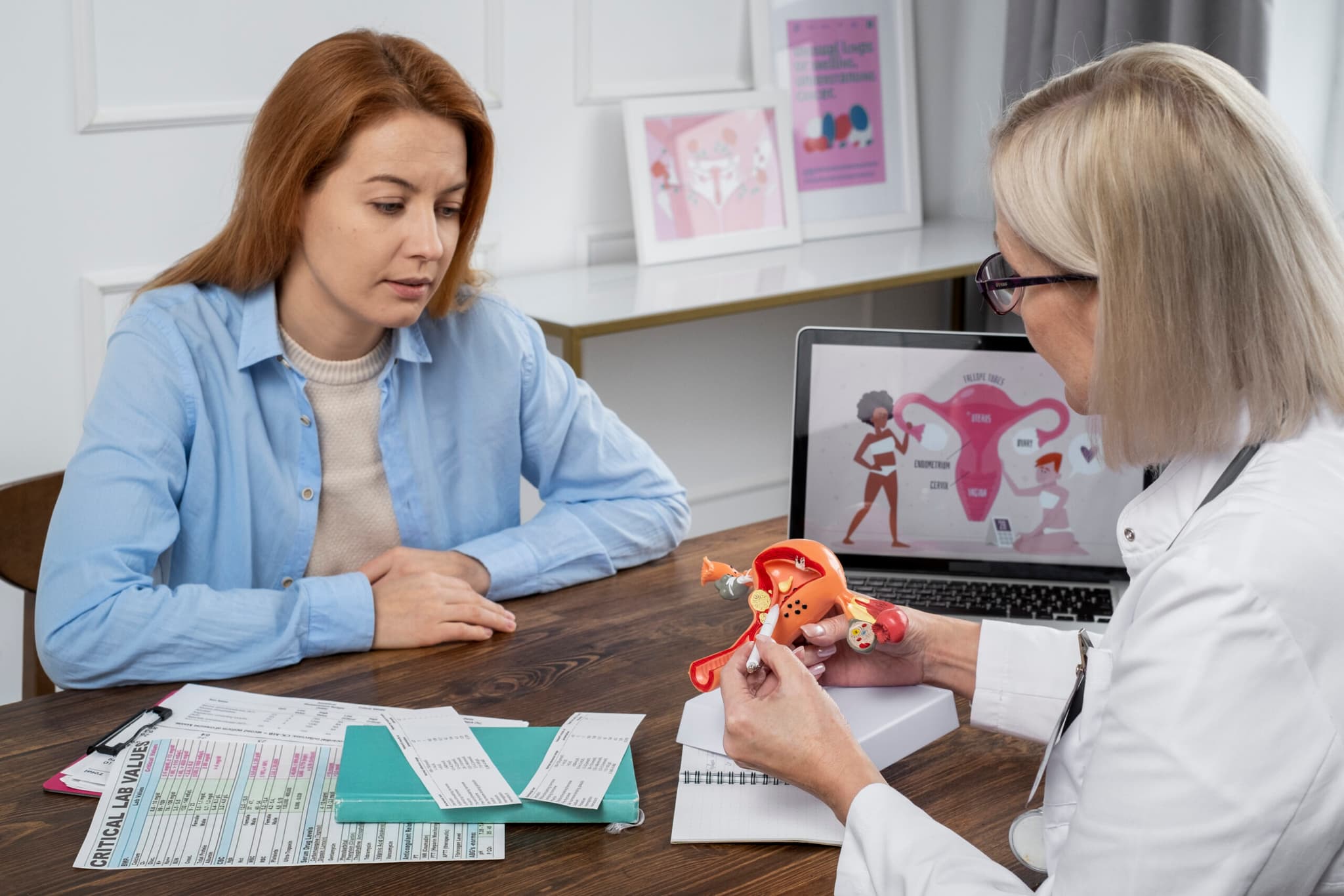
You were told you have fibroids and that they are being monitored. Nobody gave you a timeline. So you are left wondering whether the thing inside you is getting bigger by the month, whether the symptoms you have now are as bad as this gets, and whether waiting is a reasonable plan or a slow mistake.
The honest answer is that fibroids generally grow slowly, that growth is uneven rather than steady, and that the rate varies enormously between women and even between fibroids in the same uterus. Some grow noticeably over a year. Some stay effectively unchanged for a decade. Some shrink. This is genuinely unpredictable, and any source giving you a confident single rate is overstating what is known.
At Seamless Medical Centers, Dr. Zagum Bhatti, Board-Certified Interventional Radiologist and Founder & Chief Medical Officer of Seamless Medical Centers, the question that matters in practice is rarely how fast a fibroid is growing in the abstract. It is whether your symptoms are changing, and whether the trajectory you are on is one you want to keep following.
This guide covers what is actually known about fibroid growth, what influences it, what happens around pregnancy and menopause, why fibroids do not resolve on their own, and when growth is the thing that should change your plan.
Why There Is No Single Growth Rate
Fibroids are not one uniform thing. They vary in composition, in blood supply, and in how responsive they are to the hormonal environment around them, and those differences drive very different growth behaviour. Two fibroids in the same uterus, exposed to identical hormone levels, can behave completely differently over the same period.
Growth also tends not to be linear. A fibroid may enlarge over a period of months and then remain stable for years. Growth spurts and long plateaus are both normal patterns, which is why a single measurement at one point in time says very little about what happens next. It is the comparison across intervals that carries information, not any individual number.
This is also why measurement variation between scans matters. Differences of a few millimetres between two reports frequently reflect who performed the scan and which plane the fibroid was measured in rather than genuine change. Our guide to reading your fibroid ultrasound and MRI covers this in more detail, and it is the main reason to keep copies of your actual images rather than relying on remembered figures.
What Influences Whether a Fibroid Grows
Fibroid growth responds to the hormonal environment, principally estrogen and progesterone. That single fact explains most of the pattern seen across a woman’s life: fibroids typically appear during reproductive years, may enlarge during periods of higher hormone exposure, and commonly become less active after menopause when those hormones decline.
Beyond hormones, several factors are recognised as influencing whether fibroids develop and how they behave, including family history, age, and body composition. These are risk and behaviour factors rather than switches — none of them determines with any certainty what a particular fibroid will do. It is also worth saying that nothing on this list is a failing on your part. Fibroids are common, they are not caused by anything you did, and the framing that they can be controlled through personal discipline is both inaccurate and unhelpful.
One factor worth separating out is hormonal contraception and hormone therapy, because women are often told conflicting things about it. Different preparations behave differently, and the effect on fibroids is not uniform across them. This is a decision for the provider prescribing it, who can weigh it against everything else that treatment is doing for you. What it should not become is a reason to stop something you rely on without discussing it first.
The practical consequence is that growth cannot be reliably predicted from your history. What can be tracked is your own trajectory, which is why serial imaging and a record of how your symptoms are changing are worth considerably more than any general rate.
Pregnancy, Perimenopause, and Menopause
Pregnancy raises hormone levels substantially, and fibroids may enlarge during it. The pattern is inconsistent — some enlarge, some remain stable, and many that do enlarge return toward their previous size afterward. If you are pregnant or planning pregnancy and have known fibroids, that is a conversation to have with your obstetric team, and our guide to fibroids and pregnancy covers what is relevant.
Perimenopause is the phase that surprises women most. Hormone levels do not decline smoothly; they fluctuate, sometimes reaching higher peaks than in earlier years. Fibroid symptoms can therefore intensify during perimenopause rather than settling, and many women interpret worsening bleeding in their forties as simply part of the transition when a structural cause is contributing.
After menopause, with sustained low hormone levels, fibroids commonly become less active and may reduce in size. Symptoms often ease. This is the origin of the advice many women receive to wait it out. It is not unreasonable advice in principle, but it comes with a real cost: waiting may mean years of heavy bleeding, iron depletion, and pressure symptoms in the interim, and menopause may be a long way off. Any new bleeding after menopause has completed is a separate matter and should be assessed promptly rather than assumed to relate to fibroids.
Do Fibroids Ever Go Away on Their Own?
It helps to be clear about what a fibroid actually is when thinking about this question. Fibroids are growths of the same smooth muscle tissue the uterine wall is made of, wrapped in fibrous material and supplied by their own blood vessels. That is why they persist: they are established tissue with a supply feeding them, not a swelling or an accumulation that the body clears. Treatments that shrink fibroids work either by interrupting that blood supply or by removing the tissue directly.
Fibroids do not resolve spontaneously during reproductive years in any reliable way. They are established growths of uterine muscle tissue with their own blood supply, and there is no mechanism by which they simply disappear. Small fibroids can become relatively less significant as they are outgrown by the surrounding uterus, and occasionally a fibroid outgrows its blood supply and partly breaks down, but neither of these is something to plan around.
This matters because a great deal of what is written about shrinking fibroids implies that the right dietary or lifestyle approach will reduce them. General health measures are worth pursuing on their own merits, and they may help with how you feel overall. What they do not do is meaningfully reduce the physical volume of an established fibroid, and that is the thing producing your pressure symptoms.

Are You a Candidate for UFE?
If you answer "yes" to any of these questions, you may be a candidate for this treatment.
Call Now — (409) 213-9575Your information is protected under HIPAA. We will never share your data.
If you have been searching for ways to shrink fibroids without treatment, that search is itself useful information. It usually means symptoms have reached the point of needing an answer. The more productive next step is establishing what your fibroids are actually doing and what your options are, rather than spending another year on approaches that do not act on the mechanism.
When Growth Is the Thing That Changes the Plan
Monitoring is entirely reasonable for fibroids that are not causing symptoms, and many are found incidentally and never need treating. The question is what should prompt a change from watching to acting, and the answer depends far more on symptoms than on measurements.
Symptoms that are clearly worse than a year ago are the most meaningful signal — heavier or longer bleeding, pressure that has increased, new bladder or bowel symptoms, or visible abdominal change. Fatigue that has crept in alongside heavy periods matters too, since iron depletion develops gradually and is easy to attribute to a busy life. Our guide to heavy bleeding and anemia covers why ferritin is worth asking for by name.
Rapid change in size is assessed differently from gradual growth and warrants prompt review rather than waiting for a routine interval. This is not a reason to assume the worst — the overwhelming majority of fibroids are benign and remain so throughout — but it is a reason to have an unexpected change looked at rather than deferring it to your next scheduled scan. Our guide to how fibroids are diagnosed sets out what a thorough assessment involves.
What Treatment Does to the Growth Question
Treatment changes the terms of the conversation, because most options act on fibroid volume directly rather than waiting for hormones to fall. Uterine fibroid embolization works by blocking the arterial supply feeding the fibroids, so they shrink over the months that follow. Because the mechanism is volume reduction, it addresses both bleeding and pressure while preserving the uterus, and it does not require surgery or general anesthesia.
For appropriate candidates, many patients experience meaningful improvement in symptoms following treatment. Individual results may vary, and the degree of shrinkage varies with fibroid size, number, and position. Our overview of how uterine fibroid embolization works and who it helps covers candidacy, and our comparisons of UFE and hysterectomy and UFE and myomectomy set out the alternatives.
There is also a practical argument for not waiting indefinitely that has nothing to do with risk. Treatment options are shaped by what your fibroids look like when you decide. A uterus with a small number of well-defined fibroids generally offers more straightforward choices than one that has enlarged considerably over several years. Deferring is reasonable; deferring without ever revisiting the decision tends to narrow the options available later.
Deciding to wait is a legitimate choice, and for many women it is the right one. It is worth making it deliberately rather than by default — with a clear sense of what your symptoms are costing you now, and a plan for what would change your mind.
Frequently Asked Questions About Fibroid Growth
How fast do fibroids grow?
Growth varies widely between women and between individual fibroids, and it is usually slow and uneven rather than steady. Some fibroids enlarge noticeably over a year, others remain stable for many years, and some reduce in size. No single rate applies reliably.
Do fibroids go away on their own?
Not reliably during reproductive years. Fibroids are established growths with their own blood supply and do not simply disappear. They commonly become less active after menopause when hormone levels fall sustainably.
Can fibroids shrink naturally?
General health measures are worthwhile but do not meaningfully reduce the physical volume of an established fibroid. Treatments that shrink fibroids do so by acting on the blood supply or removing the fibroid directly.
Do fibroids shrink after menopause?
Commonly, yes. With sustained low hormone levels after menopause, fibroids often become less active and may reduce in size, with symptoms easing. Any new bleeding after menopause has completed should be assessed promptly rather than attributed to fibroids.
Can fibroids grow during perimenopause?
Yes. Hormone levels fluctuate during perimenopause rather than declining smoothly, and symptoms can intensify during this phase. Worsening bleeding in your forties is often attributed to the transition when a structural cause is contributing.
Should I monitor my fibroids or treat them?
Monitoring is reasonable where fibroids are not causing symptoms. The signal to move toward treatment is usually symptoms that are clearly worse than a year ago, or blood loss that has begun affecting your iron, rather than a specific measurement.
Is UFE appropriate if I want to become pregnant?
Uterine fibroid embolization is generally not recommended as a first-line option for women planning future pregnancy; myomectomy is typically preferred in that situation. Raise your fertility plans at consultation so the recommendation reflects them.
Talk to a Specialist About Your Symptoms
If your fibroids are being monitored and you want to know whether waiting still makes sense, Contact Seamless Medical Centers to discuss your options. An evaluation establishes what is driving your symptoms and what can reasonably be done about it.
Phone: 409-213-9575
Address: 3300 Jimmy Johnson Blvd, Suite #130, Port Arthur, Texas 77642
Medical Disclaimer
Individual results may vary. This information is for educational purposes only and should not replace professional medical advice. Treatment decisions should be made in consultation with qualified healthcare providers.
Published by Seamless Medical Centers | Clinical information reflects the expertise of Dr. Zagum Bhatti, MD, Board-Certified Interventional Radiologist, Founder of Seamless Medical Centers.
Why Choose Seamless Medical Centers?
- Minimally Invasive: Most procedures require only a small incision and are performed as outpatient services.
- Expert Care: Board-certified interventional radiologists with extensive training and experience.
- Faster Recovery: Less downtime compared to traditional surgery, getting you back to your life sooner.
- Advanced Technology: State-of-the-art imaging and treatment equipment for precise, effective care.
- Patient-Centered: Personalized treatment plans tailored to your unique needs and goals.
Published by Seamless Medical Centers
Clinical information on this site is based on the expertise of Zagum Bhatti, M.D. — Board Certified in Interventional Radiology/Diagnostic Radiology (American Board of Radiology), dual-fellowship-trained (Neuroradiology; Vascular & Interventional Radiology, Rush University Medical Center), former Assistant Professor of VIR at UTHealth Houston, and Founder & Chief Medical Officer of Seamless Medical Centers.
Why Choose Seamless Medical Centers?
- Minimally Invasive: Most procedures require only a small incision and are performed as outpatient services.
- Expert Care: Board-certified interventional radiologists with extensive training and experience.
- Faster Recovery: Less downtime compared to traditional surgery, getting you back to your life sooner.
- Advanced Technology: State-of-the-art imaging and treatment equipment for precise, effective care.
- Patient-Centered: Personalized treatment plans tailored to your unique needs and goals.