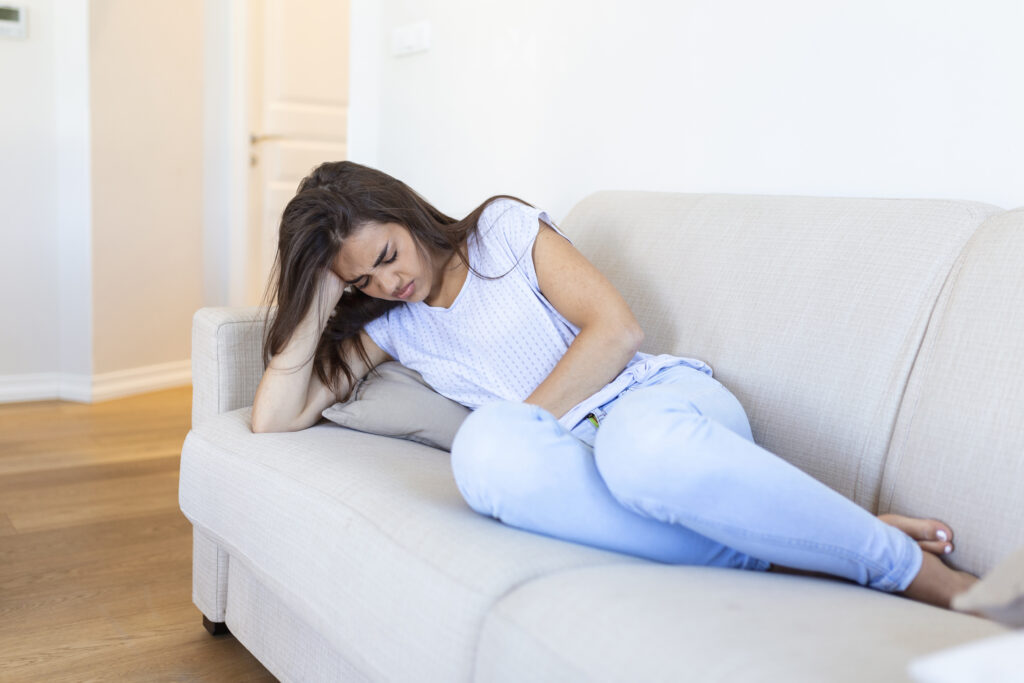
You want to know whether what you feel every month is the same thing everyone else means when they say period cramps. Perhaps yours seem worse than your friends describe. Perhaps you are trying to work out whether the pain you have is ordinary or something you should mention. Nobody talks about this in enough detail to compare against, which is exactly why the question gets asked.
Typical period cramps feel like a dull, rhythmic aching or squeezing low in the abdomen, below the navel and above the pubic bone. The pain comes in waves rather than staying constant, usually begins shortly before or as bleeding starts, and is heaviest during the first day or two. Most women find it manageable with over-the-counter pain relief and can carry on with their usual routine. That is the baseline against which to measure what you have.
At Seamless Medical Centers, Dr. Zagum Bhatti, Board-Certified Interventional Radiologist and Founder & Chief Medical Officer of Seamless Medical Centers, a recurring theme among women seeking treatment is that they had no reference point. Pain was normalised for years because nobody had described what typical actually means.
What Typical Period Cramps Feel Like
The sensation most women describe is a cramping or squeezing low in the abdomen, similar in character to a muscle cramp but deeper and less sharply located. It builds and eases in waves over minutes rather than remaining at one level. Some describe it as a heaviness or dragging, others as a tightening, and both descriptions fit the same underlying process.
The timing is fairly predictable. Pain typically begins within a day of bleeding starting, sometimes slightly before, peaks over the first day or two, and settles as flow lightens. It is usually strongest at the point your flow is heaviest. Most women find that it responds to over-the-counter pain relief, warmth, or lying down, and that it does not stop them working, sleeping, or going about their usual week.
Intensity typically follows your flow. The days you bleed most heavily are usually the days you feel the most cramping, because more lining is being shed and the contractions doing that work are stronger. This is why the second day is so often the worst, and why cramping generally settles as bleeding lightens rather than persisting at the same level throughout.
The cause is straightforward. The uterus is a muscle, and it contracts to shed its lining. Those contractions temporarily reduce blood flow to the muscle itself, which is what produces the aching. This is the same reason a cramp in your calf hurts, and it is why the pain comes in waves — it follows the rhythm of the contractions.
Where Else the Pain Is Felt
Period pain is frequently felt outside the abdomen, and this is normal rather than a sign that something else is wrong. The nerves supplying the uterus enter the spinal cord alongside those supplying the lower back, hips, and upper thighs, so the brain often registers the pain as coming from those areas instead. Our guide to back and hip pain during your period covers that pattern in detail.
Other sensations commonly accompany cramps and are also typical: a general heaviness in the pelvis, aching down the thighs, nausea, loose bowel movements around the first day, headache, and fatigue. These are driven by the same naturally occurring compounds that make the uterus contract, which circulate more widely and affect other tissues. Their presence is not in itself a cause for concern.
It is also normal for cramps to change across your life rather than staying fixed. Many women find pain is at its worst in their teens and early twenties and eases somewhat afterward, and some notice a marked change following pregnancy. Because change over time is expected, the question is never simply whether your cramps are different from before, but whether they have been getting steadily worse over recent years — a slow upward trend is the pattern that carries information.
What does not fit the typical picture is pain that is sharply localised to one side and persistent, pain accompanied by fever, or pain during intercourse or bowel movements. Those patterns point away from ordinary menstrual cramping and toward something that should be assessed on its own terms.
When Cramps Stop Being Typical
The most useful measure is not how your pain compares to other people’s but how it compares to your own history. Pain thresholds vary enormously and comparison across women is unreliable. Change within one woman is far more informative, and it is the thing worth paying attention to.
The patterns that suggest something beyond typical cramping are consistent. Pain that has become clearly worse over recent years. Pain that begins several days before bleeding and continues for days after it stops. Pain that no longer responds to what previously managed it, or that requires steadily increasing amounts of pain relief. Pain that causes you to miss work, cancel plans, or stay in bed. And pain accompanied by bleeding that has become heavier, longer, or more clot-forming.
Severe pain is not something to be endured as proof of resilience, and it is not a normal part of being a woman. Pain significant enough to interrupt your life is a reason for evaluation regardless of what anyone has told you about periods being difficult. Where pain sits alongside heavier bleeding, our guide to heavy menstrual bleeding sets out where those thresholds fall.
What Causes Cramps to Become More Painful
Several conditions intensify menstrual pain, and they are managed differently, which is why identifying which applies matters. Fibroids can make the uterus contract more forcefully against physical resistance and increase the amount of lining that must be shed, and our guide to period cramps that are getting worse covers that connection.
Adenomyosis, in which lining tissue grows into the muscular wall of the uterus, characteristically produces heavy bleeding with significant pain, and the pain is often the more prominent symptom. Endometriosis produces pain that frequently begins before bleeding and may involve the bowel, bladder, or intercourse. Uterine polyps, pelvic infection, and an intrauterine device can each contribute in different ways.
It is worth naming the anxiety that worsening pain can produce. This is not a reason to assume the worst — the large majority of painful periods trace back to common, treatable gynecological conditions of the kind described above — but pain that has been steadily worsening, or that is accompanied by a change in your bleeding, is a reason to be assessed rather than to keep managing it alone.
How Painful Periods Are Evaluated
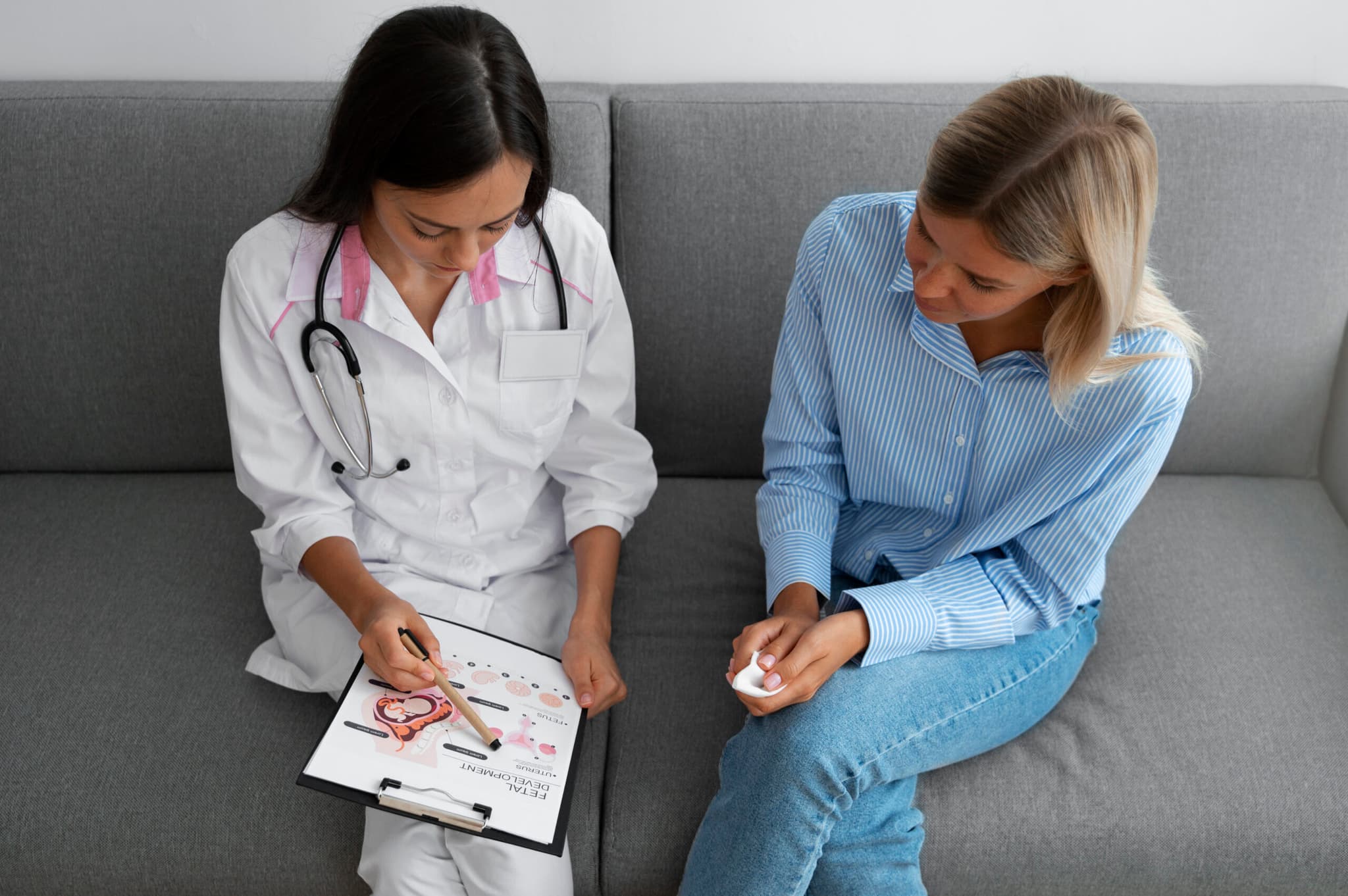
Evaluation starts with your history, and the detail you bring shapes what happens next. A pelvic ultrasound establishes whether fibroids or polyps are present and can show features suggesting adenomyosis. Where the picture is unclear, MRI distinguishes fibroids from adenomyosis more reliably. Our guide to how fibroids are diagnosed sets out the full sequence, including the blood work that runs alongside imaging.

Are You a Candidate for UFE?
If you answer "yes" to any of these questions, you may be a candidate for this treatment.
Call Now — (409) 213-9575Your information is protected under HIPAA. We will never share your data.
One thing worth clearing up, because it comes up constantly: painful periods are not caused by anything you did, and they are not a reflection of how well you look after yourself. Women frequently arrive apologetic, having read that stress, diet, or exercise habits are responsible for their pain. Those factors can influence how you experience pain, but they do not create fibroids or adenomyosis, and framing severe menstrual pain as a personal failing is both inaccurate and a reason women delay seeking help.
Track two cycles before your appointment if you can. Note when pain starts relative to bleeding, where you feel it, how long it lasts, what you took and whether it helped, and what your flow was like. Menstrual pain is notoriously difficult to describe accurately from memory, because you are rarely in pain during the appointment itself. A written record solves that entirely.
If you have already tried things, say what and for how long. Over-the-counter pain relief that once worked and no longer does, a hormonal option started specifically for pain, or heat and rest that used to be sufficient — each of those is a data point about trajectory rather than a list of complaints. A clinician hearing that your usual approach stopped being enough about eighteen months ago is being told something quite specific about how the underlying situation has changed.
Be specific about impact rather than intensity. Pain scores out of ten mean different things to different people. Saying that you missed two days of work last month, or that you now take pain relief on a schedule rather than when needed, communicates far more than any number and is harder to overlook.
What Treatment Changes
Where fibroids are contributing, treatment that reduces fibroid volume addresses both the bleeding and the intensity of the contractions. Uterine fibroid embolization blocks the arterial supply feeding the fibroids so they shrink over the following months, preserving the uterus and avoiding surgery. Our overview of how uterine fibroid embolization works and who it helps covers candidacy.
For appropriate candidates, many patients experience meaningful improvement in bleeding and associated pain. Individual results may vary, and the extent depends on fibroid size, number, and position. Our comparisons of UFE and hysterectomy and UFE and myomectomy set out the alternatives.
Where adenomyosis or endometriosis is the main driver, the treatment path is different, and that is a genuine reason not to assume fibroids explain everything simply because a scan found them. Establishing which condition is producing which symptom is what makes any treatment decision meaningful.
Frequently Asked Questions About Period Cramps
What do period cramps feel like?
Typical period cramps feel like a dull, rhythmic aching or squeezing low in the abdomen that comes in waves rather than staying constant. They usually begin as bleeding starts, peak over the first day or two, and are often accompanied by aching in the lower back and thighs.
How long should period cramps last?
Cramping usually lasts between one and three days, heaviest at the start of bleeding and easing as flow lightens. Pain that begins several days before bleeding or continues well after it stops is a different pattern and worth having evaluated.
Are period cramps supposed to be that painful?
Some discomfort is expected, but pain that stops you working, sleeping, or going about your usual routine is not something you simply have to accept. Pain significant enough to interrupt your life is a reasonable reason to seek evaluation.
Why are my period cramps worse than they used to be?
Worsening pain usually reflects a change rather than age alone. Fibroids and adenomyosis both tend to develop or progress over time, and hormone levels fluctuate more in the years approaching menopause, which can intensify symptoms.
Is it normal to feel period pain in my back and legs?
Yes. The nerves supplying the uterus enter the spinal cord alongside those supplying the lower back, hips, and thighs, so pain is frequently felt in those areas. This is referred pain and is a normal feature of how the body is wired.
Is nausea with period cramps normal?
It is common. The same naturally occurring compounds that make the uterus contract circulate more widely and can affect the digestive system, producing nausea and looser bowel movements around the first day of bleeding.
When should I see someone about period pain?
When pain has been getting steadily worse, when it no longer responds to what used to manage it, when it causes you to miss work or stay in bed, or when it occurs alongside periods that have become heavier or longer.
Is UFE appropriate if I want to become pregnant?
Uterine fibroid embolization is generally not recommended as a first-line option for women planning future pregnancy; myomectomy is typically preferred in that situation. It is also not the treatment for adenomyosis or endometriosis, which is why establishing the cause matters first.
Talk to a Specialist About Your Symptoms
If your period pain has been getting worse and you want to know what is behind it, Contact Seamless Medical Centers to discuss your options. An evaluation establishes what is driving your symptoms and what can reasonably be done about it.
Phone: 409-213-9575
Address: 3300 Jimmy Johnson Blvd, Suite #130, Port Arthur, Texas 77642
Medical Disclaimer
Individual results may vary. This information is for educational purposes only and should not replace professional medical advice. Treatment decisions should be made in consultation with qualified healthcare providers.
Published by Seamless Medical Centers | Clinical information reflects the expertise of Dr. Zagum Bhatti, MD, Board-Certified Interventional Radiologist, Founder of Seamless Medical Centers.
Why Choose Seamless Medical Centers?
- Minimally Invasive: Most procedures require only a small incision and are performed as outpatient services.
- Expert Care: Board-certified interventional radiologists with extensive training and experience.
- Faster Recovery: Less downtime compared to traditional surgery, getting you back to your life sooner.
- Advanced Technology: State-of-the-art imaging and treatment equipment for precise, effective care.
- Patient-Centered: Personalized treatment plans tailored to your unique needs and goals.
Published by Seamless Medical Centers
Clinical information on this site is based on the expertise of Zagum Bhatti, M.D. — Board Certified in Interventional Radiology/Diagnostic Radiology (American Board of Radiology), dual-fellowship-trained (Neuroradiology; Vascular & Interventional Radiology, Rush University Medical Center), former Assistant Professor of VIR at UTHealth Houston, and Founder & Chief Medical Officer of Seamless Medical Centers.
Why Choose Seamless Medical Centers?
- Minimally Invasive: Most procedures require only a small incision and are performed as outpatient services.
- Expert Care: Board-certified interventional radiologists with extensive training and experience.
- Faster Recovery: Less downtime compared to traditional surgery, getting you back to your life sooner.
- Advanced Technology: State-of-the-art imaging and treatment equipment for precise, effective care.
- Patient-Centered: Personalized treatment plans tailored to your unique needs and goals.