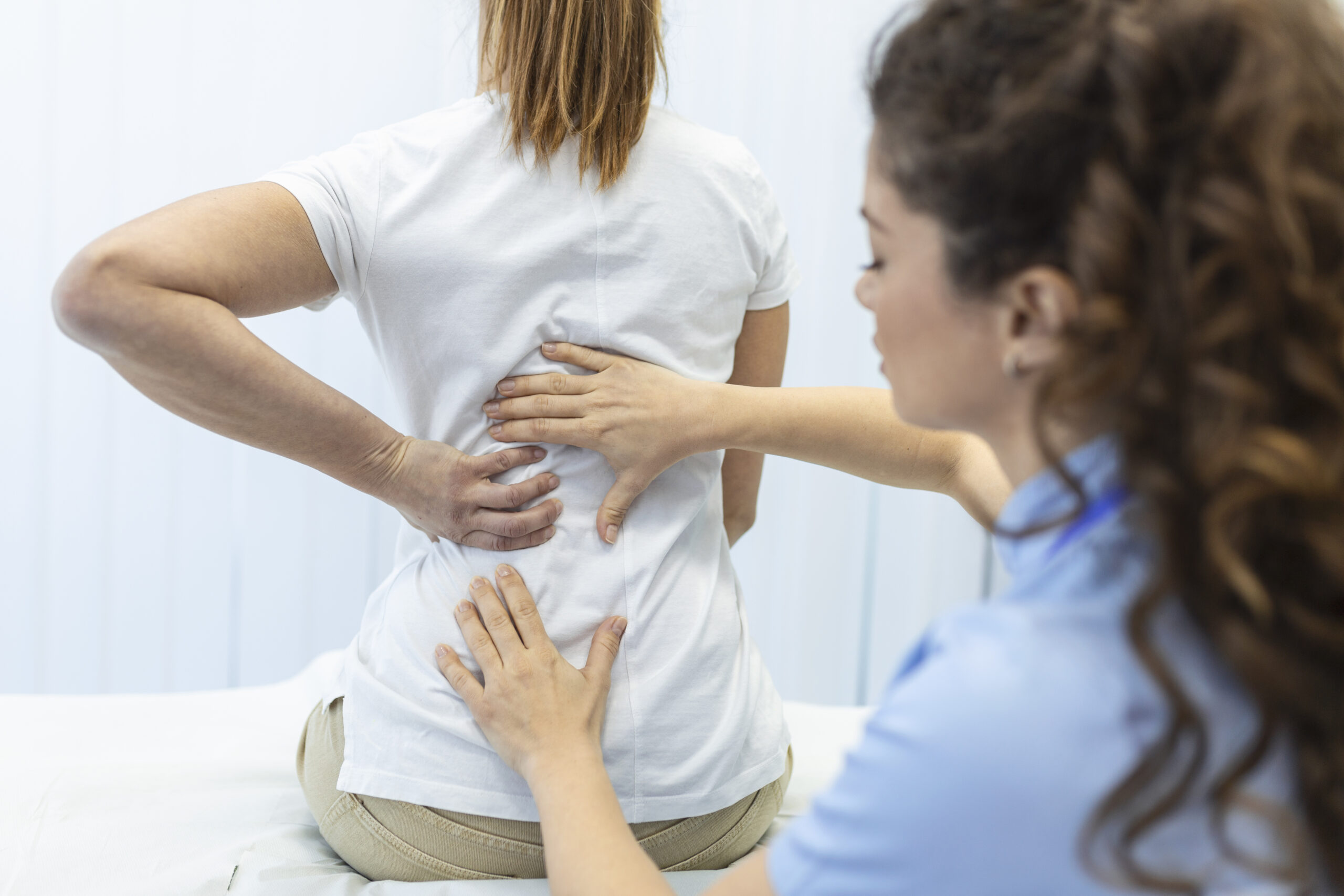
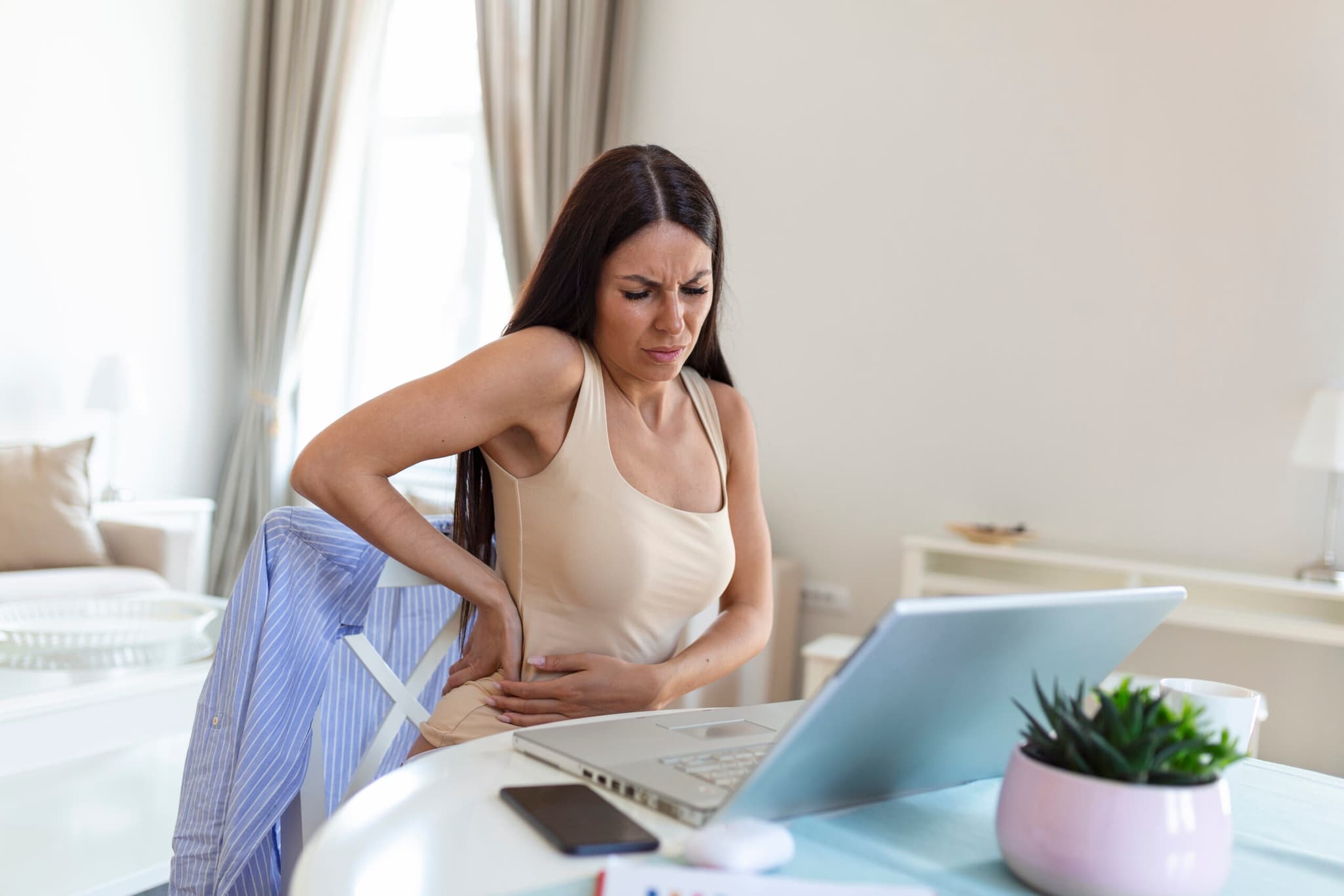
It arrives a day or so before the bleeding does. A deep ache low in your back, sometimes spreading into your hips or the tops of your thighs, heavy enough that sitting through a meeting is uncomfortable and sleeping on your usual side does not work. Then your period ends and it lifts, and you forget about it until next month.
Here is a useful way to think about what you are describing. Pain that arrives with your cycle and departs with it is behaving like menstrual pain, not like back pain — and that changes what is worth investigating. Some back and hip discomfort around a period is common and expected. What is not expected is pain that has become progressively worse over the past year or two, or pain that no longer responds to what used to manage it.
At Seamless Medical Centers, Dr. Zagum Bhatti, Board-Certified Interventional Radiologist and Founder & Chief Medical Officer of Seamless Medical Centers, cyclical back and hip pain is a symptom women rarely raise on its own. It surfaces once heavy bleeding is being discussed, and the pattern has usually been present for years by then.
This guide covers why period pain is felt in the back and hips at all, what makes it worse than it used to be, what else produces the same pattern, and when it is worth having evaluated.
Why Period Pain Is Felt in the Back and Hips
During menstruation the uterus contracts to shed its lining, driven by naturally occurring compounds that make the uterine muscle tighten. Those contractions temporarily reduce blood flow to the muscle, which is what produces the cramping sensation. That much is familiar.
What is less widely explained is why the pain is felt outside the abdomen. The nerves supplying the uterus enter the spinal cord at the same levels as the nerves supplying the lower back, the hips, and the upper thighs. The brain cannot always distinguish precisely where a signal arriving at that level originated, so pain from the uterus is frequently experienced as coming from the back or hip instead. This is referred pain, and it is a normal feature of how the body is wired rather than a sign that anything is wrong with your back.
The compounds driving those contractions also circulate more widely, which is part of why periods can bring aching that seems disproportionate to the abdomen alone. Our guide to period cramps and when fibroids may be the cause covers the abdominal side of this picture in detail; this post stays with the back and hip component.
When Cyclical Pain Points to a Structural Cause
Position and heat are worth mentioning because they are so often misread as reassurance. Curling up, applying warmth, or lying on one side commonly eases referred period pain, and women take that as evidence the pain is muscular and therefore not worth raising. It is not evidence of anything of the sort. Referred pain from the uterus responds to position and warmth just as muscular pain does, so relief from those measures tells you nothing about the source.
The question worth asking is not whether you have back pain with your period, but whether that pain has changed. Menstrual pain that has been stable since your teens and is manageable is a different situation from pain that has intensified over recent years, spread to new areas, or begun lasting longer than the bleeding does.
The patterns that suggest something structural is contributing are fairly consistent. Pain that starts earlier before your period than it used to. Pain that continues for days after bleeding stops. Pain that has spread from the abdomen into the back and hips over time. Pain accompanied by bleeding that has also become heavier or longer. And pain that no longer responds to whatever previously kept it manageable.
Any single one of those can have an innocent explanation. Several together, developing over the same period, describe a trajectory rather than a normal variation — and a trajectory is what warrants a look. Heavier bleeding alongside worsening pain is the combination most worth acting on, and our guide to heavy menstrual bleeding sets out where the thresholds sit.
How Fibroids Contribute to Cyclical Back and Hip Pain
Fibroids contribute in two separate ways, and it helps to keep them apart. The first is through the contractions themselves: a uterus containing fibroids has more lining to shed and contracts against physical resistance, which can make the contractions stronger and more prolonged. More intense contractions produce more referred pain, felt in the same back and hip distribution as ordinary period pain but at greater intensity. Our uterine fibroids condition overview covers the background.
The second is bulk, and this one is not cyclical. A fibroid growing toward the back of the uterus presses on structures at the base of the pelvis all month, producing a constant background ache that intensifies during menstruation when the uterus is more congested. If your back pain is present every week and simply gets worse during your period, that is a different pattern from pain that arrives and departs with bleeding, and our guide to fibroids and persistent back pain covers it.
Many women have both, which is why describing the timing carefully matters. Pain that radiates down a leg, or arrives with numbness or tingling, is a third pattern again and suggests nerve involvement — covered in our guide to fibroids, nerve pain and leg symptoms.
What Else Produces Cyclical Back and Hip Pain
Fibroids are one contributor among several, and evaluation is what distinguishes them. Adenomyosis, in which lining tissue grows into the muscular wall of the uterus, characteristically produces heavy bleeding with significant pain, and the pain is often the more prominent complaint. Endometriosis produces cyclical pelvic and back pain and can involve structures well beyond the uterus, sometimes with pain during intercourse or bowel movements.
Pelvic floor dysfunction can produce hip and low back pain that varies across the cycle. Musculoskeletal problems in the lower back or hip may simply become more noticeable during menstruation, when tolerance is lower, without being caused by the cycle at all. These are managed differently, which is precisely why the pattern is worth describing accurately rather than being folded into a general account of difficult periods.
It is worth naming the worry that worsening period pain can raise. This is not a reason to assume the worst — the large majority of cyclical back and hip pain traces back to common, treatable gynecological causes of the kind described above — but pain that has been steadily worsening, that has begun interfering with work or sleep, or that is accompanied by bleeding outside your normal pattern is a reason to be assessed rather than to keep absorbing it.
How This Is Evaluated

Are You a Candidate for SCS?
If you answer "yes" to any of these questions, you may be a candidate for this treatment.
Call Now — (409) 213-9575Question 1 of 2
How long have you had moderate to severe back pain?
Prefer to talk? Call (409) 213-9575
Your information is protected under HIPAA. We will never share your data.
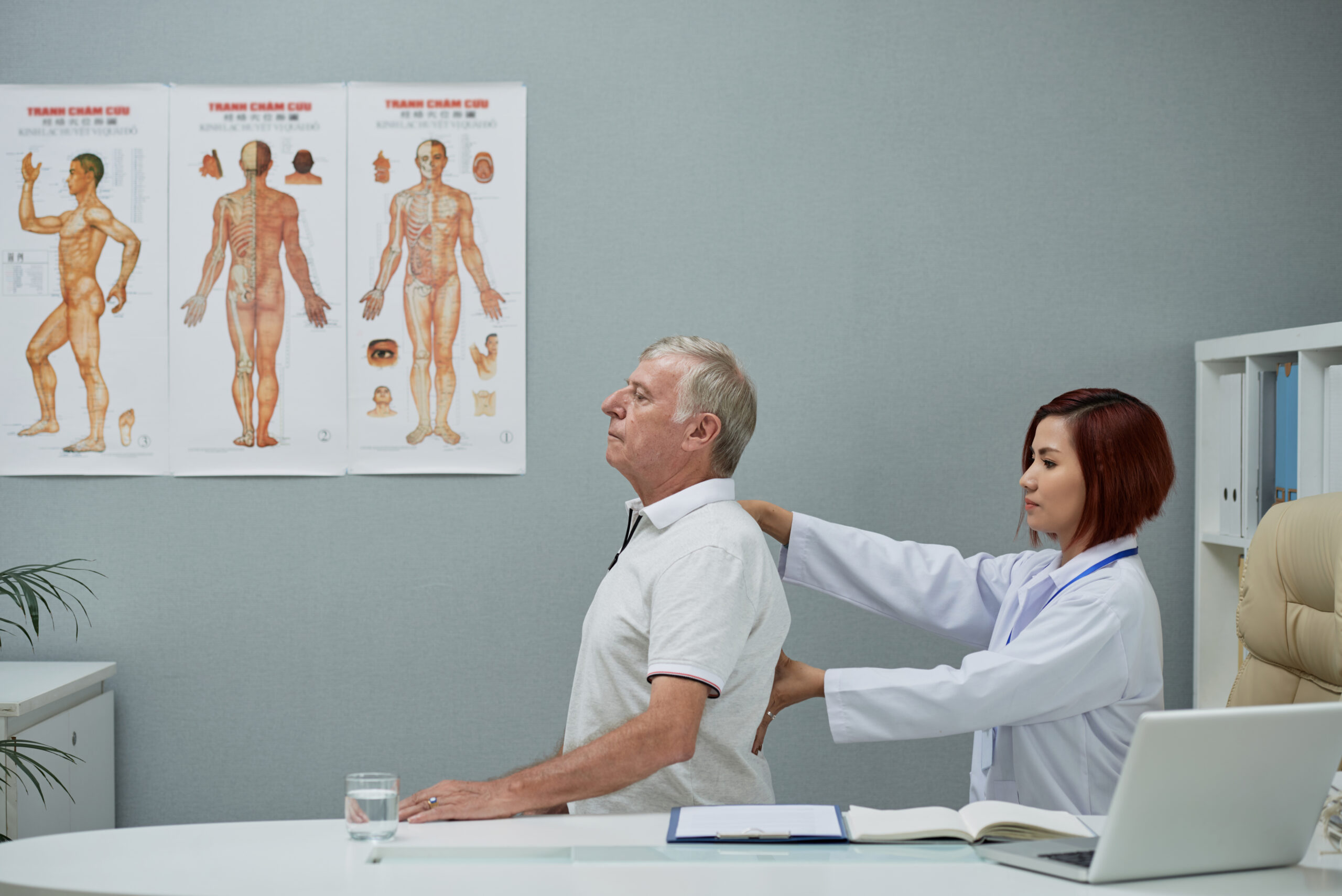
Evaluation begins with history, and the history is where most of the information sits. A pelvic ultrasound establishes whether fibroids are present and where they sit, and can show features suggesting adenomyosis. Where the picture is unclear, or the two are difficult to separate, MRI distinguishes them considerably more reliably. Our guide to how fibroids are diagnosed sets out the full sequence.
Position matters again here. A posterior fibroid is a coherent explanation for back-predominant pain; a small fibroid at the front of the uterus is not, and a report that shows one should prompt the question of what else might be responsible. Our guide to reading your fibroid imaging explains how to find that detail in your own report.
It is also worth being specific about what you have already tried and what it achieved. Over-the-counter pain relief that used to work and no longer does is a meaningful change, and so is needing to take more of it than you once did to get through the first two days. Those details describe a trajectory in a way that a general statement about difficult periods does not, and they are the kind of thing that tends to go unmentioned because it feels like a complaint rather than a clinical fact.
Track two cycles before your appointment if you can. Note when the pain starts relative to bleeding, where exactly you feel it, how long it lasts after bleeding stops, and what your flow was like. Cyclical symptoms are notoriously hard to describe accurately from memory, because by the time you are in the appointment you are usually not in pain. A written record removes that problem entirely.
What Treatment Changes
Where fibroids are driving the pain, treatment that reduces fibroid volume addresses both the bulk pressure and the intensity of the contractions. Uterine fibroid embolization blocks the arterial supply feeding the fibroids so they shrink over the following months, while preserving the uterus and avoiding surgery.
For appropriate candidates, many patients experience meaningful improvement in both bleeding and pain following treatment. Individual results may vary, and the extent depends on fibroid size, number, and position. Our overview of how uterine fibroid embolization works and who it helps covers candidacy, and our comparisons of UFE and hysterectomy and UFE and myomectomy set out the alternatives.
Where adenomyosis or endometriosis is the main driver, the treatment path is different, and that is a genuine reason not to assume fibroids explain everything simply because they are present. A thorough evaluation should establish which condition is producing which symptom before anyone commits to a plan.
Frequently Asked Questions About Period-Related Back and Hip Pain
Why do I get lower back pain during my period?
The nerves supplying the uterus enter the spinal cord at the same levels as those supplying the lower back and hips, so pain from uterine contractions is frequently felt in the back instead. This is referred pain and is a normal feature of how the body is wired.
Is hip pain during your period normal?
Some aching in the hips and upper thighs around menstruation is common and follows the same referred-pain mechanism as back pain. Pain that has been getting worse over recent years, or that limits what you can do, is worth having evaluated rather than accepted as normal.
Can fibroids cause back pain during your period?
Yes, in two ways. A uterus containing fibroids may contract more forcefully, increasing referred pain, and a fibroid sitting toward the back can press on nearby structures, producing a background ache that intensifies during menstruation.
Why has my period back pain got worse with age?
Worsening cyclical pain often reflects a structural change rather than age alone. Fibroids and adenomyosis both tend to develop or progress over time, and hormone levels fluctuate more during the years approaching menopause, which can intensify symptoms.
How do I know if my back pain is from my period or my spine?
Timing is the clearest signal. Pain that reliably arrives with your cycle and eases when bleeding stops is behaving like menstrual pain. Pain present all month that simply worsens during your period suggests a constant cause with a cyclical overlay, and both can occur together.
When should I see someone about period pain in my back and hips?
When it has been getting steadily worse, when it interferes with work or sleep, when it lasts well beyond your bleeding, or when it occurs alongside periods that have become heavier or longer. Any of those is a reasonable trigger for evaluation.
Is UFE appropriate if I want to become pregnant?
Uterine fibroid embolization is generally not recommended as a first-line option for women planning future pregnancy; myomectomy is typically preferred in that situation. It is also not the treatment for adenomyosis or endometriosis, which is why establishing the cause matters first.
Talk to a Specialist About Your Symptoms
If period pain in your back and hips has been getting worse and you want to know why, Contact Seamless Medical Centers to discuss your options. An evaluation establishes what is driving your symptoms and what can reasonably be done about it.
Phone: 409-213-9575
Address: 3300 Jimmy Johnson Blvd, Suite #130, Port Arthur, Texas 77642
Medical Disclaimer
Individual results may vary. This information is for educational purposes only and should not replace professional medical advice. Treatment decisions should be made in consultation with qualified healthcare providers.
Published by Seamless Medical Centers | Clinical information reflects the expertise of Dr. Zagum Bhatti, MD, Board-Certified Interventional Radiologist, Founder of Seamless Medical Centers.
Why Choose Seamless Medical Centers?
- Minimally Invasive: Most procedures require only a small incision and are performed as outpatient services.
- Expert Care: Board-certified interventional radiologists with extensive training and experience.
- Faster Recovery: Less downtime compared to traditional surgery, getting you back to your life sooner.
- Advanced Technology: State-of-the-art imaging and treatment equipment for precise, effective care.
- Patient-Centered: Personalized treatment plans tailored to your unique needs and goals.
Published by Seamless Medical Centers
Clinical information on this site is based on the expertise of Zagum Bhatti, M.D. — Board Certified in Interventional Radiology/Diagnostic Radiology (American Board of Radiology), dual-fellowship-trained (Neuroradiology; Vascular & Interventional Radiology, Rush University Medical Center), former Assistant Professor of VIR at UTHealth Houston, and Founder & Chief Medical Officer of Seamless Medical Centers.
Why Choose Seamless Medical Centers?
- Minimally Invasive: Most procedures require only a small incision and are performed as outpatient services.
- Expert Care: Board-certified interventional radiologists with extensive training and experience.
- Faster Recovery: Less downtime compared to traditional surgery, getting you back to your life sooner.
- Advanced Technology: State-of-the-art imaging and treatment equipment for precise, effective care.
- Patient-Centered: Personalized treatment plans tailored to your unique needs and goals.