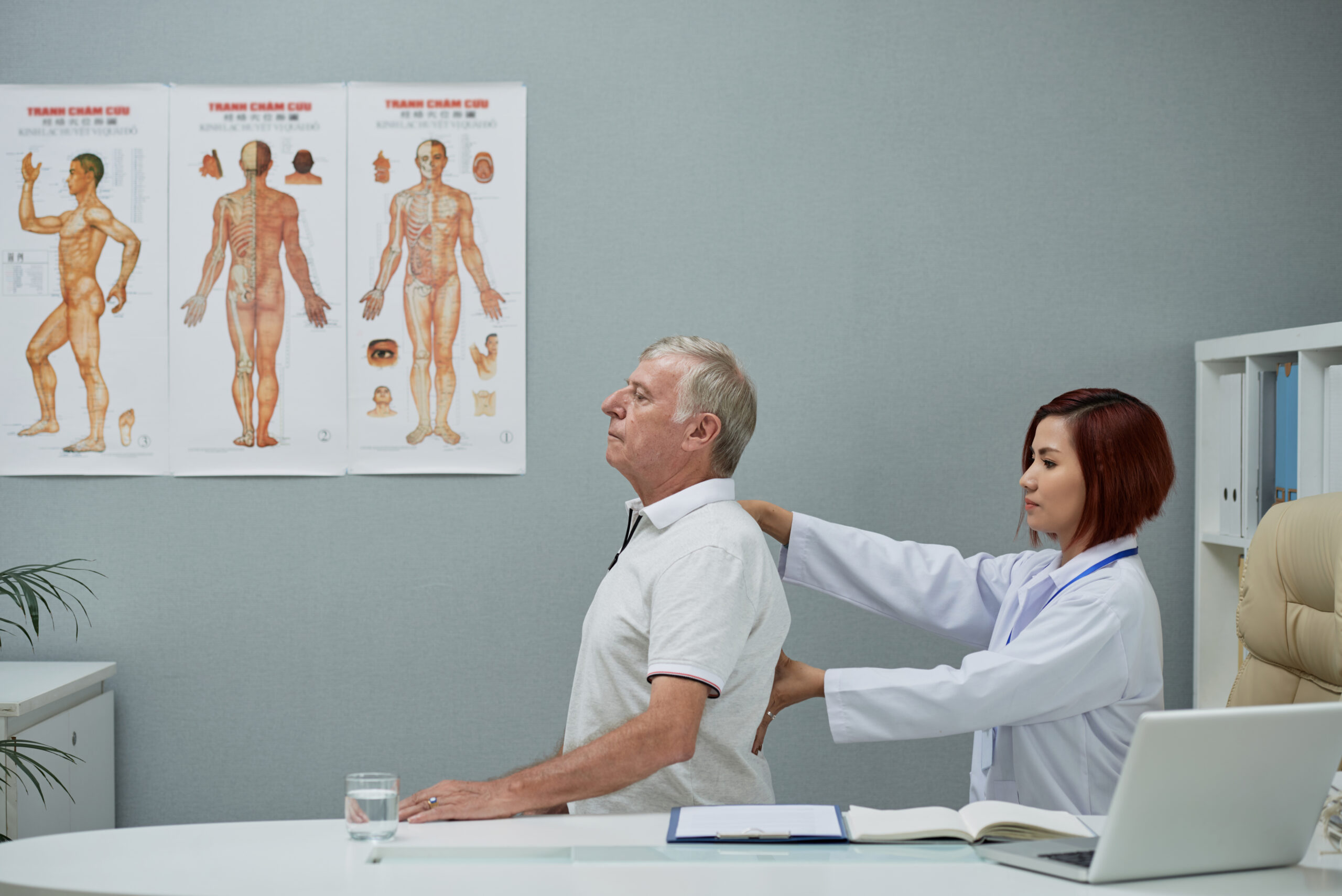

You had back surgery expecting it to end the pain. Maybe for a while it did, or maybe lasting relief never fully arrived. Now, months later, you are still living with an aching lower back, pain that shoots down your leg, or a burning, tingling sensation that flares when you sit, stand, or try to fall asleep. It can be discouraging and confusing to do everything right — the operation, the recovery, the months of physical therapy — and still hurt. If this is where you find yourself, you are not alone, and your pain is not imaginary.
At Seamless Medical Centers, with our main office in Port Arthur, Texas and care available to Houston-area patients across Southeast Texas, we help people who continue to struggle after spinal surgery understand why the pain persists and what options remain. Our practice is led by Dr. Zagum Bhatti, a Board-Certified Interventional Radiologist who focuses on minimally invasive approaches to complex, hard-to-treat pain. When standard treatments have not delivered durable relief, one option worth discussing is spinal cord stimulation, often shortened to SCS — a therapy designed to change how your nervous system processes pain rather than to alter the structure of your spine again.
Persistent pain after surgery does not necessarily mean something went wrong in the operating room. The spine and the nerves surrounding it are remarkably complex, and even a technically successful procedure can leave behind nerve sensitivity, scar tissue, or ongoing inflammation that keeps pain signals firing. Understanding this is the first step toward choosing a care path that fits your situation instead of repeating treatments that have already fallen short.
Understanding Failed Back Surgery Syndrome
When pain continues well beyond the expected healing window after a spinal procedure, doctors often describe it as failed back surgery syndrome. The name can feel harsh and a little misleading. It does not mean your surgeon made a mistake or that the operation was pointless. In many cases, the surgery did exactly what it was meant to do structurally — stabilizing the spine, removing a herniated disc, or decompressing a pinched nerve. The term simply describes a frustrating reality: meaningful pain remains despite that structural correction.
Failed back surgery syndrome is best thought of as a pain problem rather than a structural one. The original mechanical issue may be resolved, yet the pain pathways themselves have changed. Nerves that were irritated or compressed for a long time can stay overactive even after the pressure is relieved, continuing to send pain messages that no longer reflect any new injury. This is part of why imaging after surgery sometimes looks reassuring while you still feel significant discomfort.
Recognizing this distinction matters because it shapes which treatments are likely to help. Approaches aimed only at fixing structure — including additional surgery — may offer limited benefit when the real driver is the nervous system’s processing of pain. Therapies that target nerve signaling directly, such as SCS, are designed for exactly this kind of situation.
Why Pain Can Linger After a Successful Operation
Several overlapping factors can keep pain going after back surgery. Nerves may have been irritated or sensitized by the original problem or by the procedure itself. Scar tissue, sometimes called epidural fibrosis, can form around nerve roots and tether or compress them as you move. Residual disc changes, ongoing degeneration in nearby segments, and the subtle ways you begin to hold and move your body to protect a painful area can all contribute as well.
These changes often show up as more than just back pain. You may notice pain radiating into the buttock, thigh, or calf, along with tingling, numbness, or a burning quality that is characteristic of nerve-related, or neuropathic, pain. Because radiating leg pain has several possible sources, it helps to understand how the different causes behave: if your leg discomfort is tied more to walking distance and circulation than to your back, it is worth understanding how to tell peripheral artery disease apart from sciatica and arthritis, so the right kind of specialist evaluates you.
Over time, untreated neuropathic pain can become self-reinforcing. The nervous system can grow more sensitive — a process sometimes described as central sensitization — so that signals which once would have been minor are amplified into significant pain. This is one reason early, accurate evaluation is so valuable, and why a therapy that calms abnormal nerve signaling may help when structure-focused options have been exhausted.
When Standard Pain Relief Stops Working
Most people work through a familiar sequence of treatments before advanced therapies enter the conversation. Physical therapy, oral medications, targeted injections, nerve blocks, and activity changes all have a role, and for many people they provide real, if partial, relief. These are sensible first and second steps, and a thoughtful care plan usually begins here.
The challenge is that these approaches often have limits when pain is primarily neuropathic. Medications may lose effectiveness over time or bring side effects that are hard to tolerate. Injections can quiet inflammation but tend to wear off. Repeat surgery, in carefully selected cases, can help, but it may do little when the pain is not coming from a structural target. Many people also understandably want to avoid leaning on opioids long term, which is part of why interest in non-opioid, device-based options has grown.
When conservative treatments have been given a fair trial and pain continues to limit your sleep, your work, and your daily life, it is reasonable to ask what comes next. That is the point at which a specialist may raise neuromodulation — therapies that work on how pain signals travel — including SCS.
What Is Spinal Cord Stimulation?
SCS uses a small implanted device to deliver gentle electrical impulses to the spinal cord. Those impulses change the pain signals traveling toward your brain before you consciously perceive them, which can reduce how much pain you feel. It is a form of neuromodulation, meaning it works by adjusting nervous system activity rather than by altering the spine’s structure.
A stimulation system generally has a few parts working together: thin wires, called leads, positioned near the spinal cord; a small pulse generator placed under the skin that powers those leads; and an external controller used to adjust the stimulation. The systems used are FDA-approved, and the therapy is both adjustable and reversible — settings can be fine-tuned over time, and the device can be removed if it is no longer wanted. Modern systems also offer different stimulation patterns, so the experience can be tailored to your comfort.

Are You a Candidate for SCS?
If you answer "yes" to any of these questions, you may be a candidate for this treatment.
Call Now — (409) 213-9575Question 1 of 2
How long have you had moderate to severe back pain?
Prefer to talk? Call (409) 213-9575
Your information is protected under HIPAA. We will never share your data.
It is important to be clear about the goal. SCS is not meant to cure the underlying spinal condition or reverse the changes that led to your pain. Instead, it aims to reduce pain intensity and improve your ability to function day to day. For appropriate candidates whose pain has not responded to other measures, many patients report moving more comfortably and relying less on pain medication, though individual results may vary.
How Spinal Cord Stimulation Works for Failed Back Surgery Syndrome
At Seamless Medical Centers, this therapy is used for several chronic pain conditions, including failed back surgery syndrome, complex regional pain syndrome (CRPS), and neuropathic pain — the burning, shooting, nerve-related pain that often follows spine surgery. You can read more about our spinal cord stimulation services in Port Arthur, including the conditions it addresses and what the procedure involves.
Failed back surgery syndrome is one of the most established and well-studied reasons this approach is considered. It tends to come up when pain has persisted for an extended period after surgery — often six months or more — when imaging does not reveal a clear structural problem to fix, when conservative treatments have not provided adequate relief, and when the pain has a strongly neuropathic character. No single one of these factors determines candidacy; they are part of a fuller picture your specialist evaluates together with you.
One of the more reassuring features of this therapy is that it is not an all-or-nothing decision. It is typically approached in two stages, beginning with a temporary trial before any permanent device is placed. That trial lets you experience the effect of stimulation in your own daily life and gauge whether it provides meaningful relief, which removes much of the guesswork from a longer-term commitment.
What to Expect: The Trial, Implant, and Programming Steps
Deciding whether this is right for you starts with a consultation and careful evaluation rather than a procedure. A specialist reviews your surgical history, your imaging, the treatments you have already tried, and the specific pattern and character of your pain. If you appear to be a candidate, the process generally begins with a trial: thin leads are placed through a small needle and connected to an external stimulator so you can test relief while going about your normal activities. The trial usually lasts several days, is done on an outpatient basis with light sedation, and is fully reversible if it does not help you.
If the trial provides meaningful relief, a permanent stimulator can be placed during a minimally invasive procedure. The leads are positioned near the spinal nerves, and a small pulse generator is seated under the skin. The implantation is performed under anesthesia, and most people go home the same day with clear instructions for caring for the incision and using the device.
After implantation, your specialist programs the device and fine-tunes the settings across follow-up visits to find the best balance of relief and function. Early recovery involves protecting the incision, and for roughly the first six to eight weeks it usually means avoiding heavy lifting, bending, twisting, and high-impact activity while everything heals. Light activities can often resume within a few days, with a gradual return to work and exercise over several weeks. As with any procedure, this one carries some risks — including infection, bleeding, movement of the leads, or hardware issues — and careful candidate selection is part of how those risks are kept low. Your specialist can walk you through what applies to your individual situation.
Talking With a Specialist at Seamless Medical Centers
Living with pain that outlasted the surgery meant to end it is exhausting, and it is easy to feel as though you have run out of options. You may not have. A specialist evaluation can clarify whether your pain is primarily neuropathic, whether you have reached the limits of conservative care, and whether a therapy like SCS deserves a place in your plan.
At Seamless Medical Centers, Dr. Zagum Bhatti, a Board-Certified Interventional Radiologist, focuses on minimally invasive, image-guided approaches to complex pain. Our team takes the time to make sure you understand all of your options — even when that means pointing you toward a treatment we do not offer. From our main office in Port Arthur, we serve patients throughout Southeast Texas, and we provide access to Houston-area patients who are looking for a specialist alternative to large hospital systems. You can read about our practice and our approach to care on the Seamless Medical Centers home page.
If you are dealing with new or rapidly worsening symptoms — such as sudden severe weakness in your legs, or loss of bladder or bowel control — these can signal a medical emergency, and you should seek immediate care or call 911. For ongoing pain after back surgery that has not responded to other treatments, a thoughtful, unhurried evaluation is the right next step, and we are here to help you take it.
Frequently Asked Questions About Spinal Cord Stimulation
Q1. What is spinal cord stimulation used for?
SCS is used to manage chronic, nerve-related pain when treatments such as medication, physical therapy, injections, or surgery have not provided adequate, lasting relief. It is commonly discussed for failed back surgery syndrome, CRPS, and other forms of neuropathic pain.
Q2. Is spinal cord stimulation a cure for back pain?
No. SCS is a long-term pain management therapy, not a cure for the underlying spinal condition. Its goal is to reduce pain intensity and improve daily function, and because the therapy is adjustable and the device removable, settings can be changed or the system taken out over time. For appropriate candidates, many patients experience meaningful relief.
Q3. Will I have to keep taking opioids if I get a spinal cord stimulator?
Not necessarily. While SCS does not cure chronic pain, many patients experience enough relief to reduce their reliance on pain medications, including opioids. Any change to medication should be gradual and made only under the guidance of your physician.
Q4. How do I know whether it will work before committing to an implant?
SCS typically begins with a temporary trial. During this trial period, you and your care team assess how much your pain improves in everyday life before deciding whether to move forward with a permanent device, which removes much of the uncertainty from the decision.
Q5. What happens if the trial does not help?
If the trial does not provide enough relief, a permanent device is not implanted, and you and your specialist explore other treatment options. The trial is designed precisely so you can make an informed decision without a long-term commitment.
Schedule a Consultation
If chronic pain after back surgery is limiting your life, you do not have to navigate it alone. Contact Seamless Medical Centers to discuss your symptoms and find out whether minimally invasive options, including SCS, may be appropriate for you. Request your consultation with our team and take the next step toward understanding your options.
Phone: 409-213-9575
Address: 3300 Jimmy Johnson Blvd, Suite #130, Port Arthur, Texas 77642
Why Choose Seamless Medical Centers?
- Minimally Invasive: Most procedures require only a small incision and are performed as outpatient services.
- Expert Care: Board-certified interventional radiologists with extensive training and experience.
- Faster Recovery: Less downtime compared to traditional surgery, getting you back to your life sooner.
- Advanced Technology: State-of-the-art imaging and treatment equipment for precise, effective care.
- Patient-Centered: Personalized treatment plans tailored to your unique needs and goals.