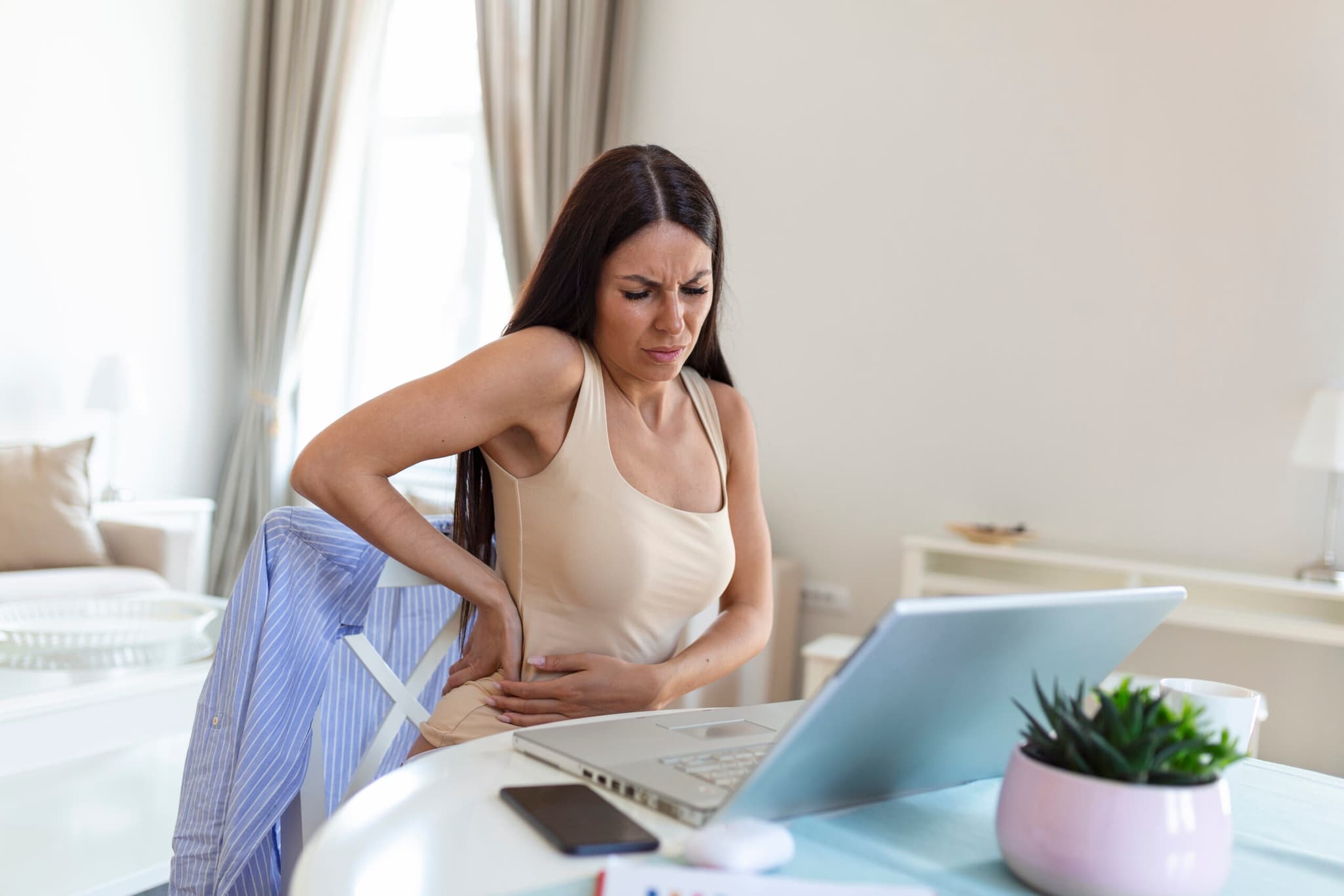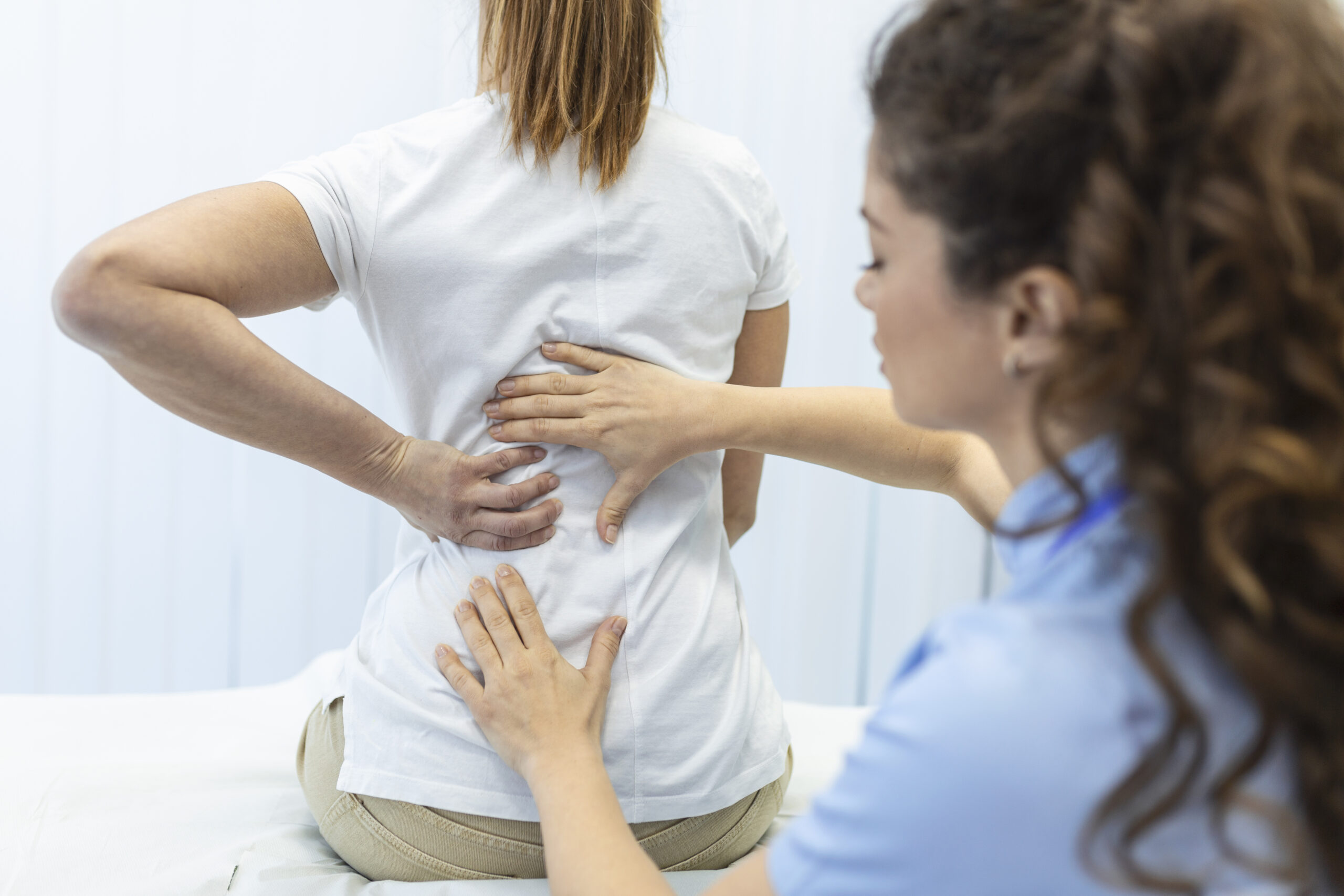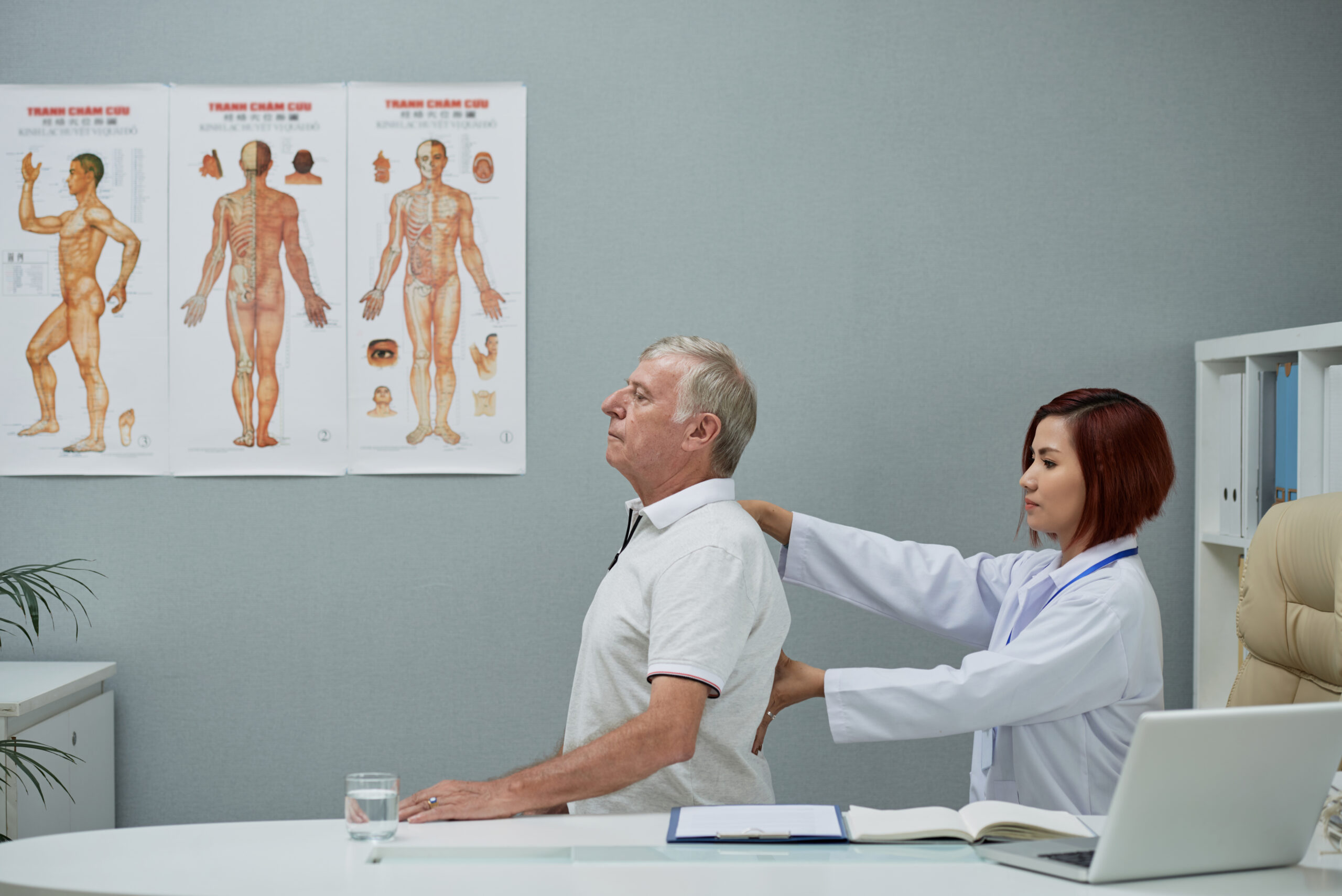


You have had a dull ache low in your back for longer than you can pin down. You have tried the reasonable things — better posture, stretching, a course of physiotherapy, perhaps an X-ray that showed nothing much. Some of it helped for a while. None of it resolved the underlying problem, and nobody has been able to tell you what the underlying problem is.
Fibroids can cause back pain, and it is one of the least recognised things they do. The reason it goes unrecognised is structural: back pain is almost always investigated from the spine outward, which is entirely sensible given how common spinal causes are. But a uterus enlarged toward the back sits directly against the structures at the base of the pelvis, and pain from that source does not behave the way spinal pain behaves.
At Seamless Medical Centers, Dr. Zagum Bhatti, Board-Certified Interventional Radiologist and Founder & Chief Medical Officer of Seamless Medical Centers, back pain is rarely the symptom that brings a woman in. It emerges once fibroids are already being discussed, and the recognition that it may have been connected all along is often the part that surprises women most.
This guide covers how fibroids produce back pain, how to distinguish it from spinal causes, what else it could be, and what evaluation and treatment involve.
How an Enlarged Uterus Produces Back Pain
The uterus sits in the middle of the pelvis with the bladder in front and the rectum behind, and behind those sit the bones, ligaments, and nerves at the base of the spine. A fibroid growing toward the back of the uterus enlarges it in that direction, and there is very little space available before it begins pressing against those structures.
The resulting pain is typically a deep, dull ache rather than something sharp. It sits low — at or below the belt line rather than between the shoulder blades — and it is often described as being felt inside rather than on the surface. Women frequently say it feels different from muscular back pain they have had before, without being able to say exactly how.
There is a second contributing mechanism worth knowing about. A uterus that has enlarged substantially shifts the distribution of weight in the pelvis, which alters posture and loads the lower back differently. That secondary effect can produce genuine muscular back pain layered on top of the pressure itself, which is one reason physiotherapy sometimes helps partially without resolving anything. Our guide to pelvic pressure and fibroid bulk symptoms covers the wider effects of that enlargement.
How to Tell Pelvic Back Pain From Spinal Back Pain
Timing is worth adding to that picture. Back pain that has appeared or worsened over the same period during which your periods changed is a meaningful coincidence, and it is the sort of detail that only emerges if someone asks about both. Women rarely connect the two themselves, because the symptoms are managed by different clinicians and often years apart, and because back pain is so common that it tends to be attributed to age, work, or posture by default.
The distinction is not absolute, and both can be present at once. But there are patterns that point one way rather than the other, and they are worth knowing before your next appointment because they are the details most likely to change what gets investigated.
Spinal back pain typically has a relationship with movement and position. It worsens with particular actions, eases with others, and often responds at least partially to rest, physiotherapy, or a change in how you sit and lift. There is usually a mechanical logic to it that you can identify once you pay attention.
Pressure-related pelvic back pain behaves differently. It is more constant and less clearly tied to what you are doing. It may worsen through the day on your feet and ease when lying down, reflecting weight rather than movement. Crucially, it tends to sit alongside other pelvic symptoms — heavier periods, pelvic heaviness, bladder or bowel changes — and it is that combination, more than the back pain itself, that points toward a pelvic origin.
The Symptoms That Usually Sit Alongside It
Back pain from fibroids very rarely arrives alone, and the accompanying symptoms are usually the more informative ones. Heavier or longer periods are the most common companion, and our guide to heavy menstrual bleeding covers what counts as outside the normal range.
Pelvic pressure and abdominal change frequently accompany it, as do bowel symptoms where the fibroid sits against the rectum — covered in our guide to bowel pressure and constipation. Bladder symptoms point to a fibroid growing forward instead, which our guide to fibroid-related urinary symptoms addresses.
When you describe your back pain, describe these alongside it even if they feel unrelated and even if a different clinician is managing them. A woman reporting lower back ache in isolation gets a spinal workup, appropriately. The same woman reporting lower back ache alongside periods that have doubled in heaviness over two years is describing a different picture entirely, and it is the combination that redirects the investigation.
What Else Produces Back Pain in This Pattern
Fibroids are one explanation and a proper evaluation distinguishes between several. Spinal causes remain the most common overall and should not be dismissed simply because fibroids are present — the two coexist frequently, particularly with age. Adenomyosis produces a similar pattern with more prominent period pain. Endometriosis can produce pelvic and back pain that is often cyclical.
Two distinctions within the pelvic group matter. Pain that arrives with your period and eases when it ends is a different pattern, covered in our guide to back and hip pain during your period. Pain that radiates down a leg, or comes with numbness or tingling, suggests nerve involvement rather than simple pressure, and our guide to fibroids, nerve pain and leg symptoms covers that.
It is worth addressing the concern that persistent back pain tends to raise. This is not a reason to assume the worst — the large majority of lower back pain, including in women with fibroids, traces back to common and treatable causes — but back pain that is new, steadily worsening, or accompanied by unexplained weight loss, fever, or symptoms that wake you at night should be assessed promptly rather than managed at home.
How This Is Evaluated

Are You a Candidate for SCS?
If you answer "yes" to any of these questions, you may be a candidate for this treatment.
Call Now — (409) 213-9575Question 1 of 2
How long have you had moderate to severe back pain?
Prefer to talk? Call (409) 213-9575
Your information is protected under HIPAA. We will never share your data.
If back pain is your main symptom and you have no pelvic symptoms at all, a spinal assessment is the right starting point. Where pelvic symptoms are present, a pelvic ultrasound establishes whether fibroids are present and where they sit — posterior fibroids being the ones most likely to explain back pain. Our guide to how fibroids are diagnosed sets out the sequence.
Position is the detail that matters most here, and it is often glossed over on reports. A posterior fibroid is a coherent explanation for lower back ache; a small fibroid on the front of the uterus is not. Our guide to reading your fibroid imaging explains how to find that information in your own report.
Come to the appointment with the timeline written down. When the back pain started, what has been tried and what each thing achieved, when your periods changed and in what way, and whether any pelvic symptoms appeared alongside. Back pain is one of the most common presentations in general practice, and the consultation is short. A clear written summary of the pattern is the single most effective way to make sure the pelvic possibility is considered rather than skipped.
If you have been through spinal investigation without a clear answer, it is reasonable to ask whether the pelvis has been imaged. This is not about replacing one explanation with another. It is about making sure both have been considered, because a normal spine scan does not explain your pain and leaving it there is where women get stuck for years.
What Treatment Does for Back Pain
Where the pain is caused by fibroid bulk, the treatments that help are the ones that reduce volume. Uterine fibroid embolization blocks the arterial supply feeding the fibroids so they shrink over the following months, which reduces the pressure producing the pain while preserving the uterus. Myomectomy removes fibroids surgically, and hysterectomy removes the uterus.
For appropriate candidates, many patients experience meaningful improvement in pressure-related symptoms following treatment. Individual results may vary, and the degree depends on fibroid size, number, and position. Our overview of how uterine fibroid embolization works and who it helps covers candidacy, and our comparison of UFE and hysterectomy sets out the alternatives.
Timing of improvement is worth setting expectations around. Because embolization works by shrinking fibroids over the months following the procedure rather than immediately, pressure-related symptoms such as back ache typically ease gradually rather than resolving the week afterward. Bleeding often improves sooner than bulk symptoms do. Knowing that in advance prevents the reasonable but mistaken conclusion, a few weeks in, that nothing has worked.
Be realistic about what treatment can be expected to change. Where fibroids are the main driver, reducing their volume generally improves the pain. Where a spinal component is also present, that part will need addressing separately and may persist afterward. A thorough evaluation should tell you which situation you are in before you commit to anything, rather than after.
Frequently Asked Questions About Fibroids and Back Pain
Can fibroids cause lower back pain?
Yes. Fibroids growing toward the back of the uterus press against structures at the base of the pelvis, producing a deep, dull ache low in the back. Substantial enlargement can also alter posture and load the lower back differently.
What does fibroid back pain feel like?
It is typically a deep, dull ache low in the back rather than a sharp pain, and it is often described as being felt inside rather than on the surface. It tends to be more constant than movement-related, and it may worsen through the day on your feet.
How do I know if my back pain is from fibroids or my spine?
Spinal pain usually has a clear relationship with movement and position. Pressure-related pelvic pain is more constant and tends to sit alongside other pelvic symptoms such as heavier periods or pelvic heaviness. That combination is the strongest signal, and both can be present at once.
Why has physiotherapy not helped my back pain?
Physiotherapy addresses muscular and mechanical contributors, which can produce partial improvement where enlargement has altered your posture. It does not change the volume of a fibroid pressing from within the pelvis, so relief is often incomplete and does not last.
Should I see a spine specialist or a gynecologist?
Either is reasonable, and they are not mutually exclusive. If back pain is isolated with no pelvic symptoms, spinal assessment is the sensible starting point. If pelvic symptoms are present, or spinal investigation has not produced an answer, pelvic imaging is worth asking about.
Will treating fibroids resolve my back pain?
Where fibroid bulk is the main driver, reducing fibroid volume generally improves the pain. Where a spinal component also exists, that part will need separate treatment. Evaluation should establish which applies before you decide.
Is UFE appropriate if I want to become pregnant?
Uterine fibroid embolization is generally not recommended as a first-line option for women planning future pregnancy; myomectomy is typically preferred in that situation. Raise your fertility plans at consultation so the recommendation reflects them.
Talk to a Specialist About Your Symptoms
If back pain has persisted alongside pelvic symptoms and nobody has looked at your pelvis, Contact Seamless Medical Centers to discuss your options. An evaluation establishes what is driving your symptoms and what can reasonably be done about it.
Phone: 409-213-9575
Address: 3300 Jimmy Johnson Blvd, Suite #130, Port Arthur, Texas 77642
Medical Disclaimer
Individual results may vary. This information is for educational purposes only and should not replace professional medical advice. Treatment decisions should be made in consultation with qualified healthcare providers.
Published by Seamless Medical Centers | Clinical information reflects the expertise of Dr. Zagum Bhatti, MD, Board-Certified Interventional Radiologist, Founder of Seamless Medical Centers.
Why Choose Seamless Medical Centers?
- Minimally Invasive: Most procedures require only a small incision and are performed as outpatient services.
- Expert Care: Board-certified interventional radiologists with extensive training and experience.
- Faster Recovery: Less downtime compared to traditional surgery, getting you back to your life sooner.
- Advanced Technology: State-of-the-art imaging and treatment equipment for precise, effective care.
- Patient-Centered: Personalized treatment plans tailored to your unique needs and goals.
Published by Seamless Medical Centers
Clinical information on this site is based on the expertise of Zagum Bhatti, M.D. — Board Certified in Interventional Radiology/Diagnostic Radiology (American Board of Radiology), dual-fellowship-trained (Neuroradiology; Vascular & Interventional Radiology, Rush University Medical Center), former Assistant Professor of VIR at UTHealth Houston, and Founder & Chief Medical Officer of Seamless Medical Centers.
Why Choose Seamless Medical Centers?
- Minimally Invasive: Most procedures require only a small incision and are performed as outpatient services.
- Expert Care: Board-certified interventional radiologists with extensive training and experience.
- Faster Recovery: Less downtime compared to traditional surgery, getting you back to your life sooner.
- Advanced Technology: State-of-the-art imaging and treatment equipment for precise, effective care.
- Patient-Centered: Personalized treatment plans tailored to your unique needs and goals.