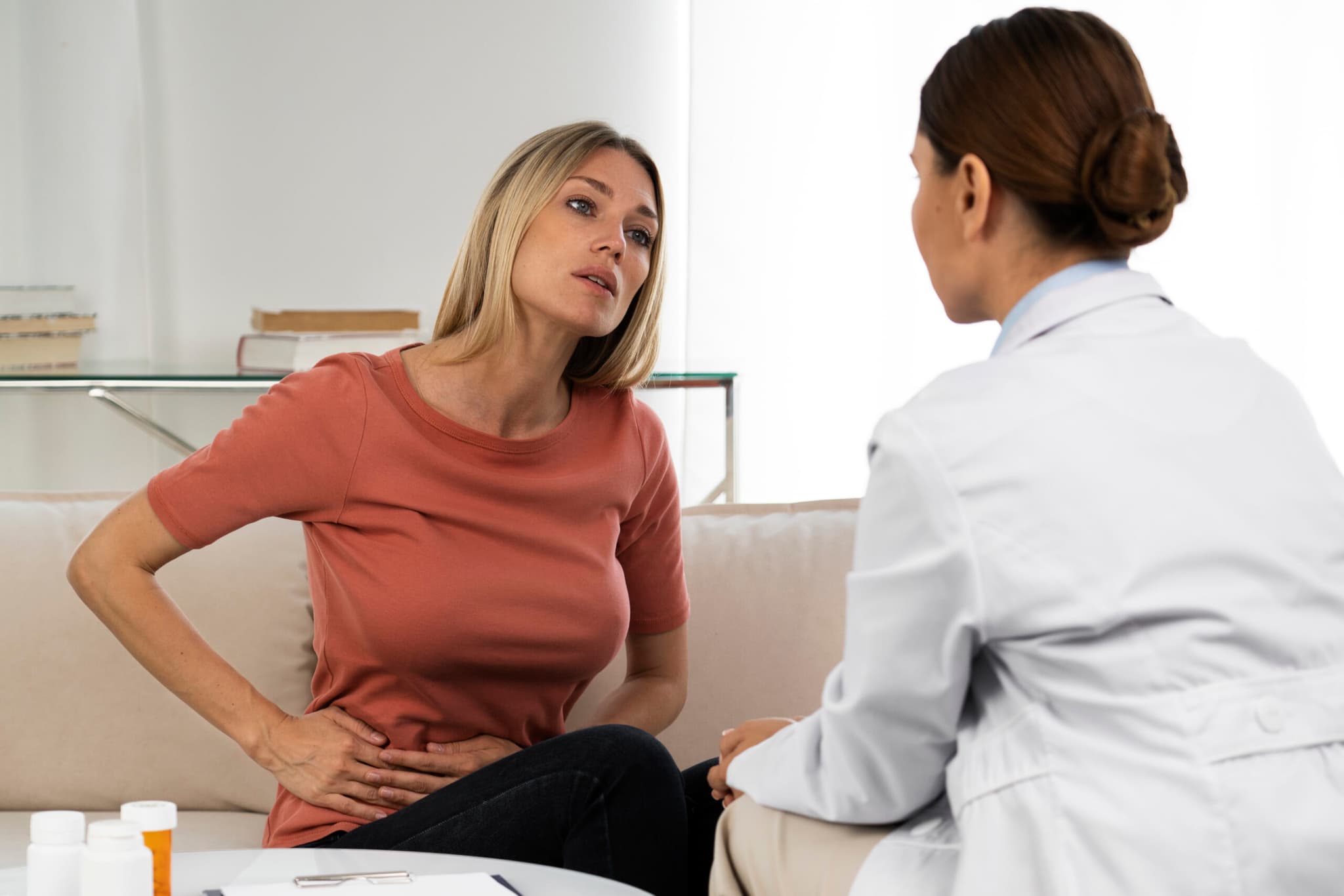

You’ve noticed that your periods have changed. The blood clots that appear during your period are getting larger — bigger than a quarter, sometimes significantly larger. Your period may be heavier overall, lasting longer than it used to. You may be soaking through protection more quickly than before. This is not something most people talk about openly, but passing large blood clots during your period is a meaningful symptom that can indicate an underlying condition that deserves evaluation.
Large clots during menstruation often signal that blood is pooling faster than the uterine lining can process it. When menstrual flow is very heavy, the body’s natural anticoagulants in the uterus cannot keep up, and clots form. One of the most common structural causes of this pattern in women of reproductive age is uterine fibroids.
At Seamless Medical Centers in Port Arthur, TX, Dr. Zagum Bhatti, Board-Certified Interventional Radiologist, evaluates and treats fibroid-related heavy bleeding for women across the Golden Triangle — Port Arthur, Beaumont, Nederland, Orange, Vidor, Bridge City, and surrounding communities. Patients from western Louisiana including Lake Charles and Sulphur also access care at our Port Arthur location. UFE at our Port Arthur office. Menorrhagia treatment information.
When Clots During Your Period Are Abnormal
Passing some clots during menstruation is normal, particularly at the beginning of a heavy flow day. Small clots, up to the size of a grape, are common and not typically a concern in the absence of other symptoms. It is when clots are consistently larger than a quarter — or when they are accompanied by very heavy flow, significant anemia symptoms, or progressive worsening over time — that evaluation is appropriate.
Women in Port Arthur, Beaumont, Groves, and Lumberton who find themselves planning activities around their heavy periods, keeping extra supplies everywhere they go, or feeling exhausted and light-headed during their period are likely experiencing menorrhagia — abnormally heavy menstrual bleeding — that is affecting their daily life and potentially their iron stores.
How Fibroids Cause Heavy Bleeding and Clots
Submucosal fibroids that grow into the uterine cavity significantly increase the surface area of the endometrial lining. When more lining sheds during menstruation, there is more blood to clear. Fibroids also interfere with the uterus’s normal ability to contract and constrict the blood vessels in the endometrium — the primary mechanism by which bleeding is controlled. The result is heavier, longer, and harder to control menstrual bleeding, with larger clots forming as blood pools faster than the natural anticoagulants can process it.
For women in Silsbee, Orangefield, Port Neches, and surrounding Jefferson County communities who have been managing increasingly heavy periods for months or years, understanding what fibroid embolization involves and how it can reduce this level of bleeding is an important step in exploring treatment options.
Why Your Body Forms Clots During a Period
Understanding why menstrual clots form makes it easier to judge when they are simply part of a heavy day and when they signal something more. During a normal period, the uterine lining sheds and the body releases anticoagulants that keep the blood thin enough to flow out smoothly. When flow is light to moderate, these natural anticoagulants keep pace and you may see little or no clotting. When bleeding is rapid and heavy, however, blood can pool in the uterus or vagina faster than the anticoagulants can work, and the blood begins to coagulate just as it would anywhere else in the body – forming the gel-like clots that are a mixture of blood cells, tissue from the uterine lining, and proteins. This is why clots tend to appear on your heaviest days, often in the morning after blood has collected overnight, or when you stand up after sitting for a while. In that sense, clotting itself is a normal mechanism; the issue is what the clots reveal about the volume and speed of your bleeding. Small, occasional clots during a heavy stretch are expected and usually harmless. Consistently large clots, on the other hand, are a visible sign that your flow is heavy enough to repeatedly overwhelm the body’s ability to keep the blood liquid – and that level of bleeding is worth understanding rather than simply enduring.
Beyond Fibroids: Other Reasons for Large Clots

Are You a Candidate for UFE?
If you answer "yes" to any of these questions, you may be a candidate for this treatment.
Call Now — (409) 213-9575Your information is protected under HIPAA. We will never share your data.
While uterine fibroids are one of the most common structural causes of heavy bleeding with large clots in women of reproductive age, they are not the only explanation, and an evaluation is what distinguishes among the possibilities. Adenomyosis – in which uterine lining tissue grows into the muscular wall of the uterus – frequently produces both heavy, clot-filled periods and significant cramping. Uterine polyps, small growths on the lining, can contribute to heavy or irregular bleeding. Hormonal imbalances, including cycles in which ovulation does not occur, can cause the lining to build up excessively and then shed heavily. Bleeding and clotting disorders, such as von Willebrand disease, may underlie very heavy periods that have been present since a woman’s first cycles. Thyroid dysfunction can alter menstrual flow as well, and certain medications, some intrauterine devices, an early pregnancy loss, or the hormonal shifts of perimenopause can each change the pattern of bleeding and clotting. Because these causes are managed differently, identifying which one is at work matters. This is not a reason to assume the worst – the large majority of heavy, clotty periods trace back to common, treatable conditions – but it is a reason to have persistent symptoms assessed rather than self-diagnosing. A proper workup sorts out which of these explanations fits, so that any treatment is aimed at the actual cause.
What Passing Large Clots Can Do to Your Daily Life and Iron
Living with consistently heavy, clot-filled periods takes a toll that goes well beyond the days of bleeding themselves. Many women find their lives quietly reorganizing around their cycle: keeping spare supplies in every bag and car, mapping out bathrooms before leaving home, wearing dark clothing, and bracing for the sudden gush that can come with standing up or passing a large clot. The fear of leaking or flooding through protection in public or at work is a real and exhausting source of stress, and some women limit travel, exercise, or social plans during their heaviest days. There is also a physical cost that is easy to overlook. Passing large clots month after month means losing a significant volume of blood, and over time that can outpace the body’s ability to replace iron, leading to iron-deficiency anemia. The fatigue, weakness, breathlessness, and difficulty concentrating that result are often blamed on a hectic schedule rather than recognized as a consequence of the bleeding. If that pattern sounds familiar, our companion guide on heavy bleeding and anemia explains how chronic blood loss affects your energy and what can be done about it. Recognizing that the heavy, clotty periods and the exhaustion may be linked is often what prompts women to finally seek an answer.
When to Have Large Clots Evaluated
Knowing when to seek care takes the guesswork out of a symptom many women are unsure how to gauge. It is reasonable to have your periods evaluated if you are consistently passing clots larger than a quarter, soaking through a pad or tampon every hour or two, bleeding for more than seven days, or noticing that your flow and clotting have been steadily worsening over recent months. Symptoms of anemia – persistent fatigue, light-headedness, breathlessness with exertion, or a racing heart – are an added reason to be seen, since they suggest the blood loss is affecting your iron. An evaluation is usually straightforward: a pelvic ultrasound can identify fibroids and other structural causes and show their size and location, while blood work checks your hemoglobin and iron levels to gauge whether anemia has developed. From there, the cause guides the options. For fibroid-related heavy bleeding, uterine fibroid embolization is one minimally invasive, uterus-preserving treatment that works by shrinking the fibroids responsible. Women across the Golden Triangle – in Port Arthur, Beaumont, Nederland, Orange, Groves, and the surrounding Jefferson County communities, as well as those traveling from Lake Charles and western Louisiana – can be evaluated locally rather than traveling out of the region. The point of being seen is simple: to learn what is driving the clots and what, if anything, can make your periods manageable again.
Frequently Asked Questions About Blood Clots During Your Period
How large is too large when it comes to menstrual blood clots?
Blood clots larger than a quarter (approximately 2.5 cm) are generally considered abnormally large and warrant medical evaluation. If you are consistently passing clots this size or larger, particularly if accompanied by very heavy flow, you should discuss this with a healthcare provider.
Could the clots be causing my fatigue?
Yes. Heavy menstrual bleeding with large clots can lead to iron-deficiency anemia over time, as the blood lost each cycle exceeds the body’s ability to replace it. Anemia from heavy periods commonly causes fatigue, weakness, shortness of breath with exertion, difficulty concentrating, and pallor. If your periods are consistently very heavy and you have been experiencing these symptoms, evaluation should include blood work to check hemoglobin and iron levels.
Is UFE appropriate if I still want to have children?
UFE is generally not recommended as a first-line option for women who plan future pregnancies. For women who want to preserve fertility while treating fibroids, myomectomy — surgical removal of fibroids while preserving the uterus — is typically the preferred approach. Dr. Bhatti will discuss your fertility plans during the consultation.
Do I need a referral to see Dr. Bhatti in Port Arthur?
A referral is helpful for care coordination but is not required. You can contact Seamless Medical Centers directly to schedule a consultation. Bringing your most recent pelvic ultrasound imaging, if available, helps make the consultation more productive.
Schedule Your Consultation
Contact Seamless Medical Centers to schedule a consultation at our Port Arthur office. Learn more about UFE in Southeast Texas. Phone: 409-213-9575. Address: 3300 Jimmy Johnson Blvd, Suite #130, Port Arthur, Texas 77642.
Medical Disclaimer
Individual results may vary. This information is for educational purposes only and should not replace professional medical advice. Treatment decisions should be made in consultation with qualified healthcare providers.
Published by Seamless Medical Centers | Clinical information reflects the expertise of Dr. Zagum Bhatti, MD, Board-Certified Interventional Radiologist, Founder of Seamless Medical Centers.
Why Choose Seamless Medical Centers?
- Minimally Invasive: Most procedures require only a small incision and are performed as outpatient services.
- Expert Care: Board-certified interventional radiologists with extensive training and experience.
- Faster Recovery: Less downtime compared to traditional surgery, getting you back to your life sooner.
- Advanced Technology: State-of-the-art imaging and treatment equipment for precise, effective care.
- Patient-Centered: Personalized treatment plans tailored to your unique needs and goals.