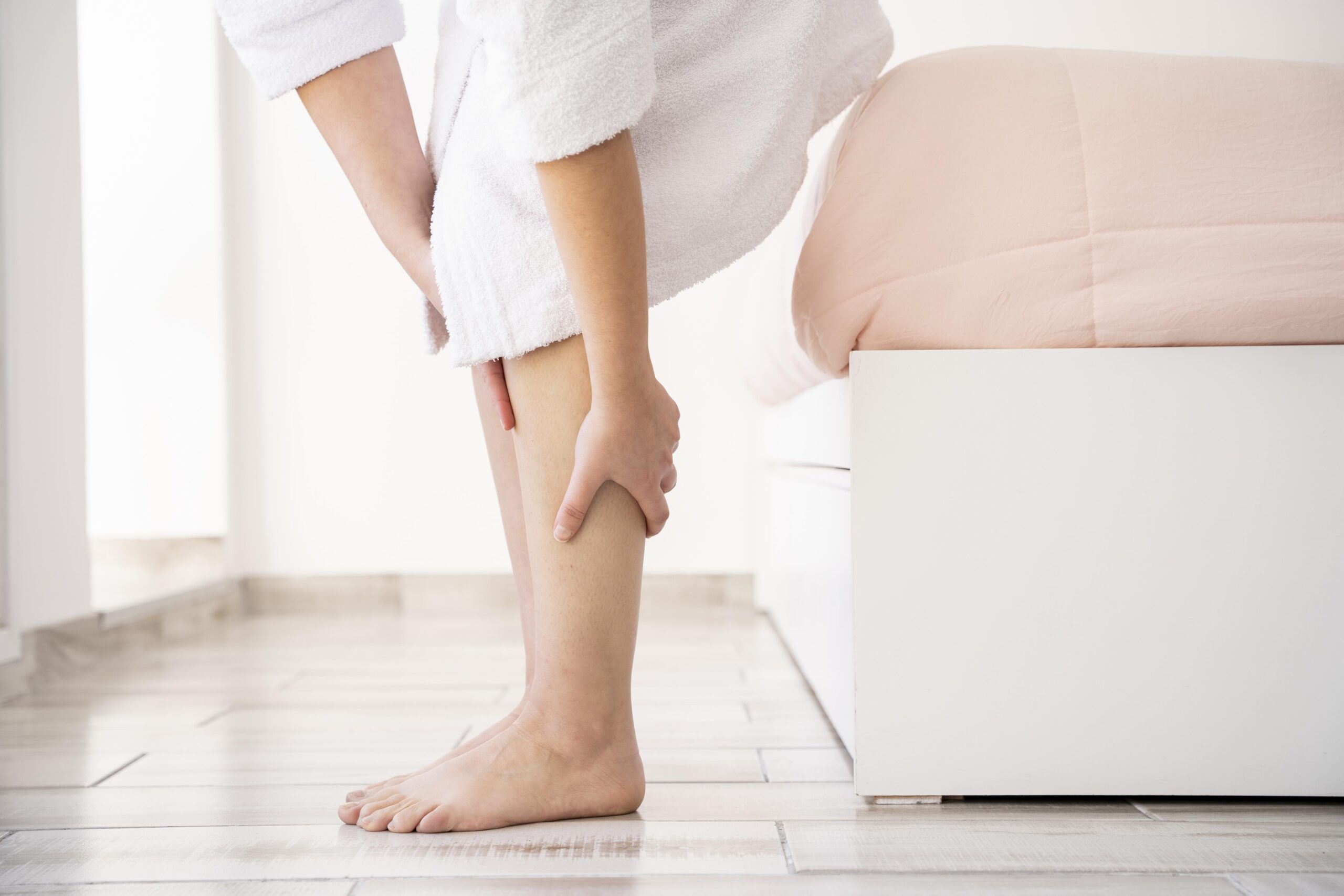
If your legs ache, cramp, or feel heavy when you walk — and the discomfort goes away when you stop and rest — peripheral artery disease may be the explanation. PAD affects the arteries that carry blood from the heart to the legs and feet. When these arteries narrow due to plaque buildup, the legs don’t receive adequate blood flow to meet the demands of activity. The resulting pain is called claudication, and it is one of the most recognizable symptoms of PAD.
Peripheral artery disease is underdiagnosed and undertreated, in part because its early symptoms are easy to attribute to aging, arthritis, or being out of shape. But PAD is a vascular disease with meaningful consequences if left unaddressed — including progressive limitation of walking ability, non-healing wounds, and increased risk of heart attack and stroke.
At Seamless Medical Centers, Dr. Zagum Bhatti, Board-Certified Interventional Radiologist, provides minimally invasive PAD treatment for patients across Southeast Texas and the Houston area. Both Houston-area PAD services and Port Arthur PAD services are available.
What Is Peripheral Artery Disease?
Peripheral artery disease is caused by atherosclerosis — the same process that causes heart attacks and strokes, but occurring in the arteries of the legs rather than the coronary or carotid arteries. Plaque — a buildup of fat, cholesterol, calcium, and other substances — accumulates on artery walls over time, narrowing the vessel lumen and reducing blood flow. In the legs, this reduced flow becomes symptomatic during exercise when the muscles demand more oxygen-rich blood than the narrowed arteries can supply.
The most common locations for PAD blockages are the iliac arteries in the pelvis, the femoral arteries in the thigh, the popliteal artery behind the knee, and the tibial arteries in the lower leg. The location of the blockage influences where symptoms are felt: aortoiliac disease causes buttock and thigh pain; femoral disease causes calf pain; tibial disease affects the foot and lower calf.
Risk factors for PAD are the same as for cardiovascular disease generally: smoking (the single strongest modifiable risk factor), diabetes, hypertension, high cholesterol, obesity, advancing age, and family history. PAD and coronary artery disease frequently coexist, and patients with PAD have a significantly elevated risk of heart attack and stroke.
Recognizing the Symptoms
The hallmark symptom of PAD is claudication — calf, thigh, or buttock pain that comes on with walking a predictable distance and resolves with rest. The muscle pain reflects oxygen shortage: the narrowed arteries can meet the legs’ oxygen needs at rest but cannot increase flow enough to meet the demands of walking. Rest relieves the pain because the muscles’ oxygen demands decrease. Read the in-depth guide to claudication for a detailed explanation of this symptom.
In more advanced PAD, symptoms may include rest pain — pain in the foot or lower leg that occurs at night or when lying down, and is often relieved by dangling the foot off the bed. Skin changes on the feet and lower legs (thinning, hair loss, shiny appearance), slow-healing or non-healing wounds on the feet or lower legs, and coldness in the foot compared to the other side are also signs of more severe arterial insufficiency.
Diagnosis
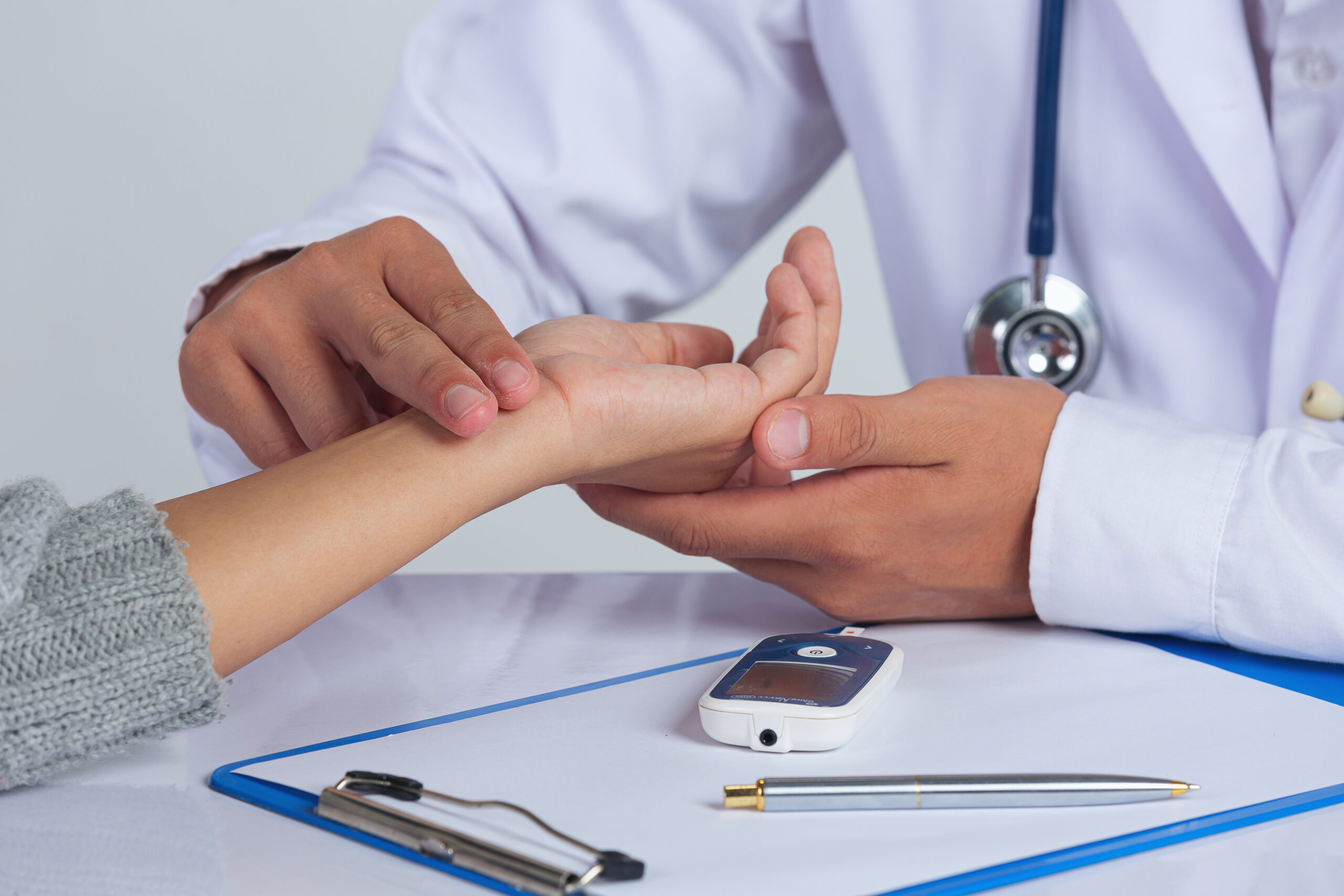
The primary diagnostic tool for PAD is the ankle-brachial index (ABI) — a non-invasive measurement that compares blood pressure in the ankle to blood pressure in the arm. A normal ratio is approximately 1.0 to 1.4; a ratio below 0.9 suggests significant arterial disease. The ABI is a simple, inexpensive test that can be performed in a clinic setting and provides important information about the severity of arterial restriction.
When more detailed information is needed — particularly when planning a revascularization procedure — imaging studies including duplex ultrasound, CT angiography, or MR angiography can map the location and severity of blockages throughout the leg arteries. This information allows Dr. Bhatti to plan the most effective minimally invasive approach for each patient.
Treatment Options

Are You a Candidate for PAD Treatment?
If you answer "yes" to any of these questions, you may be a candidate for this treatment.
Call Now — (409) 213-9575Question 1 of 4
Have you been diagnosed with Peripheral Artery Disease (PAD) by a doctor?
Prefer to talk? Call (409) 213-9575
Your information is protected under HIPAA. We will never share your data.
PAD treatment addresses both symptom management and the underlying cardiovascular risk. Lifestyle modifications including smoking cessation, regular supervised walking exercise (which helps develop collateral circulation), and management of diabetes, hypertension, and cholesterol are the foundation of PAD care. When these measures are not sufficient to adequately control symptoms, minimally invasive revascularization procedures can restore blood flow through the narrowed arteries. Read the full guide to PAD treatment options for a detailed breakdown. Contact us to schedule a PAD evaluation.
Who Is at Risk, and Who Should Consider Screening
Peripheral artery disease shares its risk factors with cardiovascular disease more broadly. The strongest is smoking, which both speeds plaque formation and worsens outcomes once PAD develops. Diabetes is the next most significant, and the two together are especially damaging. High blood pressure, high cholesterol, advancing age, obesity, a sedentary lifestyle, chronic kidney disease, and a family history of vascular disease all add to the total picture, and most people who develop PAD carry more than one of these at once.
Because early PAD is often silent, screening matters for higher-risk groups even without symptoms. Cardiovascular organizations suggest discussing an evaluation with your physician if you are between 50 and 64 with risk factors such as diabetes or a smoking history, under 50 with diabetes plus one additional risk factor, 65 or older, or already diagnosed with coronary or carotid disease. A simple ankle-brachial index can confirm or rule out reduced circulation in a single visit, which is why raising the question early is worthwhile.
Why PAD Matters Beyond Your Legs
It is tempting to treat PAD as only a leg problem, but narrowing in the leg arteries usually signals the same process elsewhere in the body. The plaque limiting blood flow to your calves can also sit in the arteries feeding the heart and brain, which is why a PAD diagnosis carries a meaningfully higher risk of heart attack and stroke. Treating PAD is therefore never only about leg pain: controlling cholesterol and blood pressure, managing diabetes, and stopping smoking are the same steps that protect the heart and brain. Addressing your circulation is, in practice, part of protecting your whole cardiovascular system.
What Treatment at Seamless Medical Centers Involves
When narrowed arteries need to be reopened, Dr. Bhatti treats PAD with minimally invasive, image-guided techniques rather than open surgery. Angioplasty, stenting, and atherectomy are performed through a small puncture, usually in the wrist or groin, under conscious sedation. These are outpatient procedures: most patients are observed for a few hours and go home the same day, returning to light activity within days. Most insurance plans, including Medicare and Medicaid, cover medically necessary PAD care, and the practice handles verification and pre-authorization.
Getting Evaluated Close to Home
For patients across Southeast Texas and western Louisiana, a PAD evaluation does not require traveling to a major metropolitan center. At the Port Arthur office, the ankle-brachial index and ultrasound assessment are done locally, and when treatment is warranted, the same minimally invasive, outpatient procedures are available close to home. Houston-area patients are seen at the Port Arthur location as well, and the practice handles insurance verification so the focus stays on care.
If you recognize the pattern of PAD in your own legs, the most useful next step is to ask the question rather than wait and see. Because the disease is treatable and its early signs are so easily mistaken for ordinary aging, an evaluation that confirms or rules out reduced circulation is worthwhile even when symptoms feel minor or come and go. The earlier peripheral artery disease is identified, the more options remain for protecting both your mobility and your long-term cardiovascular health, and the simpler the path to feeling better tends to be. A short, painless test is often all it takes to move from uncertainty to a clear answer and a plan.
Frequently Asked Questions
Is peripheral artery disease reversible?
The underlying atherosclerosis cannot be fully reversed, but PAD is very manageable. Lifestyle changes and medication can slow or halt its progression, supervised exercise can improve how far you walk before pain begins, and minimally invasive procedures can restore blood flow through narrowed arteries when symptoms warrant it.
How is PAD different from simply having cold feet or tired legs?
Occasional cold feet or tiredness is common and usually harmless. PAD tends to produce a consistent pattern, cramping that comes on at a predictable walking distance and eases with rest, often alongside cold feet, skin changes, or slow-healing wounds. It is the repeatable, activity-linked pattern that sets it apart.
Will I need surgery?
Most people with PAD do not. Treatment usually begins with lifestyle measures, exercise, and medication, and the procedures used when those are not enough are minimally invasive ones performed through a small puncture, not open surgery. At Seamless Medical Centers, all PAD revascularization is done this way, on an outpatient basis.
Schedule Your Consultation
Contact Seamless Medical Centers to schedule a consultation with Dr. Bhatti. Phone: 409-213-9575. Address: 3300 Jimmy Johnson Blvd, Suite #130, Port Arthur, Texas 77642.
Why Choose Seamless Medical Centers?
- Minimally Invasive: Most procedures require only a small incision and are performed as outpatient services.
- Expert Care: Board-certified interventional radiologists with extensive training and experience.
- Faster Recovery: Less downtime compared to traditional surgery, getting you back to your life sooner.
- Advanced Technology: State-of-the-art imaging and treatment equipment for precise, effective care.
- Patient-Centered: Personalized treatment plans tailored to your unique needs and goals.