
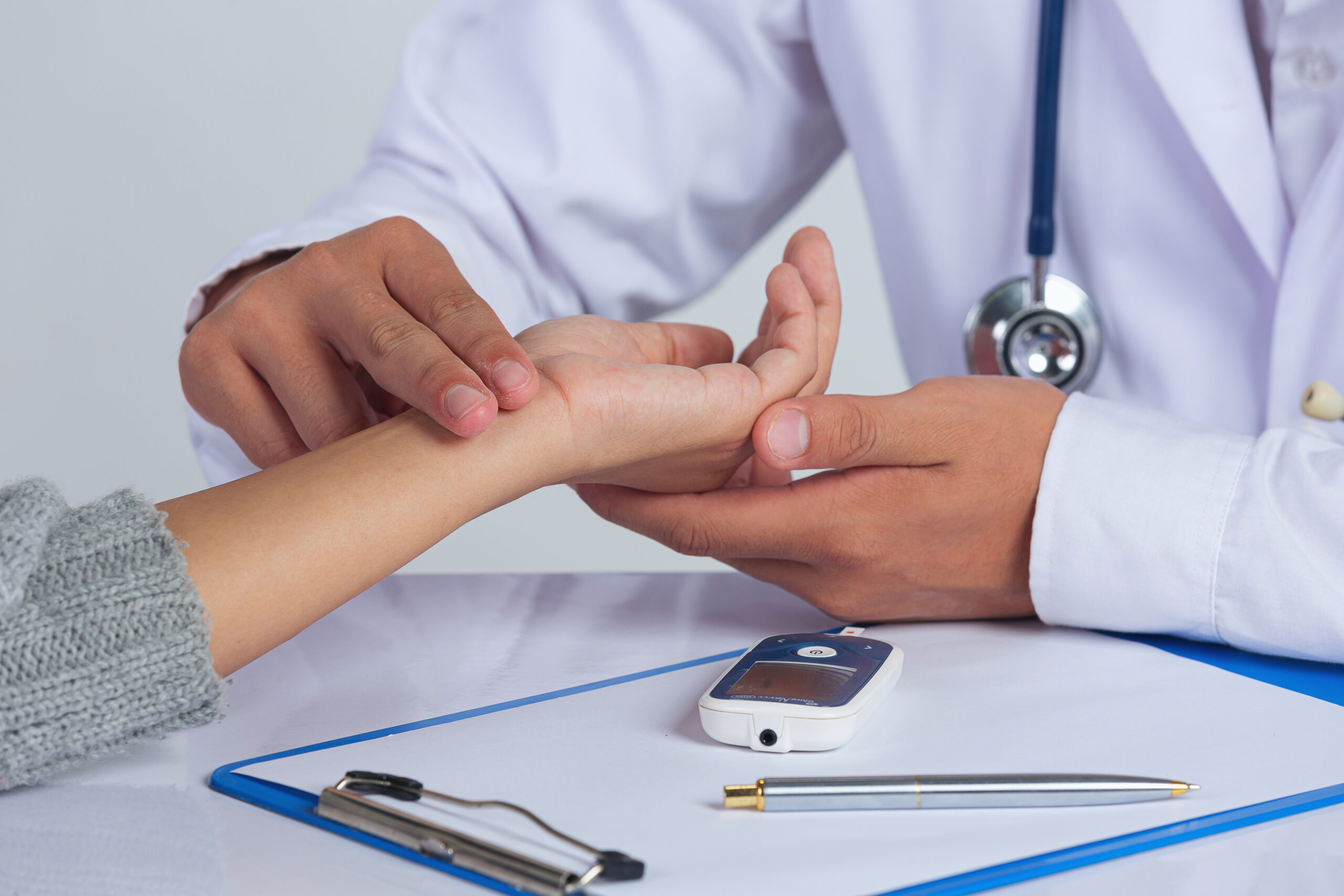
If you have diabetes, your risk of developing peripheral artery disease is two to four times higher than in someone without diabetes. And if you develop PAD, the consequences tend to be more severe: the disease progresses faster, symptoms may present differently, foot complications are more common, and wound healing is impaired in ways that turn minor foot injuries into serious medical events. Understanding this connection — and what to do about it — is one of the most important pieces of vascular health management for patients with diabetes.
Diabetes is more common across Southeast Texas than in much of the country — adult diabetes prevalence in Texas runs above the national average, and the CDC has identified East Texas counties as having higher diabetes prevalence than the rest of the state. The Golden Triangle communities of Port Arthur, Beaumont, Orange, Nederland, Groves, Port Neches, Vidor, and Bridge City reflect this pattern. For diabetic patients in Jefferson County and Orange County, the combination of diabetes with other regional PAD risk factors — smoking and hypertension being particularly common — creates a compounded risk that deserves proactive vascular attention.
At Seamless Medical Centers, Dr. Zagum Bhatti, Board-Certified Interventional Radiologist, provides PAD evaluation and minimally invasive treatment for diabetic patients across Southeast Texas. Port Arthur PAD service. Houston-area PAD service.
Why Diabetes Accelerates Vascular Disease
Chronically elevated blood glucose damages blood vessel walls in multiple ways. It accelerates atherosclerotic plaque formation, promotes inflammation in the vascular endothelium, increases platelet aggregation (clotting tendency), and stiffens arterial walls — reducing their ability to dilate in response to increased demand. These mechanisms compound standard cardiovascular risk factors, making arterial narrowing develop faster and affect smaller vessels more severely in diabetic patients.
Diabetic PAD also frequently affects the smaller vessels below the knee — the tibial and peroneal arteries — in addition to the larger vessels affected in non-diabetic PAD. This makes the disease pattern more diffuse and technically more challenging to treat, though minimally invasive revascularization remains effective for many patients.
The Silent PAD Problem in Diabetic Patients
Peripheral neuropathy — nerve damage from long-standing diabetes — blunts the pain sensation that normally prompts PAD evaluation. The classic claudication pain that brings non-diabetic patients to medical attention may be absent or significantly reduced in diabetic patients, allowing PAD to progress to advanced stages without being recognized. A diabetic patient with severe PAD may have minimal pain and a non-healing foot wound as their first presentation.
This is why screening for PAD with ankle-brachial index testing is recommended for diabetic patients, particularly those over 50 or with longer duration of diabetes — not waiting for symptoms, but proactively assessing vascular health as part of diabetes management.
Foot Care as PAD Management
For diabetic PAD patients, foot care is not cosmetic — it is medical. Peripheral neuropathy reduces sensation, PAD reduces healing capacity, and the combination means that minor foot injuries can become serious quickly and without early warning pain. Daily foot inspection, properly fitting footwear, avoiding barefoot walking, and prompt evaluation of any wound, blister, or skin change are all components of foot care that directly affect limb outcomes in diabetic PAD.
Any foot wound in a diabetic patient with known or suspected PAD should be evaluated urgently. Wounds in this population do not simply heal with time — they require active management and often require revascularization to create the blood flow necessary for healing. Review PAD treatment options to understand what interventional approaches are available.
What Treatment Involves for Diabetic PAD
Diabetic peripheral artery disease often affects the smaller arteries below the knee, including the tibial and peroneal vessels, in addition to the larger arteries involved in non-diabetic PAD. This makes the disease pattern more diffuse and technically more demanding to treat, but it remains very treatable with minimally invasive techniques. At Seamless Medical Centers, Dr. Bhatti and the team have particular experience treating the small arteries of the lower leg and foot, using angioplasty, stenting, and atherectomy delivered through a small puncture.
These are outpatient procedures performed under conscious sedation, with most patients observed for a few hours and discharged the same day. For diabetic patients with a non-healing foot wound, restoring blood flow is frequently what finally allows the wound to heal, which is why prompt vascular evaluation is so important when a wound appears.

Are You a Candidate for PAD Treatment?
If you answer "yes" to any of these questions, you may be a candidate for this treatment.
Call Now — (409) 213-9575Question 1 of 4
Have you been diagnosed with Peripheral Artery Disease (PAD) by a doctor?
Prefer to talk? Call (409) 213-9575
Your information is protected under HIPAA. We will never share your data.
Why Regular Screening Matters in Diabetes
Because neuropathy can blunt the warning pain that normally prompts an evaluation, peripheral artery disease can advance silently in people with diabetes, sometimes presenting first as a non-healing wound rather than leg pain. For this reason, screening with the ankle-brachial index is recommended for diabetic patients, particularly those over 50 or with a longer duration of diabetes, as a proactive part of diabetes care rather than something to pursue only after symptoms appear. Most insurance plans, including Medicare and Medicaid, cover medically necessary evaluation and treatment.
Coordinating PAD Care With Diabetes Management
For people with diabetes, peripheral artery disease is best managed as one part of overall diabetes care rather than as a separate problem. Tight blood-sugar control slows the vascular damage that underlies diabetic PAD, and while it cannot reverse existing narrowing, it reduces the rate of new plaque formation and supports the small vessels that are so often affected. Blood pressure and cholesterol control, antiplatelet therapy where appropriate, and smoking cessation work in the same direction, protecting both the legs and the heart.
Because reduced sensation can hide developing problems, regular foot checks, both at home and at medical visits, become an essential safeguard. Coordinating vascular care with your diabetes management team ensures that circulation, blood sugar, and foot health are addressed together rather than in isolation, which is what gives the limb the best long-term protection.
Building Screening Into Routine Diabetes Care
For people with diabetes, the case for screening rather than waiting for symptoms is especially strong, because neuropathy can mask the warning pain that would otherwise prompt an evaluation. Incorporating a periodic ankle-brachial index and a careful foot examination into routine diabetes care can catch reduced circulation before it leads to a wound or other complication. Guidelines generally support screening for diabetic patients over fifty, and earlier for those with a longer duration of diabetes or additional risk factors such as smoking.
Pairing this with daily foot inspection at home creates two layers of early detection, which is what gives the limb the best protection. When screening or a foot check turns up a concern, prompt vascular evaluation allows circulation to be assessed and, if needed, restored before a small problem becomes a serious one.
For anyone living with diabetes, peripheral artery disease is a risk worth taking seriously and managing proactively rather than waiting for it to announce itself. Because neuropathy can hide its warning signs, regular screening, daily foot care, and tight control of blood sugar, blood pressure, and cholesterol together form the best defense. When PAD is found, it is very treatable, including in the smaller arteries below the knee that diabetes so often affects, and restoring circulation is frequently what allows a stubborn foot wound to heal. Coordinating vascular care with your diabetes management team gives the limb its best long-term protection.
Frequently Asked Questions About Diabetes and PAD
Q1. How often should diabetic patients be screened for PAD?
Most guidelines recommend ABI screening for diabetic patients over 50, or earlier in patients with longer disease duration, smoking history, or other cardiovascular risk factors. The frequency of repeat screening depends on initial results and ongoing risk factor management.
Q2. Can PAD be treated effectively in diabetic patients?
Yes. Diabetic patients can benefit from minimally invasive revascularization procedures, including angioplasty and stenting of the tibial arteries. Technical success rates and outcomes are somewhat lower than in non-diabetic PAD, but meaningful improvement in blood flow and wound healing can be achieved. Dr. Bhatti will discuss the specific technical considerations for your anatomy.
Q3. I have diabetes and a foot wound that won’t heal. What should I do?
A non-healing foot wound in a diabetic patient should be evaluated by both a wound care specialist and a vascular specialist promptly. If PAD is contributing to impaired healing, revascularization to restore blood flow is often necessary for the wound to close. Do not wait to see if it improves on its own.
Q4. Does better blood sugar control help PAD?
Yes. Optimizing blood glucose control slows the progression of vascular damage that underlies diabetic PAD. While it cannot reverse existing arterial disease, better glycemic management reduces the rate of new plaque formation and endothelial damage, making it an important component of PAD management alongside revascularization and cardiovascular risk factor control.
Schedule Your Consultation
Contact Seamless Medical Centers at our Port Arthur office. Phone: 409-213-9575. Address: 3300 Jimmy Johnson Blvd, Suite #130, Port Arthur, Texas 77642.
Why Choose Seamless Medical Centers?
- Minimally Invasive: Most procedures require only a small incision and are performed as outpatient services.
- Expert Care: Board-certified interventional radiologists with extensive training and experience.
- Faster Recovery: Less downtime compared to traditional surgery, getting you back to your life sooner.
- Advanced Technology: State-of-the-art imaging and treatment equipment for precise, effective care.
- Patient-Centered: Personalized treatment plans tailored to your unique needs and goals.