
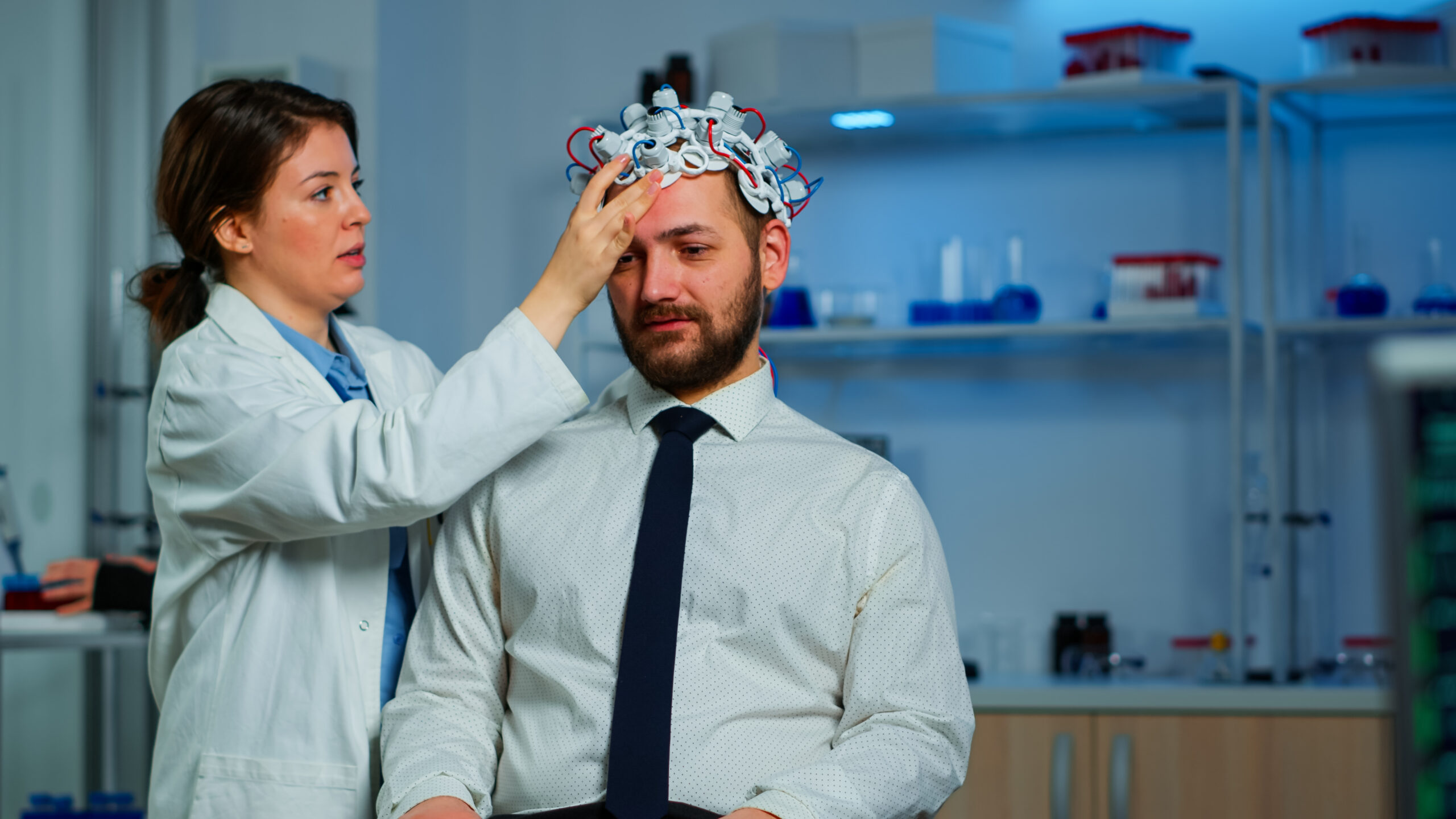
You have tried the things you were told to try. Maybe you have taken medication for months, completed rounds of physical therapy, had injections that helped for a while and then stopped, or even undergone back surgery that did not bring the relief you hoped for. And yet the pain is still there — aching, burning, or shooting through your back, legs, or arms, following you into your sleep and shaping how you move through every day. When chronic pain has outlasted the usual treatments, it is natural to wonder whether anything else is left to try.
Neuromodulation for chronic pain is one of the options worth understanding when conventional care has reached its limits. Rather than masking pain with more medication, it works with your nervous system to change how pain signals are processed before they reach your brain. At Seamless Medical Centers, spinal cord stimulation is offered as part of minimally invasive, image-guided care for people across Southeast Texas who are living with pain that has not responded to other approaches.
This care is led by Dr. Zagum Bhatti, a board-certified interventional radiologist, who brings dual fellowship training — including in neuroradiology — to conditions involving the nerves and spine. This guide explains what neuromodulation is, how spinal cord stimulation fits within it, the kinds of pain it may help, and the signs that it could be time to talk with a pain specialist. Understanding these options will not make the decision for you, but it can help you have a more informed conversation about what comes next.
What Neuromodulation Is — and Where Spinal Cord Stimulation Fits
Neuromodulation is a broad term for treatments that use targeted electrical signals to change — or modulate — the activity of nerves. Instead of removing the source of pain through open surgery, neuromodulation aims to alter the way pain messages travel along the nervous system, so that fewer of them reach the brain, or so that the brain interprets them differently. It is an approach built around adjusting signals rather than cutting or removing tissue.
Spinal cord stimulation, often shortened to SCS, is one of the most established forms of neuromodulation therapy for chronic pain. It involves placing thin wires, called leads, in the space near the spinal cord. These leads deliver mild electrical signals to the nerves carrying pain information, with the goal of reducing how strongly you feel that pain. Because it works through small access points rather than large incisions, it belongs to the same minimally invasive family as many other image-guided procedures.
Spinal cord stimulation is the form of neuromodulation offered here, within interventional radiology — the specialty Dr. Bhatti has practiced for years. You can explore the broader range of minimally invasive treatments offered at Seamless Medical Centers to understand how procedures that work through small access points have changed what is possible for many conditions — often with less downtime than traditional surgery.
How Spinal Cord Stimulation Works to Quiet Pain Signals
To understand how spinal cord stimulation may ease pain, it helps to picture your nervous system as a network of pathways carrying messages between your body and your brain. When tissue is injured or nerves are irritated, pain signals travel up the spinal cord to the brain, where they are recognized as pain. In long-lasting pain conditions, these pathways can become overactive, continuing to send strong signals even when there is no longer a clear injury to explain them.
Spinal cord stimulation is thought to work by introducing gentle electrical pulses along this pathway. These pulses can interfere with the pain messages traveling toward the brain, so that the sensations you feel are reduced or replaced by a milder feeling. Many people describe the result as turning the volume of their pain down rather than switching it off completely.
Because the device adjusts signals rather than altering the structures in your body, the settings can often be fine-tuned over time to match your needs. Individual results may vary, and not everyone responds the same way — which is one reason a trial period is such an important part of the process.
Conditions That May Respond to Neuromodulation
Neuromodulation is generally considered for chronic pain that has not improved with more conservative treatments. It is most often discussed for nerve-related, or neuropathic, pain — pain caused by damage or dysfunction in the nerves themselves rather than ongoing tissue injury. This type of pain can be especially difficult to manage with medication alone.
Among the conditions for which spinal cord stimulation is frequently considered are failed back surgery syndrome, where back or leg pain persists despite one or more spine operations, and complex regional pain syndrome (CRPS), a condition involving severe, lasting pain that is out of proportion to the original injury. It is also studied for other forms of refractory neuropathic pain — nerve pain that has resisted standard treatment.
It is important to understand that neuromodulation is not a cure for these conditions, and it is not appropriate for everyone. For appropriate candidates, however, it may offer meaningful relief and improved daily function when other options have fallen short. A thorough evaluation by a qualified specialist is the only way to determine whether it fits your situation.
A Non-Opioid Option for Pain That Won’t Go Away
For many people living with chronic pain, long-term reliance on pain medication brings its own challenges, including side effects and concerns about dependence. One reason neuromodulation has drawn growing interest is that it offers a non-opioid pain treatment approach — one that works through the nervous system rather than through medication.
This does not mean medication has no place, or that neuromodulation replaces every other part of your care. Rather, for appropriate candidates, it may reduce how much pain medication is needed and provide an additional tool for managing pain that has not responded well to drugs alone. Decisions about any medication should always be made together with your prescribing provider.
Telling Nerve and Spine Pain Apart From Circulation Problems

Are You a Candidate for SCS?
If you answer "yes" to any of these questions, you may be a candidate for this treatment.
Call Now — (409) 213-9575Question 1 of 2
How long have you had moderate to severe back pain?
Prefer to talk? Call (409) 213-9575
Your information is protected under HIPAA. We will never share your data.
Not all chronic leg or foot pain comes from the nerves or spine. Some pain that feels similar actually stems from problems with blood flow, and this distinction matters because the treatments are very different.
If your leg pain tends to come on when you walk and eases when you rest, or if your feet feel cold, numb, or are slow to heal, the cause may lie in your circulation rather than your nerves. In that case, learning about peripheral artery disease and circulation problems in the legs can help you recognize whether a vascular evaluation, rather than a pain-management approach, is the more appropriate first step. A specialist can help sort out which type of problem is driving your symptoms so you pursue the right kind of care.
When to See a Pain Specialist
Knowing when to see a pain specialist can be difficult, especially when you have been managing symptoms on your own for a long time. As a general guide, it may be time to seek specialized care when pain has lasted for several months, when it is getting worse rather than better, when it is interfering with your sleep, work, or daily activities, or when the treatments you have already tried are no longer helping.
A pain specialist can review your history, look more closely at the underlying cause of your pain, and talk through the full range of treatment options — from conservative measures to advanced approaches like neuromodulation. Seeking this kind of evaluation does not commit you to any particular treatment; it simply gives you a clearer picture of what is driving your pain and what could help.
Some symptoms warrant urgent attention rather than a routine appointment. If you experience sudden weakness, loss of bladder or bowel control, or rapidly worsening numbness, call 911 or go to the nearest emergency room, as these can signal problems that need immediate care.
The Trial Period: Testing Whether SCS Helps Before Committing
One feature that sets spinal cord stimulation apart from many other treatments is that you can often test whether it works for you before making a lasting commitment. In a trial spinal cord stimulator phase, temporary leads are placed and connected to an external device, allowing you to experience the therapy in your daily life for a short period.
During this trial, you and your care team can judge how much your pain improves and how the therapy affects your ability to move, sleep, and function. Only if the trial provides meaningful relief is a permanent spinal cord stimulator considered. This step-by-step approach helps ensure the therapy is pursued mainly by those most likely to benefit from it, and it gives you a real sense of the results before deciding.
Why Choose Seamless Medical Centers for Chronic Pain Care
Choosing where to seek care for complex, long-lasting pain is an important decision. At Seamless Medical Centers, spinal cord stimulation is performed by Dr. Zagum Bhatti, a board-certified interventional radiologist with dual fellowship training and prior experience as an academic faculty member in vascular and interventional radiology. This depth of training is uncommon in community practice and is especially relevant for a therapy that works directly with the nerves and spine.
The practice is rooted in Port Arthur, Texas, and serves communities throughout the Golden Triangle and the wider Southeast Texas region, including Beaumont, Nederland, and Orange. Houston-area patients are seen at our Port Arthur office, where the emphasis is on personalized attention and minimally invasive care rather than the long waits often associated with large hospital systems.
As part of an ongoing commitment to patient education, Seamless Medical Centers is building a library of pain management resources to help you understand the conditions and treatments that matter most to you. The more you understand your options, the better positioned you are to make a confident decision about your care.
Take the Next Step
If chronic pain has continued despite the treatments you have already tried, you do not have to navigate the next step alone. Contact Seamless Medical Centers to discuss your options and find out whether spinal cord stimulation may be right for you.
Phone: 409-213-9575
Address: 3300 Jimmy Johnson Blvd, Suite #130, Port Arthur, Texas 77642
Frequently Asked Questions About Neuromodulation for Chronic Pain
Q1. What is neuromodulation for chronic pain?
Neuromodulation for chronic pain is a treatment approach that uses targeted electrical signals to change how the nervous system processes pain. Spinal cord stimulation is one common form, and it aims to reduce how strongly pain signals reach the brain.
Q2. When should you consider neuromodulation therapy?
It is generally considered when chronic pain has not improved despite medication, physical therapy, injections, or surgery. Many people explore it as a non-opioid option for pain that has lasted for months and is affecting daily life.
Q3. What conditions may respond to spinal cord stimulation?
Spinal cord stimulation is most often considered for nerve-related pain, including failed back surgery syndrome and complex regional pain syndrome. Individual results may vary, and a specialist evaluation determines whether it is appropriate for you.
Q4. Is there a way to test SCS before committing to it?
Yes. A trial spinal cord stimulator phase lets you experience the therapy with temporary leads before a permanent device is considered. A permanent stimulator is generally pursued only if the trial provides meaningful relief.
Q5. Is neuromodulation a cure for chronic pain?
No, neuromodulation does not cure chronic pain. For appropriate candidates, it may help reduce pain and improve daily function as part of a broader pain management plan.
Why Choose Seamless Medical Centers?
- Minimally Invasive: Most procedures require only a small incision and are performed as outpatient services.
- Expert Care: Board-certified interventional radiologists with extensive training and experience.
- Faster Recovery: Less downtime compared to traditional surgery, getting you back to your life sooner.
- Advanced Technology: State-of-the-art imaging and treatment equipment for precise, effective care.
- Patient-Centered: Personalized treatment plans tailored to your unique needs and goals.