






Trusted by Hundreds of Doctors.Refer a Patient Today
Seamless Medical Centers Logo
(409) 213-9575Tap to Call

Advanced Women's Health Care

Menorrhagia Treatment in Mont Belvieu, TX — Heavy & Prolonged Menstrual Bleeding Relief Without Surgery

Patients from Mont Belvieu, TX are seen at our Port Arthur office. Expert, minimally invasive care for women suffering from heavy or prolonged menstrual bleeding — without the need for major surgery.

consultation

Book Your Appointment Today

Same week appointments available

🔒 Your information is 100% private. We never share your data.

Medically reviewed by Zagum Bhatti, M.D. Board-Certified Interventional Radiologist

Last reviewed: July 4, 2026

Patients from Mont Belvieu, TX are seen at our office located at 3300 Jimmy Johnson Blvd, Suite #130, Port Arthur, TX 77642 — 52 miles away.

Seamless Medical Centers

What Is Menorrhagia Treatment?

Menorrhagia refers to unusually heavy or prolonged menstrual bleeding that can disrupt daily life and affect overall health. Women experiencing this condition may struggle with fatigue, discomfort, and difficulty maintaining normal routines during their cycles. It has several possible causes — including uterine fibroids, adenomyosis, polyps, hormonal imbalance, and bleeding disorders — so evaluation and imaging come first.

For bleeding driven by fibroids — and in selected cases adenomyosis — Uterine Fibroid Embolization (UFE) is a well-established, minimally invasive option that treats the cause without surgery. ACOG recognizes UFE as an evidence-supported alternative to hysterectomy for women who wish to preserve their uterus.

At Seamless Medical Centers in Port Arthur, Dr. Zagum Bhatti — a board-certified interventional radiologist — confirms whether UFE is appropriate based on your imaging and goals, and discusses other options, or referral, when the cause is not fibroid-related.

Who It's For

Who Can Benefit from Menorrhagia Treatment?

Heavy or prolonged menstrual bleeding can affect women at different stages of life. Individuals experiencing persistent symptoms that interfere with daily activities or overall health may benefit from medical evaluation and targeted treatment options. Dr. Zagum Bhatti reviews your bleeding history and imaging to identify the cause and whether UFE is appropriate for you.

Heavy Menstrual Bleeding

Women Experiencing Excessive Menstrual Bleeding

Women who experience unusually heavy menstrual flow may find daily activities difficult during their cycle. Seeking a heavy bleeding in periods treatment can help reduce symptoms and restore comfort throughout the menstrual cycle.

Long or Irregular Cycles

Women with Long or Irregular Cycles

Some women experience menstrual cycles that last significantly longer than normal. In these cases, a medical evaluation can determine whether prolonged menses treatment may help regulate bleeding and improve overall cycle health.

Non-Surgical Solutions

Women Seeking Non-Surgical Solutions

Many women prefer treatment options that address menstrual health concerns without invasive surgery. Minimally invasive approaches may provide effective relief while allowing patients to return to their normal routines quickly.

Long-Term Relief

Women Looking for Long-Term Relief

For women dealing with recurring menstrual symptoms, long-term treatment planning can help reduce cycle-related discomfort. A personalized approach ensures that care focuses on improving overall health and quality of life.

Common Symptoms

Prolonged Menstruation Treatment for Mont Belvieu Women with Heavy Periods

Heavy periods can create significant disruption in everyday life. Many women experience symptoms such as excessive bleeding, fatigue, and discomfort that make routine activities more difficult during their menstrual cycle. Addressing these symptoms early can help prevent further health complications and improve overall well-being.

checkExcessive menstrual bleeding
checkPeriods lasting longer than seven days
checkPassing large blood clots
checkSevere cramping during menstruation
checkFatigue caused by blood loss
checkFrequent need to change menstrual products

A personalized treatment plan focuses on identifying the cause of abnormal bleeding and recommending therapies that help restore a healthier menstrual cycle. Modern medical techniques may involve targeted procedures designed to reduce abnormal blood flow and support long-term symptom relief.

By working with experienced specialists, women can explore treatment options that address their symptoms while prioritizing comfort and safety. With the right care plan, many patients experience improved cycle control, reduced bleeding, and a noticeable improvement in daily quality of life.

If you're experiencing any of these symptoms, schedule a consultation now →

What to Expect

Safety, Recovery & What to Expect After UFE

When menorrhagia is caused by fibroids, UFE is a well-established, minimally invasive treatment — in the multicenter Ontario Uterine Fibroid Embolization Trial, 83% of women reported improvement in heavy menstrual bleeding within three months (Pron 2003). Understanding the recovery, the possible side effects, and who is not a candidate is part of choosing the right treatment.

Recovery

UFE is an outpatient procedure performed through a pinhole catheter entry using local anesthesia and light sedation — no surgical incision. Most patients go home the same day or after a short overnight stay. Expect cramping and fatigue (post-embolization syndrome) for the first 1–3 days, a return to light activity within a few days, and a return to normal routines within about one to two weeks. Bleeding and bulk symptoms improve over the following 3–6 months as the fibroids shrink.

Side effects and risks

Post-embolization syndrome — cramping, low-grade fever, nausea, and fatigue in the first few days — is common and usually managed with oral medication. Vaginal discharge or passage of fibroid tissue can occur in the weeks after treatment. Serious complications (significant infection, non-target embolization) are rare. About one in four women (~24%) need a repeat procedure or further treatment within five years — durability is good for most but not guaranteed, and Dr. Bhatti reviews this with you.

Who may not be a candidate

UFE treats fibroid-related (and some adenomyosis-related) bleeding — it does not treat menorrhagia caused by polyps, hormonal imbalance, or bleeding disorders, which need different care. It is generally not advised during active pelvic infection, suspected malignancy, or pregnancy, and is a relative contraindication for women actively seeking future pregnancy, for whom myomectomy may be preferred. Candidacy is confirmed by Dr. Bhatti based on your imaging and history.

Surgery-Free Care

UFE Compared With Hysterectomy for Heavy Bleeding

For appropriately selected women with fibroid-related bleeding who want to keep their uterus, UFE is an alternative to hysterectomy — not a replacement for surgery when surgery is clinically indicated. Dr. Bhatti reviews which option fits your case.

checkNo surgical incision — pinhole catheter entry
checkLocal anesthesia with light sedation
checkSame-day or short overnight stay
checkReturn to light activity in a few days; normal routines in about 1–2 weeks

UFE vs. Hysterectomy

Uterine Fibroid Embolization (UFE)Hysterectomy
IncisionPinhole catheter entry (groin or wrist)Surgical incision; uterus removed
AnesthesiaLocal anesthesia + light sedationGeneral anesthesia
Hospital staySame-day or short overnightTypically 1–2+ days
RecoveryLight activity in days; ~1–2 weeks to normal routines~4–6 weeks
UterusPreservedRemoved
Evidence / statusWell established; ACOG Level-A alternative for uterine preservationStandard definitive surgical treatment
DurabilityDurable for most; about 1 in 4 (~24%) need a repeat procedure within 5 yearsDefinitive for fibroid bleeding (no recurrence in the removed uterus)
Insurance coverageGenerally covered — we verify before treatmentGenerally covered

All comparative claims are reviewed and approved by Dr. Bhatti before publishing. This page makes no UFE-vs-myomectomy recurrence comparison.

Your Consultation

Schedule Your Menorrhagia Treatment Consultation in Port Arthur

Dr. Zagum Bhatti and the Seamless team review your bleeding history and imaging to identify the cause and whether UFE is appropriate for you. During your consultation, your physician will:

  • checkReview your symptoms, bleeding history, and any prior imaging
  • checkOrder a pelvic ultrasound or MRI to confirm the cause of bleeding
  • checkDiscuss whether UFE — or another option — fits your cause and goals
  • checkConfirm candidacy with Dr. Bhatti, including future-fertility considerations
  • checkWalk through recovery, risks, and insurance verification (Medicare, Medicaid, major commercial plans)

Got Questions?
Frequently Asked Questions

About Your Physician
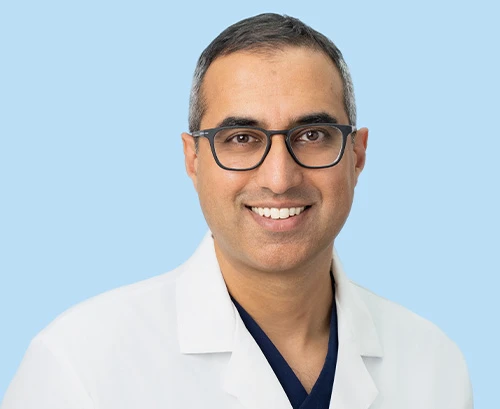
Dr. Zagum Bhatti, M.D., board-certified interventional radiologist and founder of Seamless Medical Centers

Zagum Bhatti, M.D.

Board-Certified Interventional Radiologist

Founder & Chief Medical Officer; Interventional Radiologist

Dr. Zagum Bhatti is a board-certified, dual-fellowship-trained interventional radiologist and a former Assistant Professor of Vascular & Interventional Radiology at the University of Texas Health Science Center at Houston (UTHealth). He has dedicated his career to minimally invasive, image-guided procedures that treat serious conditions without open surgery. As Founder and Chief Medical Officer of Seamless Medical Centers, he brings academic-level expertise — including published peer-reviewed research in vascular and interventional radiology — to a community practice in Southeast Texas, making advanced treatments for enlarged prostate, uterine fibroids, knee osteoarthritis, peripheral artery disease, and chronic pain available close to home.

Education & training

  • B.S., Biochemistry University of Wisconsin–Milwaukee (2001–2004)
  • Doctor of Medicine (M.D.) Medical College of Wisconsin (2004–2008)
  • Residency, Diagnostic Radiology Michigan State University College of Human Medicine (2008–2012)
  • Fellowship, Neuroradiology Medical College of Wisconsin (2013–2014)
  • Fellowship, Vascular & Interventional Radiology Rush University Medical Center (Rush Medical College) (2014–2015)

Board certification & licensure

  • Board Certified in Interventional Radiology / Diagnostic Radiology, American Board of Radiology — actively maintained in the ABR Continuing Certification (MOC) program
  • Texas Medical License #Q3852
  • NPI 1053577890

Medical Sources

The clinical information on this page is supported by the following peer-reviewed studies and professional medical society guidance.

  1. ACOG — Heavy Menstrual Bleeding (patient FAQ) — Definition, iron-deficiency anemia consequence, and causes.
  2. ACOG Practice Bulletin No. 228 — Management of Symptomatic Uterine Leiomyomas (2021) — UAE recommended for uterine preservation; limited reproductive-outcome data.
  3. Uterine Fibroid Treatment — RadiologyInfo.org (RSNA/ACR) — UFE mechanics; outpatient; fibroids shrink over months.
  4. Uterine Fibroid Embolization — StatPearls / NCBI Bookshelf (NIH) — SIR: >90% cessation/improvement of abnormal uterine bleeding.
  5. Pron G, et al. The Ontario Uterine Fibroid Embolization Trial, Part 2. Fertil Steril (2003) — Menorrhagia improved in 83% (95% CI 80–87%) at 3 months; menstrual duration 7.6→5.4 days (PMID 12524074). Boston Scientific part-funded — disclosed.
  6. Reintervention Rates After Myomectomy, Endometrial Ablation, and UAE for Uterine Fibroids. J Womens Health (2018) — MarketScan cohort — ~24% 5-year reintervention after UAE (PMC6205049).

Ready to learn more?

Schedule a consultation with Dr. Bhatti to discuss your treatment options and see if this procedure is right for you.

Most major plans accepted, including Medicare/Medicaid — we verify before your visit.