






Trusted by Hundreds of Doctors.Refer a Patient Today
Seamless Medical Centers Logo
(409) 213-9575Tap to Call

Advanced Women's Health Care

Uterine Fibroid Treatment in Beaumont, TX: Non-Surgical Options That Work

Patients from Beaumont, TX are seen at our Port Arthur office. Expert, minimally invasive care for women suffering from fibroid symptoms — without the need for major surgery.

consultation

Book Your Appointment Today

Same week appointments available

🔒 Your information is 100% private. We never share your data.

Medically reviewed by Zagum Bhatti, M.D. Board-Certified Interventional Radiologist

Last reviewed: July 4, 2026

Patients from Beaumont, TX are seen at our office located at 3300 Jimmy Johnson Blvd, Suite #130, Port Arthur, TX 77642 — 19 miles away.

Seamless Medical Centers

What Is Uterine Fibroid Treatment?

Uterine fibroids are noncancerous growths that develop in or around the uterine wall. They are the most common benign tumors in women of reproductive age, affecting an estimated 40–80% of women by age 50. Symptoms vary widely — from heavy menstrual bleeding and pelvic pressure to frequent urination, bloating, and pain during intercourse — and can significantly impact daily quality of life.

For decades, hysterectomy was considered the standard solution. Today, women have access to clinically proven, non-surgical fibroid treatment options that shrink fibroids and relieve symptoms while preserving the uterus and requiring far less recovery time.

At Seamless Medical Centers in Port Arthur, Texas, Dr. Zagum Bhatti — a board-certified interventional radiologist — specializes in Uterine Fibroid Embolization (UFE), a minimally invasive fibroid treatment that, in the Ontario UFE trial, improved heavy menstrual bleeding in about 83% of women at three months, with quality-of-life gains comparable to myomectomy in the randomized FEMME trial. Most patients go home the same day and return to light activity within a few days to a week.

Who It's For

Who Can Benefit from Uterine Fibroid Treatment in Beaumont?

UFE and other non-surgical fibroid treatments are appropriate for most women with symptomatic fibroids who want to avoid surgery or preserve their uterus. A consultation with Dr. Bhatti will confirm whether you are a candidate based on your fibroid type, size, location, and overall health.

Heavy Menstrual Bleeding

Women Experiencing Heavy Menstrual Bleeding

Heavy or prolonged menstrual bleeding is the most common symptom of uterine fibroids and one of the leading causes of iron-deficiency anemia in women. UFE improved heavy menstrual bleeding in about 83% of women at three months in the Ontario UFE trial (Pron 2003), by cutting off the blood supply that sustains fibroid growth — without surgery, without a hospital stay, and without removing the uterus. For women who have been told a hysterectomy is their only option, UFE offers a clinically validated alternative.

Pelvic Pain and Pressure

Women with Pelvic Pain or Pressure

Large or multiple fibroids can press against the bladder, bowel, and surrounding pelvic structures — causing chronic pelvic pressure, a sensation of fullness, frequent urination, or constipation. Minimally invasive fibroid treatment causes fibroids to shrink over the weeks and months following the procedure, directly relieving the mechanical pressure on surrounding organs. Patients at our Port Arthur clinic consistently report significant improvement in pelvic symptoms within 30 to 90 days of treatment.

Fibroid Treatment Without Surgery

Women Seeking Fibroid Treatment Without Surgery

Hysterectomy and myomectomy both require general anesthesia, surgical incisions, and recovery periods of four to six weeks or more. UFE — the leading non-surgical fibroid treatment — is performed through a pinhole-sized entry point in the wrist or groin, requires only conscious sedation, and allows most women to return home within hours. For women who want effective fibroid treatment without surgery, UFE is endorsed by the Society of Interventional Radiology (SIR) and recognized by the American College of Obstetricians and Gynecologists (ACOG) as a safe and effective alternative to hysterectomy for appropriately selected patients.

Long-Term Fibroid Relief

Women Looking for Long-Term Fibroid Relief

UFE provides durable, long-term results. In randomized trials, quality-of-life scores four years after UFE were not significantly different from myomectomy, and most patients maintain meaningful symptom relief for years following a single procedure. UFE is durable but not always a one-time treatment: in published cohorts about 1 in 4 women (~24%) need a repeat procedure or later surgery within five years, and Dr. Bhatti reviews this trade-off with you. At Seamless Medical Centers, Dr. Bhatti develops a personalized follow-up plan after uterine fibroid embolization — including imaging at three and six months — to confirm fibroid shrinkage and monitor your recovery.

Common Symptoms

Uterine Fibroid Embolization (UFE) — How It Works and What It Treats

Uterine fibroids affect millions of women and are the leading cause of hysterectomy in the United States. When symptoms become severe or persistent, they interfere with work, sleep, relationships, and everyday function. UFE is a clinically proven, image-guided procedure that treats the fibroids directly — without surgery, without removing the uterus, and without a lengthy hospital stay.

checkHeavy or prolonged menstrual bleeding
checkPelvic pressure or chronic pelvic pain
checkFrequent urination from bladder pressure
checkPain during menstrual cycles or intercourse
checkAbdominal swelling or bloating
checkLower back pain from fibroid mass

Treating Symptoms and Root Cause

Without a blood supply, fibroids shrink — roughly 40–65% in volume within three to six months — and symptoms resolve significantly. If you are experiencing any of these symptoms, a consultation with Dr. Bhatti in Port Arthur will determine whether UFE or another non-surgical fibroid treatment is appropriate for your specific case.

Advanced Imaging & Targeted Techniques

At Seamless Medical Centers in Port Arthur, Texas, UFE is performed by Dr. Zagum Bhatti, a board-certified interventional radiologist, using real-time X-ray imaging (fluoroscopy) to guide a thin catheter through blood vessels to the uterine arteries. Tiny microspheres are then released to block blood flow to the fibroids.

If you're experiencing any of these symptoms, schedule a consultation now →

What to Expect

Safety, Recovery & What to Expect

UFE is a well-established, minimally invasive procedure with a strong safety record, but — like any medical procedure — it has side effects worth understanding before you decide. Being fully informed is part of choosing the right treatment.

Recovery

Most patients experience mild to moderate cramping, fatigue, and sometimes low-grade fever or nausea for two to five days afterward — a normal, temporary response known as post-embolization syndrome, which is managed with medication. Most women return to light, normal activities within about 5–7 days, compared with four to six weeks after hysterectomy. Full recovery and maximum symptom improvement typically occur over three to six months as fibroids continue to shrink.

Side effects and risks

Some women pass small amounts of fibroid tissue (most common with submucosal fibroids). Serious complications are uncommon — one study of UFE reported severe adverse events in roughly 3% of cases and mild events, such as minor infection or vaginal discharge, in about 17%. Dr. Bhatti will review your individual risks at consultation.

Durability

UFE preserves the uterus, but it is not always a one-time treatment. New fibroids can develop over time; in published cohorts about 1 in 4 women (~24%) need a repeat procedure or later surgery within five years (MarketScan; EMMY RCT reports 28% at five years). Dr. Bhatti reviews this durability trade-off with you before recommending UFE.

Fertility considerations

UFE is best suited for women who have completed childbearing or are not planning a future pregnancy. If preserving fertility is a priority, Dr. Bhatti will discuss whether myomectomy or another option may be more appropriate — professional societies consider a strong desire for future fertility a relative contraindication to UFE, and while pregnancy after UFE is possible, the data are more limited than for surgical alternatives.

Surgery-Free Care

Why Women Choose UFE Over Surgery for Fibroid Treatment

For women who want effective fibroid treatment without surgery, UFE offers clinically documented advantages over hysterectomy and myomectomy — the two traditional surgical options.

checkNo general anesthesia — conscious sedation only
checkNo surgical incision or scar
checkSame-day, outpatient procedure
checkReturn to normal activity within days, not weeks

UFE vs. Surgery — A Direct Comparison

UFE (Non-Surgical)Hysterectomy (Surgery)
Incision requiredNo — pinhole entry onlyYes — abdominal or vaginal
AnesthesiaConscious sedationGeneral anesthesia
Hospital staySame-day discharge1–3 days
Recovery time5–7 days4–6 weeks
Uterus preservedYesNo
Treats all fibroids simultaneouslyYesDepends on procedure type
Insurance coveredYes — Medicare, Medicaid, most commercial plansYes
Endorsed bySociety of Interventional Radiology (SIR), ACOGStandard surgical bodies

UFE does not require general anesthesia, leaves no surgical scar, and allows women to return to normal activity within days. For women who have been told a hysterectomy is their only option, UFE is a recognized alternative supported by major medical societies for appropriately selected patients.

Seamless Medical Centers

Are You a Candidate for UFE?

If you answer "yes" to any of these questions, you may be a candidate for this treatment.

Call Now — (409) 213-9575

Question 1 of 5

Have you been diagnosed with Uterine Fibroids?

Prefer to talk? Call (409) 213-9575

Your information is protected under HIPAA. We will never share your data.

Your Consultation

Schedule Your UFE Consultation at Our Port Arthur Medical Center

If fibroid symptoms are affecting your quality of life, Dr. Zagum Bhatti and the team at Seamless Medical Centers are here to help. During your consultation at our Port Arthur office, your physician will:

  • checkReview your symptoms and medical history
  • checkAssess existing imaging or order a pelvic ultrasound or MRI
  • checkConfirm whether UFE or another minimally invasive fibroid treatment is appropriate for your case
  • checkWalk you through the procedure, recovery timeline, and what results to expect
  • checkVerify your insurance coverage before any treatment begins

Got Questions?
Frequently Asked Questions

About Your Physician
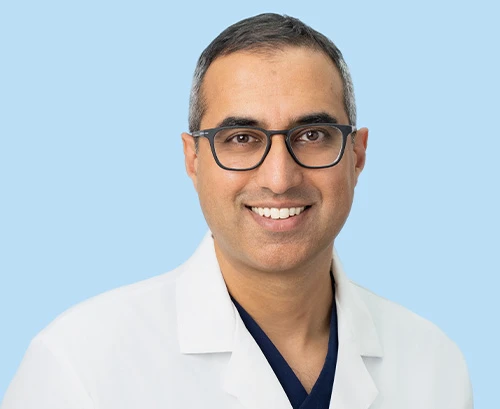
Dr. Zagum Bhatti, M.D., board-certified interventional radiologist and founder of Seamless Medical Centers

Zagum Bhatti, M.D.

Board-Certified Interventional Radiologist

Founder & Chief Medical Officer; Interventional Radiologist

Dr. Zagum Bhatti is a board-certified, dual-fellowship-trained interventional radiologist and a former Assistant Professor of Vascular & Interventional Radiology at the University of Texas Health Science Center at Houston (UTHealth). He has dedicated his career to minimally invasive, image-guided procedures that treat serious conditions without open surgery. As Founder and Chief Medical Officer of Seamless Medical Centers, he brings academic-level expertise — including published peer-reviewed research in vascular and interventional radiology — to a community practice in Southeast Texas, making advanced treatments for enlarged prostate, uterine fibroids, knee osteoarthritis, peripheral artery disease, and chronic pain available close to home.

Education & training

  • B.S., Biochemistry University of Wisconsin–Milwaukee (2001–2004)
  • Doctor of Medicine (M.D.) Medical College of Wisconsin (2004–2008)
  • Residency, Diagnostic Radiology Michigan State University College of Human Medicine (2008–2012)
  • Fellowship, Neuroradiology Medical College of Wisconsin (2013–2014)
  • Fellowship, Vascular & Interventional Radiology Rush University Medical Center (Rush Medical College) (2014–2015)

Board certification & licensure

  • Board Certified in Interventional Radiology / Diagnostic Radiology, American Board of Radiology — actively maintained in the ABR Continuing Certification (MOC) program
  • Texas Medical License #Q3852
  • NPI 1053577890

Ready to learn more?

Schedule a consultation with Dr. Bhatti to discuss your treatment options and see if this procedure is right for you.

Most major plans accepted, including Medicare/Medicaid — we verify before your visit.