





About Your Physician
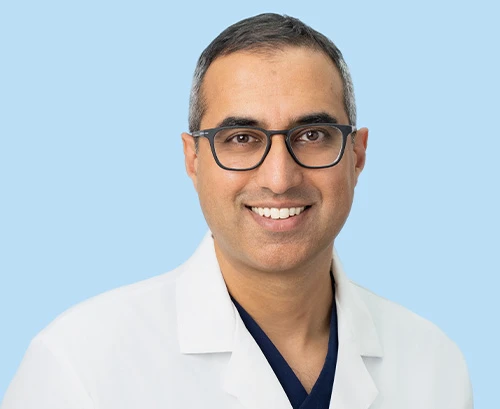
Zagum Bhatti, M.D.
Board-Certified Interventional Radiologist
Founder & Chief Medical Officer; Interventional Radiologist
Dr. Zagum Bhatti is a board-certified, dual-fellowship-trained interventional radiologist and a former Assistant Professor of Vascular & Interventional Radiology at the University of Texas Health Science Center at Houston (UTHealth). He has dedicated his career to minimally invasive, image-guided procedures that treat serious conditions without open surgery. As Founder and Chief Medical Officer of Seamless Medical Centers, he brings academic-level expertise — including published peer-reviewed research in vascular and interventional radiology — to a community practice in Southeast Texas, making advanced treatments for enlarged prostate, uterine fibroids, knee osteoarthritis, peripheral artery disease, and chronic pain available close to home.
Education & training
- B.S., Biochemistry — University of Wisconsin–Milwaukee (2000–2004)
- Doctor of Medicine (M.D.) — Medical College of Wisconsin (2004–2008)
- Internship, Transitional Year — Michigan State University / Grand Rapids Medical Education Partners (2008–2009)
- Residency, Diagnostic Radiology — Michigan State University / Grand Rapids Medical Education Partners (2009–2013)
- Fellowship, Neuroradiology — Medical College of Wisconsin (2013–2014)
- Fellowship, Vascular & Interventional Radiology — Rush University Medical Center (Rush Medical College) (2014–2015)
Board certification & licensure
- Board Certified in Interventional Radiology / Diagnostic Radiology, American Board of Radiology — actively maintained in the ABR Continuing Certification (MOC) program
- Texas Medical License #Q3852
- NPI 1053577890
Selected publications
- Portal Venous Interventions: How to Recognize, Avoid, or Get Out of Trouble in Transjugular Intrahepatic Portosystemic Shunt (TIPS), Balloon Occlusion Sclerosis (BRTO), and Portal Vein Embolization (PVE). Techniques in Vascular and Interventional Radiology 2018;21(4):267-287.
- Percutaneous Venous Interventions in the Pulmonary Vascular, Central and Peripheral Venous Systems: How to Recognize, Avoid and Treat Complications. Techniques in Vascular and Interventional Radiology 2018;21(4):228-241.
- Spontaneous Chyluria Treated with Retrograde Embolization via Direct Thoracic Duct Access at the Left Neck. Journal of Vascular and Interventional Radiology 2019;30(5):772-774.
- Management of Vascular Complications of Extra-corporeal Membrane Oxygenation (ECMO). Cardiovascular Diagnosis and Therapy 2018;8(3):372-377.