



Trusted by Hundreds of Doctors.Refer a Patient Today
Seamless Medical Centers Logo
(409) 213-9575Tap to Call

Advanced Pain Management

Regain Control of Your Life with Spinal Cord Stimulation

Patients from Port Arthur, TX are seen at our Port Arthur office. A minimally invasive therapy that uses electrical impulses to interrupt chronic pain signals, providing relief from back, leg, and nerve pain.

consultation

Book Your Appointment Today

Same week appointments available

🔒 Your information is 100% private. We never share your data.

Medically reviewed by Zagum Bhatti, M.D. Board-Certified Interventional Radiologist

Last reviewed: July 4, 2026

Patients from Port Arthur, TX are seen at our office located at 3300 Jimmy Johnson Blvd, Suite #130, Port Arthur, TX 77642.

Seamless Medical Centers

What Is Spinal Cord Stimulation?

Spinal cord stimulation (SCS) is an advanced pain management therapy that uses a small implanted device to deliver mild electrical pulses to the spinal cord. These pulses interrupt pain signals before they reach the brain, replacing the sensation of pain with a gentle tingling feeling. SCS is particularly effective for chronic back pain, nerve pain, failed back surgery syndrome, and complex regional pain syndrome. The procedure is reversible and can be customized to each patient's specific pain patterns.

Serving Port Arthur and the Golden Triangle. Seamless Medical Centers is based right here in Port Arthur, serving patients across Beaumont, Orange, Nederland, Groves, Port Neches, and Southeast Texas who live with chronic back, leg, and nerve pain. Board-certified interventional radiologist Dr. Zagum Bhatti performs the spinal cord stimulation trial and, for patients who respond, the permanent implant, with follow-up programming handled locally rather than requiring travel out of the region.

Who It's For

Who Can Benefit from Spinal Cord Stimulation?

Spinal cord stimulation is designed for individuals with chronic pain that has not responded to more conservative treatments such as physical therapy, medications, or injections. It offers an alternative to long-term opioid use and can significantly improve quality of life.

Chronic Back Pain

Individuals with Chronic Back Pain

For patients with persistent back pain that has not improved with other treatments, spinal cord stimulation may provide substantial relief by interrupting pain signals at the spinal level.

Nerve Pain

Patients with Nerve Pain in the Extremities

Neuropathic pain conditions such as diabetic neuropathy or peripheral neuropathy can be difficult to treat. SCS targets these nerve pathways to reduce burning, tingling, and shooting pain.

Failed Back Surgery

Individuals with Failed Back Surgery Syndrome

Some patients continue to experience pain even after back surgery. SCS offers a minimally invasive option that can help manage persistent post-surgical pain.

Opioid Alternative

Patients Seeking an Alternative to Opioid Medications

For individuals seeking a non-opioid approach to chronic pain, spinal cord stimulation may improve pain control and daily function. Some patients are able to reduce their pain medication afterward, though evidence on opioid reduction is mixed — the goal is better pain control, not a guarantee of stopping medication.

Common Symptoms

Spinal Cord Stimulation for Patients with Chronic Pain

Chronic pain affects every aspect of life — from sleep and work to relationships and mental health. For patients who have not found relief with other approaches, spinal cord stimulation offers a well-established, reversible option.

checkChronic back pain lasting more than 6 months
checkBurning, shooting, or stabbing nerve pain
checkPain after back surgery that has not resolved
checkPain that limits daily activities and mobility
checkPain that has not responded to medications
checkComplex regional pain syndrome (CRPS)

Before a permanent implant, patients undergo a trial period where a temporary stimulator is placed to evaluate effectiveness. This allows patients to experience the therapy and confirm it provides meaningful pain relief before committing to the permanent implant.

The permanent implant involves placing a small pulse generator under the skin and thin wires (leads) near the spinal cord. The device is programmed to match your specific pain patterns, and adjustments can be made as needed using a remote control.

If you're experiencing any of these symptoms, schedule a consultation now →

Safety & Recovery

Safety, Recovery, and What to Expect

Both stages are outpatient with same-day discharge at our Port Arthur center. The trial uses temporary leads under conscious sedation; the permanent implant takes 60-90 minutes.

Recovery timeline

Expect lifting and bending restrictions for about six weeks while the leads stabilize, light daily activity within 1-2 weeks, and full unrestricted activity by roughly 6-8 weeks.

Possible side effects

Most common are temporary implant-site soreness, bruising, and lead-position sensitivity. Less common: lead migration or loss of stimulation coverage, sometimes needing reprogramming or revision. Rare: infection, epidural bleeding, or dural puncture. Not everyone who does well in the trial keeps the same relief long-term; the device is reprogrammable and fully removable.

When SCS is deferred

SCS is generally deferred for active untreated infection, certain bleeding-risk or anticoagulation situations, unmanaged psychological factors identified on screening, or where imaging suggests a correctable structural cause better treated another way. Candidacy is confirmed by Dr. Zagum Bhatti.

Seamless Medical Centers

Are You a Candidate for SCS?

If you answer "yes" to any of these questions, you may be a candidate for this treatment.

Call Now — (409) 213-9575

Question 1 of 2

How long have you had moderate to severe back pain?

Prefer to talk? Call (409) 213-9575

Your information is protected under HIPAA. We will never share your data.

Consultation

Schedule Your SCS Consultation at Our Port Arthur Medical Center

Dr. Zagum Bhatti reviews whether spinal cord stimulation is a reasonable next step — and, because SCS is trialed first, you learn whether it works for you before any permanent implant.

  • checkReview your pain history, prior treatments, and imaging
  • checkDiscuss whether an SCS trial is appropriate
  • checkExplain the trial-then-implant pathway and psychological screening
  • checkConfirm candidacy with Dr. Zagum Bhatti
  • checkVerify insurance benefits and handle prior authorization

Got Questions?
Frequently Asked Questions

About Your Physician
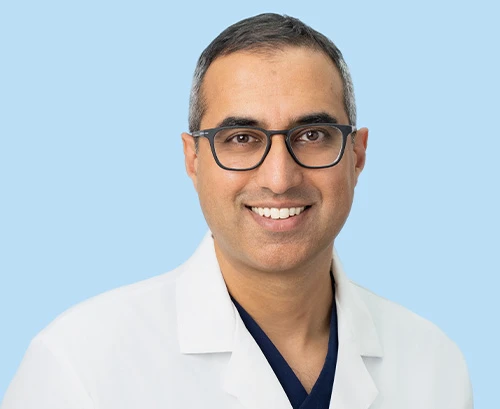
Dr. Zagum Bhatti, M.D., board-certified interventional radiologist and founder of Seamless Medical Centers

Zagum Bhatti, M.D.

Board-Certified Interventional Radiologist

Founder & Chief Medical Officer; Interventional Radiologist

Dr. Zagum Bhatti is a board-certified, dual-fellowship-trained interventional radiologist and a former Assistant Professor of Vascular & Interventional Radiology at the University of Texas Health Science Center at Houston (UTHealth). He has dedicated his career to minimally invasive, image-guided procedures that treat serious conditions without open surgery. As Founder and Chief Medical Officer of Seamless Medical Centers, he brings academic-level expertise — including published peer-reviewed research in vascular and interventional radiology — to a community practice in Southeast Texas, making advanced treatments for enlarged prostate, uterine fibroids, knee osteoarthritis, peripheral artery disease, and chronic pain available close to home.

Education & training

  • B.S., Biochemistry University of Wisconsin–Milwaukee (2001–2004)
  • Doctor of Medicine (M.D.) Medical College of Wisconsin (2004–2008)
  • Residency, Diagnostic Radiology Michigan State University College of Human Medicine (2008–2012)
  • Fellowship, Neuroradiology Medical College of Wisconsin (2013–2014)
  • Fellowship, Vascular & Interventional Radiology Rush University Medical Center (Rush Medical College) (2014–2015)

Board certification & licensure

  • Board Certified in Interventional Radiology / Diagnostic Radiology, American Board of Radiology — actively maintained in the ABR Continuing Certification (MOC) program
  • Texas Medical License #Q3852
  • NPI 1053577890

Medical Sources

The clinical information on this page is supported by the following peer-reviewed studies and professional medical society guidance.

  1. North RB et al., Neurosurgery 2005;56(1):98-106 (PMID 15617591) — SCS vs. repeated lumbosacral surgery for failed back surgery syndrome (RCT, 2-year)
  2. Kemler MA et al., J Neurosurg 2008;108:292-298 (PMID 18240925) — CRPS 5-year follow-up — early advantage over conservative care not sustained
  3. Traeger AC et al., Cochrane Database Syst Rev 2023, CD014789 (PMID 36878313) — SCS for low-back pain — benefit questioned
  4. Dhruva SS et al., JAMA Neurol 2023;80(1):18-29 (PMID 36342695) — No opioid reduction versus conventional care — counter-caveat to the opioid claim
  5. Rupp A et al., Interv Pain Med 2022;1(4):100148 (PMID 39238856) — Opioid figure — narrative review; ~47% of patients reduced use, ~33-50% mean MME decrease; heterogeneous, industry-affiliated, no statistics
  6. Thomson S, Br J Pain 2013;7(1):56-59 (PMC4590156) — FBSS epidemiology — spinal-surgery failure 10-40%
  7. FDA PMA — Senza SCS System (P130022) — SCS FDA premarket approval reference

Ready to learn more?

Schedule a consultation with Dr. Bhatti to discuss your treatment options and see if this procedure is right for you.

Most major plans accepted, including Medicare/Medicaid — we verify before your visit.