



Trusted by Hundreds of Doctors.Refer a Patient Today
Seamless Medical Centers Logo
(409) 213-9575Tap to Call

Kidney Care and Dialysis Access

Prepare for Dialysis with Minimally Invasive Fistula Creation

Patients from Port Arthur, TX are seen at our Port Arthur office. A non-surgical procedure to create dialysis access by connecting an artery and vein percutaneously, offering a shorter recovery with no surgical incision.

consultation

Book Your Appointment Today

Same week appointments available

🔒 Your information is 100% private. We never share your data.

Medically reviewed by Zagum Bhatti, M.D. Board-Certified Interventional Radiologist

Last reviewed: July 4, 2026

Patients from Port Arthur, TX are seen at our office located at 3300 Jimmy Johnson Blvd, Suite #130, Port Arthur, TX 77642.

Seamless Medical Centers

What Is Percutaneous Dialysis Fistula Creation?

Percutaneous AV fistula (PAVF) creation is a minimally invasive procedure that creates a connection between an artery and vein in the arm using specialized devices, without making surgical incisions. This connection creates a high-flow access site for hemodialysis. Unlike traditional surgical fistula creation, which requires an incision and dissection of blood vessels, the percutaneous approach uses image guidance and catheter-based tools to create the fistula from inside the blood vessels. This results in less tissue trauma, a faster recovery, and fewer wound-related complications because no surgical incision is made. In published studies, maturation and durability are broadly comparable to surgical fistulas — not proven superior — and some fistulas need an additional minimally invasive step to complete maturation.

Serving Port Arthur and the Golden Triangle. Our Port Arthur center is the practice's home office, in a region of Southeast Texas that carries a high burden of diabetes and chronic kidney disease. Board-certified interventional radiologist Dr. Zagum Bhatti performs vein mapping and percutaneous (endovascular) fistula creation here and coordinates directly with local nephrology teams, so access planning happens close to home. Learn more about our dialysis access services. We serve Port Arthur, Beaumont, Orange, Groves, Nederland, and the surrounding Southeast Texas communities.

Who It's For

Who Can Benefit from Percutaneous Dialysis Fistula Creation?

Patients with advanced kidney disease who need hemodialysis require reliable vascular access. Percutaneous fistula creation offers a less invasive alternative to traditional surgical fistula creation, with shorter recovery times and outcomes broadly comparable to surgical fistulas in published studies.

Kidney Disease

Patients with Advanced Kidney Disease

When kidney function declines to the point where dialysis is needed, creating reliable vascular access is essential. PAVF offers a minimally invasive way to prepare for dialysis.

No Incisions

Patients Who Want to Avoid Surgery

Unlike traditional surgical fistula creation, PAVF requires no incisions. The entire procedure is performed through a small puncture in the skin, leading to faster recovery and less scarring.

Previous Access Failure

Patients with Failed Previous Access

For patients who have had previous dialysis access attempts that failed, PAVF offers a new option that preserves other access sites for future use.

Faster Dialysis Start

Patients Who Need Timely Dialysis Access

Percutaneous fistula creation is a same-day outpatient procedure with no surgical incision, so recovery is quick. The fistula still needs several weeks to mature — and some fistulas need an additional minimally invasive step — so your care team confirms readiness with follow-up ultrasound before it is used.

Common Symptoms

Percutaneous Dialysis Fistula Creation for Patients Needing Dialysis Access

When kidneys can no longer filter waste effectively, dialysis becomes necessary. Having reliable vascular access is critical for successful hemodialysis. PAVF offers a modern approach to creating this access with less trauma and faster recovery than traditional surgery.

checkAdvanced kidney disease requiring dialysis
checkNeed for hemodialysis access
checkDesire to avoid surgical incisions
checkPrevious access site complications
checkAnatomy suitable for percutaneous approach
checkPreference for faster recovery

PAVF is performed using specialized catheter-based devices that create a connection between an artery and vein from inside the vessels. The procedure is guided by ultrasound and X-ray to ensure precise placement and optimal blood flow.

After the procedure, the fistula needs time to mature before it can be used for dialysis. Maturation typically takes 4-8 weeks, and our team monitors the fistula with ultrasound to ensure it is developing properly.

If you're experiencing any of these symptoms, schedule a consultation now →

What to Expect

Safety, Recovery & What to Expect

Percutaneous fistula creation is a minimally invasive, FDA-cleared option for selected patients. Understanding recovery, possible side effects, and who may not be a candidate is part of making an informed decision.

Recovery

The procedure takes about 30–60 minutes under local anesthetic with conscious sedation, and most patients go home the same day and resume normal activity within a day or two with arm precautions. The fistula then matures over several weeks — on average about two months to first cannulation in published series — and Dr. Bhatti confirms readiness with follow-up ultrasound before it is used for dialysis.

Side effects and risks

Some fistulas need an additional minimally invasive maturation step — for example, balloon angioplasty or embolization of a competing vein — before they can be cannulated, and a minority fail to mature adequately and may require salvage or an alternative access. Other risks include access-site bruising or, less commonly, bleeding and arm swelling; uncommonly, steal (reduced hand blood flow), thrombosis, or the need to convert to a different access. No procedure guarantees a durable, working fistula.

Who may not be a candidate

Not everyone has suitable vessel anatomy for a percutaneous fistula; candidacy depends on vein mapping and is confirmed by Dr. Bhatti. It is a way to create access — not a cure for kidney disease — and is not a universal replacement for surgical fistula creation.

Surgery-Free Access

Percutaneous vs. Surgical AV Fistula

For patients with suitable anatomy, a percutaneous fistula can avoid an open incision. It is an option for selected patients, not a replacement for surgical fistula creation when surgery is the better choice. Dr. Bhatti reviews which approach fits your anatomy.

checkNo skin incision — pinhole (needle/catheter) access
checkLocal anesthetic with conscious sedation — no general anesthesia
checkSame-day, outpatient procedure
checkNo surgical wound to care for

Percutaneous vs. Surgical AV Fistula

Percutaneous fistulaSurgical fistula
Skin incisionNone — pinhole accessYes — surgical incision
AnesthesiaLocal + conscious sedationLocal, regional, or (less often) general
Procedure time~30–60 minutes~60–120 minutes
Hospital staySame-day dischargeUsually same-day
Typical time to first useSeveral weeks (average ~2 months to first cannulation in published series); adjunctive maturation sometimes neededAbout 6 weeks or longer; ~20–40% need assisted maturation
Wound-care burdenMinimal — no incisionPost-surgical wound care
CandidacySelected patients with suitable forearm vessel anatomyBroader anatomic range
Procedural (technical) success~88–100%, device- and series-dependent (angiographic fistula creation — distinct from maturation for dialysis use)High creation success; separate maturation challenge
U.S. regulatory statusFDA-cleared devices (Ellipsys De Novo / WavelinQ 510(k)), on-labelEstablished standard of care
InsuranceVaries — Medicare covers eligible patients (CPT 36836/36837); some commercial plans still review as investigational — verifyGenerally covered

Percutaneous and surgical figures are drawn from separate published series unless a head-to-head study is cited; they are not a controlled comparison. All comparative claims are reviewed and approved by Dr. Zagum Bhatti before publishing.

Your Consultation

Schedule Your Dialysis Access Consultation at Our Port Arthur Medical Center

Dr. Zagum Bhatti, MD, reviews your kidney function, vein mapping, and access history to build a personalized dialysis-access plan — whether you are approaching dialysis, catheter-dependent, or managing a failed fistula. During your consultation, your physician will:

  • checkReview your kidney function and dialysis timeline
  • checkPerform vein mapping and a vessel-suitability assessment
  • checkDiscuss whether a percutaneous or surgical fistula fits your anatomy
  • checkConfirm candidacy with Dr. Bhatti
  • checkWalk through maturation, recovery, and realistic risks
  • checkVerify your insurance benefits and prior authorization

Got Questions?
Frequently Asked Questions

About Your Physician
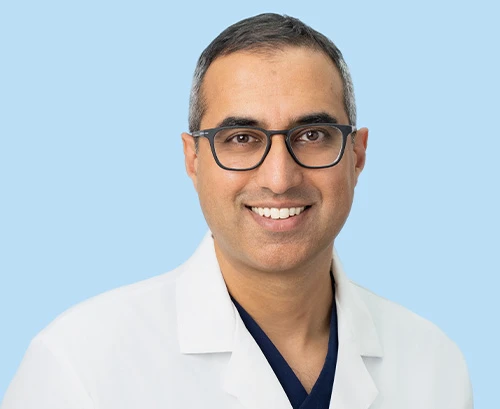
Dr. Zagum Bhatti, M.D., board-certified interventional radiologist and founder of Seamless Medical Centers

Zagum Bhatti, M.D.

Board-Certified Interventional Radiologist

Founder & Chief Medical Officer; Interventional Radiologist

Dr. Zagum Bhatti is a board-certified, dual-fellowship-trained interventional radiologist and a former Assistant Professor of Vascular & Interventional Radiology at the University of Texas Health Science Center at Houston (UTHealth). He has dedicated his career to minimally invasive, image-guided procedures that treat serious conditions without open surgery. As Founder and Chief Medical Officer of Seamless Medical Centers, he brings academic-level expertise — including published peer-reviewed research in vascular and interventional radiology — to a community practice in Southeast Texas, making advanced treatments for enlarged prostate, uterine fibroids, knee osteoarthritis, peripheral artery disease, and chronic pain available close to home.

Education & training

  • B.S., Biochemistry University of Wisconsin–Milwaukee (2001–2004)
  • Doctor of Medicine (M.D.) Medical College of Wisconsin (2004–2008)
  • Residency, Diagnostic Radiology Michigan State University College of Human Medicine (2008–2012)
  • Fellowship, Neuroradiology Medical College of Wisconsin (2013–2014)
  • Fellowship, Vascular & Interventional Radiology Rush University Medical Center (Rush Medical College) (2014–2015)

Board certification & licensure

  • Board Certified in Interventional Radiology / Diagnostic Radiology, American Board of Radiology — actively maintained in the ABR Continuing Certification (MOC) program
  • Texas Medical License #Q3852
  • NPI 1053577890

Medical Sources

The clinical information on this page is supported by the following peer-reviewed studies and professional medical society guidance.

  1. Lok CE, et al. KDOQI Clinical Practice Guideline for Vascular Access: 2019 Update. Am J Kidney Dis. 2020;75(4 Suppl 2):S1–S164. — ESKD Life-Plan / individualized access; AV fistula preferred for suitable candidates.
  2. Multicenter 2-year patency of WavelinQ endoAVF (4F). Cardiovasc Intervent Radiol. 2024. — Technical (angiographic) success 97.3% (109/112).
  3. WavelinQ global post-market investigation (NCT04626427). — Procedural success 96.7%; mean time to cannulation ~2.0 months.
  4. Doppler evaluation of surgical AVF maturation (2024/2025). — Surgical AVF: mean time to first cannulation 50.4 days; primary failure 24.8%.
  5. New CPT codes 36836/36837 for percutaneous AVF creation (CMS 2023). — Established Category I codes; Medicare payment.

Ready to learn more?

Schedule a consultation with Dr. Bhatti to discuss your treatment options and see if this procedure is right for you.

Medicare covers percutaneous AV fistula creation for eligible patients (CPT 36836/36837); commercial and Medicaid coverage varies and some plans still review it as investigational. We verify your benefits and handle prior authorization before scheduling.