
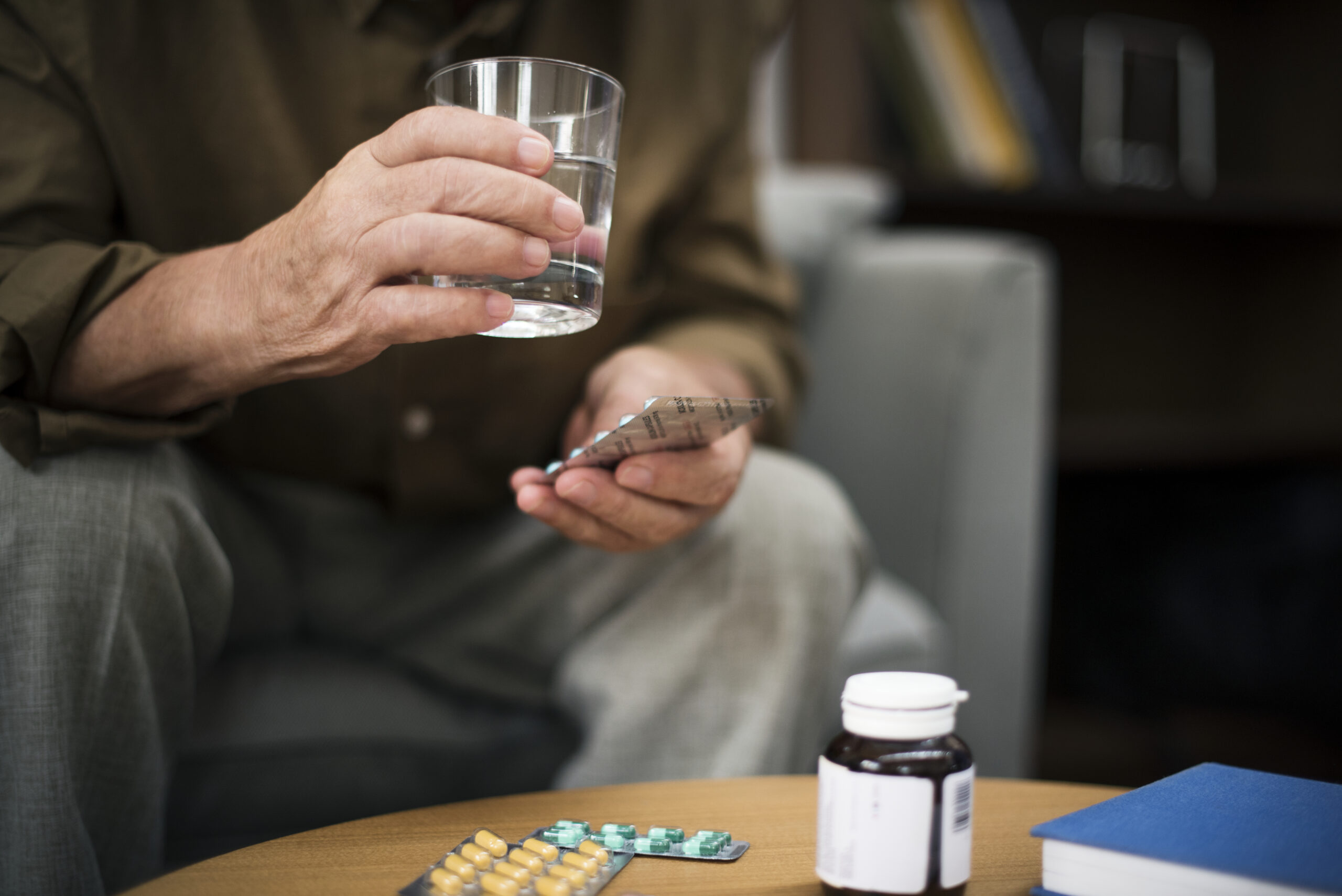
You started taking medication for your enlarged prostate hoping it would finally let you sleep through the night, empty your bladder completely, and stop planning your day around the nearest bathroom. Maybe it helped at first. But months or years later, you are still waking up two or three times a night, still waiting for a stream that takes its time to start, and still feeling like the job is never quite finished. If the relief you were promised has faded — or never fully arrived — you are right to wonder whether medication is still the answer.
You do not have to choose between living with worsening symptoms and undergoing major surgery. At Seamless Medical Centers, Dr. Zagum Bhatti, a board-certified interventional radiologist and founder of the practice, offers prostate artery embolization (PAE) — a minimally invasive treatment for an enlarged prostate that does not involve cutting or removing prostate tissue. Houston-area men are seen at our Port Arthur main office, where figuring out where you stand and what comes next starts with a conversation rather than a commitment. You can learn more about Dr. Bhatti’s training and background as a board-certified interventional radiologist before you ever book a visit.
For men across the Houston area — from Katy and Cypress to Sugar Land, Pearland, and The Woodlands — reaching the point where medication no longer controls an enlarged prostate is a common and frustrating crossroads. Understanding the full range of treatment options, and where a procedure like PAE fits among them, can help you make a decision that fits your symptoms, your anatomy, and your life.
When Medication for an Enlarged Prostate Stops Being Enough
An enlarged prostate — known medically as benign prostatic hyperplasia, or BPH — happens when the prostate gland grows and presses against the urethra, the tube that carries urine out of the body. That pressure is what produces the familiar enlarged prostate symptoms: a weak or stop-and-start stream, difficulty starting, frequent trips to the bathroom, and the sense that your bladder never fully empties. For many men, BPH is a slow, progressive condition, which is part of why a treatment that worked a few years ago can feel less effective today.
Medication is often the first step, and for good reason. Several categories of prescription drugs can relax the muscle around the prostate or gradually reduce its size, easing symptoms for a time. But these medications manage the condition rather than resolve it, and they do not work equally well for everyone. Some men find the benefit fades as the prostate continues to grow; others are bothered by side effects or simply tire of taking daily pills indefinitely with diminishing returns.
If you are spending more of your day managing symptoms than the medication is relieving, that is a meaningful signal. Worsening frequent urination, getting up repeatedly at night, or a stream that keeps weakening despite treatment are all reasons to revisit your options. It also helps to understand the full range of causes behind frequent urination, since recognizing the difference between normal aging and symptoms that warrant a closer look is the first step toward relief that lasts.
Understanding Your Treatment Options Beyond Medication
When medication is no longer enough, your options generally fall into three broad groups: continuing or adjusting medication, traditional surgical procedures, and minimally invasive treatments such as embolization. Each approaches the same problem — an enlarged prostate crowding the urethra — in a different way, with different trade-offs in recovery time, risk, and how the procedure affects the prostate itself.
Surgical options like transurethral resection of the prostate (TURP) physically remove or destroy prostate tissue to open the urinary channel. These procedures have a long track record and can be very effective, but they typically involve more recovery time and carry their own set of considerations. For men who want to understand how a surgical approach compares with a non-surgical one, our overview of how prostate artery embolization works as a modern BPH treatment explains the minimally invasive option in plain terms.
Minimally invasive treatments have expanded the middle ground between daily pills and the operating room. Rather than removing tissue, prostate artery embolization reduces the blood supply to the prostate so the gland gradually shrinks, relieving pressure on the urethra over time. For many men weighing what comes after medication, this kind of option opens up a path they did not realize existed.
How Prostate Artery Embolization Compares
Prostate artery embolization is performed through a tiny catheter — a thin, flexible tube — inserted into a blood vessel, usually at the wrist or groin. Guided by imaging, your interventional radiologist directs the catheter to the small arteries feeding the prostate and releases microscopic particles that reduce blood flow to the gland. With its blood supply limited, the prostate gradually shrinks over the following weeks and months, and many men notice their urinary symptoms easing as it does.
Because PAE does not cut or remove tissue, it differs from surgery in several practical ways. It is typically performed on an outpatient basis, often without general anesthesia, and many men return to normal activities within a few days. The approach also tends to preserve the surrounding structures, which is one reason some men explore it specifically out of concern about side effects associated with certain surgical procedures — though every option carries its own considerations that are best discussed individually.
Deciding between PAE and a surgical procedure is rarely one-size-fits-all. Prostate size, your symptoms, your overall health, and your personal priorities all factor in. If you want a side-by-side sense of the differences, our comparison of PAE versus TURP for prostate treatment lays out how the two approaches differ in recovery, risk, and results, so you can bring informed questions to your evaluation.
Is PAE Right for You? Evaluating Candidacy

Are You a Candidate for PAE?
If you answer "yes" to any of these questions, you may be a candidate for this treatment.
Call Now — (409) 213-9575Question 1 of 4
Have you ever been diagnosed with Benign Prostatic Hyperplasia?
Prefer to talk? Call (409) 213-9575
Your information is protected under HIPAA. We will never share your data.
Not every man with an enlarged prostate is a candidate for prostate artery embolization, and a thorough evaluation is the only way to know. For appropriate candidates, PAE tends to be considered when enlarged prostate symptoms are moderate to severe, when medication has not provided adequate relief, or when you would prefer to avoid — or are not a good candidate for — traditional surgery. Men with larger prostates, in particular, are often well suited to the approach.
Evaluation usually begins with a review of your symptoms and medical history, along with imaging to assess the size of your prostate and map the arteries that supply it. This planning is what allows the procedure to be tailored to your specific anatomy. It is also an opportunity to confirm that your symptoms are coming from BPH rather than another cause, so that any treatment is aimed at the right target.
Because the right choice depends on factors unique to you, the goal of an evaluation is not to push a single procedure but to help you understand which options genuinely fit your situation. Individual results may vary, and the most appropriate treatment is the one matched to your symptoms, your anatomy, and your goals after an honest conversation with a qualified specialist.
Accessible Specialist Care for Houston-Area Men
You should not have to navigate a sprawling hospital system or wait weeks for a specialist just to get answers about an enlarged prostate. Seamless Medical Centers serves men throughout the Houston area — including Katy, Sugar Land, The Woodlands, Pearland, Cypress, League City, and Spring, as well as the broader communities of Harris County and Fort Bend County — who are looking for focused, specialist care without the runaround of a large medical-center practice.
Houston-area men are seen at our Port Arthur main office, an accessible drive from the metro area along I-10. Dr. Bhatti is a board-certified interventional radiologist and a former faculty member in vascular and interventional radiology at UTHealth in Houston, and the practice is built around giving you direct access to that expertise with shorter waits and more personal attention than many men experience at a large hospital system. You can explore prostate artery embolization for Houston-area men on our dedicated service page, or visit our home page for the full range of minimally invasive treatments offered at the practice.
If insurance or scheduling questions are part of what is holding you back, those are exactly the kinds of details our team can walk through with you before any decision is made. The aim is simply to make getting clear, specialist guidance about your enlarged prostate as straightforward as possible, wherever in the Houston area you are coming from.
When to Seek a Specialist Evaluation
It can be hard to know when ongoing prostate symptoms have crossed from a manageable nuisance into something worth acting on. As a general guide, it is reasonable to seek evaluation when symptoms are disrupting your sleep, limiting your activities, or steadily worsening despite medication — or when you simply want to understand options you have not been offered yet.
Certain symptoms call for prompt attention rather than watchful waiting. If you become unable to urinate at all, see blood in your urine, or develop a fever alongside urinary symptoms, contact a medical provider right away or seek emergency care, as these can signal problems that need immediate evaluation. Short of that, persistent enlarged prostate symptoms are a signal to talk with a specialist about whether a treatment beyond medication makes sense for you.
Reaching out sooner rather than later tends to give you more options, not fewer. The earlier you understand where your symptoms are coming from and what can be done, the more control you have over the decision. If you are ready to take that step, you can contact Seamless Medical Centers to discuss your enlarged prostate symptoms and whether PAE may be appropriate for you.
Schedule Your Enlarged Prostate Consultation
You do not have to keep organizing your life around an enlarged prostate that medication can no longer control. If you are ready to understand your options and whether prostate artery embolization may be right for you, schedule your consultation with Seamless Medical Centers. Our team serves men throughout the Houston area and Southeast Texas, and we are here to help you take the next step toward lasting relief.
Phone: 409-213-9575
Address: 3300 Jimmy Johnson Blvd, Suite #130, Port Arthur, Texas 77642
Frequently Asked Questions About Enlarged Prostate Treatment in Houston
Q1. How do I know if I need more than medication for my enlarged prostate?
If your enlarged prostate symptoms are worsening despite taking medication, disrupting your sleep, or limiting your daily activities, it may be time to explore other options. Many men reach a point where medication manages their BPH less effectively over time, which is a reasonable moment to discuss minimally invasive treatments with a specialist.
Q2. Is prostate artery embolization a type of surgery?
No. Prostate artery embolization is a minimally invasive procedure performed through a small catheter, not an open or transurethral surgery. It does not remove prostate tissue; instead, it reduces blood flow to the prostate so the gland gradually shrinks, and it is typically performed on an outpatient basis.
Q3. Will I have to travel far for treatment if I live in the Houston area?
Houston-area men are seen at the Seamless Medical Centers main office in Port Arthur, an accessible drive from much of the metro area. Many men from Katy, Sugar Land, Pearland, and surrounding communities choose this route to access focused specialist care with shorter waits than a large hospital system.
Q4. Does prostate artery embolization affect sexual function?
One reason some men consider PAE is that, because it does not remove prostate tissue, it may carry a different risk profile for sexual side effects than certain surgical procedures. That said, every treatment has its own considerations and individual results may vary, so this is an important topic to discuss directly with your specialist during your evaluation.
Q5. How long does recovery after PAE usually take?
Recovery is generally quicker than with traditional prostate surgery. Many men experience only mild discomfort and return to normal activities within a few days, though symptom improvement develops gradually over the following weeks to months as the prostate shrinks. Individual recovery varies from person to person.
Why Choose Seamless Medical Centers?
- Minimally Invasive: Most procedures require only a small incision and are performed as outpatient services.
- Expert Care: Board-certified interventional radiologists with extensive training and experience.
- Faster Recovery: Less downtime compared to traditional surgery, getting you back to your life sooner.
- Advanced Technology: State-of-the-art imaging and treatment equipment for precise, effective care.
- Patient-Centered: Personalized treatment plans tailored to your unique needs and goals.