

Urinary hesitancy, the difficulty, delay, or interruption in starting urination, can be a frustrating and unsettling experience.
What should be an automatic bodily function becomes a source of stress and anxiety. Simple bathroom visits can become stressful and frustrating when your body doesn’t respond as expected.
Many people find themselves planning activities around bathroom access or feeling isolated and worried about their symptoms.
However, in most cases, targeted pelvic floor exercises, gentle stretching, medications, and lifestyle modifications can support healthy bladder function and improve urine flow.
In this guide, we will explore the causes, symptoms, and potential complications of urinary hesitancy, as well as diagnosis and treatment options to help you manage symptoms and regain confidence in your daily life.
What is Urinary Hesitancy?
Urinary hesitancy is the difficulty initiating or maintaining a steady stream of urine despite the urge to void.
It’s more than just a minor inconvenience; it’s a disruption of a fundamental process. It often occurs alongside other symptoms like a weak stream, straining, or a sensation of incomplete emptying.
What does urinary hesitancy feel like?
Patients describe it as:
- A frustrating “hold-up” where you feel ready, but your body doesn’t cooperate.
- Needing to concentrate or wait several seconds to a minute for the flow to begin.
- A stop-and-start pattern during urination.
- The need to apply abdominal pressure or strain to get started.
- An underlying feeling that you haven’t fully emptied your bladder, even after finishing.
What are the Causes of Urinary Hesitancy?
Hesitancy is a symptom, not a disease itself. It signals an obstruction, a neurological issue, or weakened muscles. Causes often differ by biological sex due to anatomical differences.
Causes of Urinary Hesitancy in Females
- Pelvic Organ Prolapse: When the bladder, uterus, or rectum descends into the vaginal canal, it can alter the urethra’s angle and function.
- Urinary Tract Infections (UTIs): Inflammation and swelling in the urinary tract can cause hesitation and pain.
- Post-Surgical Effects: Scar tissue or nerve damage following pelvic or back surgeries (e.g., hysterectomy, spinal surgery).
- Pelvic Floor Dysfunction: Overactive or tight pelvic floor muscles (not just weak ones) can prevent the urethral sphincter from relaxing properly to allow urine out.
A study of female patients found that a continuous detrusor voiding pressure curve and a prolonged, “tailed” shape on the free urine flow curve were strongly associated with bladder outlet obstruction (BOO).
Causes of Urinary Hesitancy in Males
- Benign Prostatic Hyperplasia (BPH): The most common cause in men over 50. An enlarged prostate gland constricts the urethra, acting like a kink in a garden hose.
- Prostatitis: Inflammation or infection of the prostate gland, causing swelling and irritation.
- Urethral Stricture: Scarring that narrows the urethra, often from past injury, infection, or medical procedures.
- Prostate Cancer: While less common, it can cause similar obstructive symptoms.
A clinical study examined nearly 500 men with BPH and found that symptoms such as weak urinary stream and hesitancy are among the most common and bothersome components of BPH-related Lower urinary tract symptoms (LUTS).
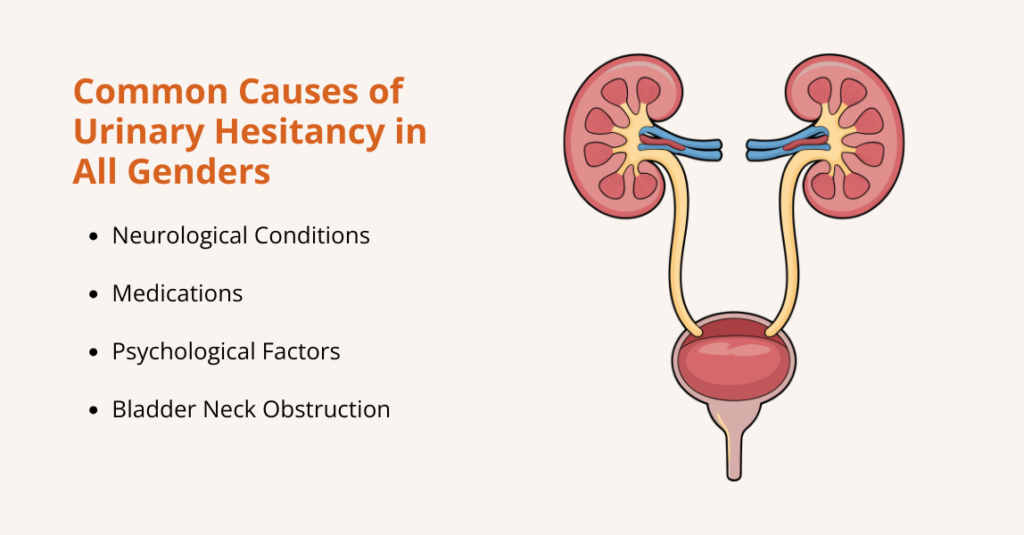
Common Causes in All Genders:
- Neurological Conditions: Diseases that disrupt nerve signals between the brain and bladder (e.g., Multiple Sclerosis, Parkinson’s, Stroke, Spinal Cord Injuries, Diabetes-induced neuropathy).
- Medications: Side effects of common drugs like antihistamines, decongestants, anticholinergics, tricyclic antidepressants, and certain muscle relaxants.
- Psychological Factors: Extreme anxiety, “shy bladder” syndrome (paruresis), or a history of trauma.
- Bladder Neck Obstruction: A malfunction of the muscles at the bladder’s outlet.
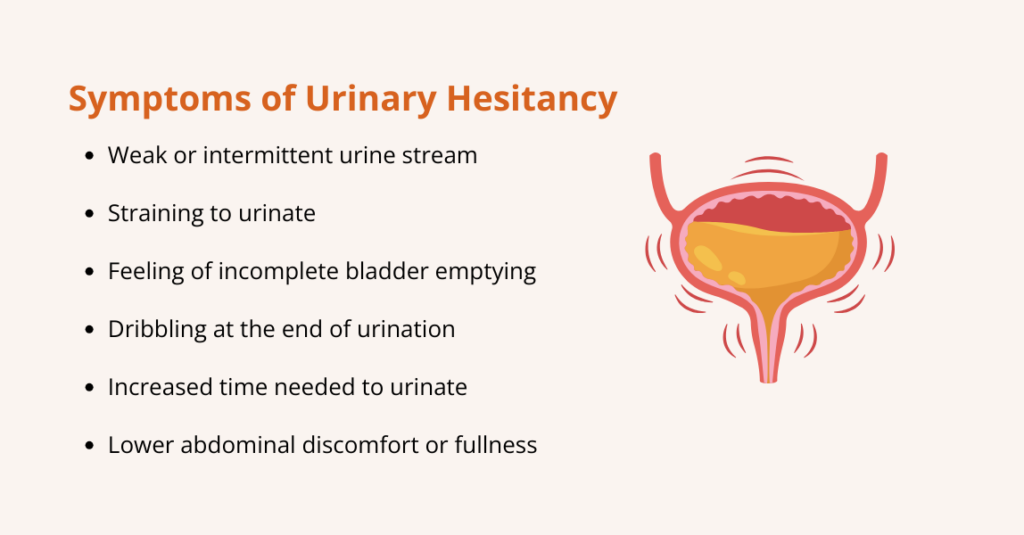
What are the Symptoms of Urinary Hesitancy?
Hesitancy rarely occurs in isolation. Look for these accompanying signs:
- Weak or intermittent urine stream
- Straining to urinate
- Feeling of incomplete bladder emptying
- Dribbling at the end of urination
- Increased time needed to urinate
- Lower abdominal discomfort or fullness
What are the Risk Factors for Urinary Hesitancy?
Urinary hesitancy does not usually happen without a reason. Certain health conditions, lifestyle factors, and medications can increase the risk of having trouble starting urination.
Age-Related Changes
As people age, the muscles that control the bladder and urethra may weaken or lose coordination. This can slow urine flow and make it harder to start urinating.
- More common in adults over 50
- Often develops gradually
Prostate-Related Conditions (in men)
An enlarged prostate is one of the most common risk factors for urinary hesitancy.
- Benign prostatic hyperplasia (BPH) narrows the urethra
- Prostate inflammation or infection can also block urine flow
- Risk increases with age
Neurological Conditions
The bladder depends on proper nerve signals to function normally. Any condition that affects these signals can cause hesitancy.
- Diabetes-related nerve damage
- Parkinson’s disease
- Multiple sclerosis
- Stroke or spinal cord injury
Psychological Factors
In some cases, mental or emotional factors play a role.
- Anxiety or stress
- Habitually holding urine for long periods
- Difficulty urinating in public settings
Medications
Some medications interfere with bladder muscle contraction or tighten the urinary sphincter. Common examples include:
- Antihistamines and cold medications
- Decongestants
- Certain antidepressants
- Opioid pain medications
Other Key Factors
Several additional conditions can also interfere with normal urine flow.
For example, urinary tract infections and inflammation, such as UTIs, prostatitis, or urethritis, can cause swelling and irritation that temporarily narrow the urinary passage.
Similarly, pelvic floor disorders, including pelvic organ prolapse, childbirth-related muscle strain, or chronic pelvic muscle tension, may disrupt the coordination needed to start urination.
In other cases, structural blockages, such as urethral strictures, bladder or kidney stones, pelvic tumors, or scar tissue from previous surgery or injury, can physically obstruct urine flow.
In addition, severe or long-term constipation can place pressure on the bladder and urethra, making it harder to begin urinating.
What are the Complications of Urinary Hesitancy?
When urine stays in the bladder, er it creates problems: bacteria can grow, the bladder can overstretch or weaken, and pressure can back up into the kidneys. Left untreated, these changes can progress.
Common complications of urinary hesitancy include:
- Recurrent urinary tract infections (UTIs)
- Acute or chronic urinary retention
- Bladder overdistension and detrusor (muscle) damage
- Bladder stones (calculi)
- Overflow incontinence
- Hydronephrosis and kidney injury
- Bladder diverticula and structural changes
- Sepsis (rare but serious)
If urinary hesitancy is new, progressive, painful, or accompanied by fever or reduced urine output, seek medical evaluation. Prompt treatment of retention or infection prevents most of these complications.
How Do Doctors Test for Urinary Hesitancy?
Urinary hesitancy is usually diagnosed by a primary care physician (PCP) or healthcare provider.
Initial Assessment
The evaluation begins with a detailed discussion of your symptoms, a review of your medical history, and a physical examination.
During this visit, your provider may ask questions such as:
- How long have you had difficulty starting urination?
- Has your urine stream become weaker than usual?
- Did the symptoms develop gradually or start suddenly?
- Are you taking any prescription or over-the-counter medications?
- Do your symptoms worsen after certain activities or after consuming specific foods or drinks?
These questions help identify possible causes and guide further testing.
Tests Used to Diagnose Urinary Hesitancy
If needed, your healthcare provider may order tests to confirm the diagnosis and determine the underlying cause.
Urodynamic Testing
Urodynamic tests measure how well your bladder and urethra store and release urine. These tests can assess:
- The amount of urine you pass
- The speed and strength of your urine stream
- Pressure within the bladder during filling and emptying
Additional Diagnostic Tests
Depending on your symptoms, your provider may also recommend:
- Imaging tests, such as an ultrasound or CT scan, are used to evaluate bladder emptying and check prostate size
- Cystoscopy, which uses a small camera to look inside the urethra and bladder
- Digital rectal exam, to assess prostate size and detect abnormalities
- Urinalysis, to examine urine for signs of infection, blood, or other abnormalities
- Urine culture, to identify bacterial infections
Together, these evaluations help determine the cause of urinary hesitancy and guide appropriate treatment.
Treatment for Urinary Hesitancy
Treatment for urinary hesitancy depends on the underlying cause and any other comorbidities. Your healthcare provider may recommend
- Home Remedies
- Bladder Retraining (Timed Voiding)
- Pelvic Floor Physical Therapy
- Medications
- Surgery & Procedures
- Sacral Nerve Stimulation (Sacral Neuromodulation)
Home Remedies
Some cases of urinary hesitancy can improve with safe home strategies, but always consult your provider first:
- Heat: Applying a heating pad, using a hot water bottle, or taking a warm shower/bath can relax the pelvic muscles.
- Gentle abdominal massage: Light pressure near the bladder while peeing may help strengthen the stream.
- Bowel regulation: Using stool softeners or adjusting diet to prevent constipation can reduce pressure on the bladder.
- Bladder diary: Track fluid intake, urine volume, stream strength, time to urinate, frequency, and other symptoms to help your provider monitor progress and adjust treatment.
Bladder Retraining (Timed Voiding)
Bladder retraining involves voiding at set intervals, typically every 2 hours, to prevent overfilling of the bladder.
You do this even if you don’t feel the urge to urinate. Over time, it helps improve bladder control and ease hesitancy.
Pelvic Floor Physical Therapy
Pelvic floor physical therapy (PT) is an effective way to treat urinary hesitancy caused by tight or uncoordinated pelvic floor muscles.
These muscles need to contract and fully relax to allow normal urination. If the muscles remain tense, go into spasm, or cannot relax properly, it can lead to urinary hesitancy and other bladder symptoms.
Targeted exercises help stretch and relax the pelvic floor muscles, improving urine flow. You can perform some exercises at home, but working with a physical therapist ensures personalized guidance.
Medications
Depending on the cause, your provider may prescribe:
- Alpha-blockers to relax muscles in the bladder and prostate
- 5-alpha-reductase inhibitors (like dutasteride or finasteride) to shrink the prostate
- Antibiotics to treat urinary tract infections
Surgery & Procedures
Surgery is considered when medications, physical therapy, or less invasive treatments are not effective. Common surgical options include:
- Prostate surgery (partial prostatectomy or transurethral resection of the prostate) to remove excess prostate tissue and relieve BPH-related obstruction.
- Pelvic organ prolapse repair to restore support to dropped organs, reducing pressure on the bladder and improving urination.
In addition, minimally invasive procedures can improve urine flow without major surgery:
- Urethral dilation or reconstruction for a narrow or obstructed urethra.
- Prostatic Artery Embolization (PAE), a non-surgical procedure for BPH, reduces blood flow to the enlarged prostate, shrinking it and relieving urinary symptoms.
Sacral Nerve Stimulation (Sacral Neuromodulation)
A small device is implanted near the upper buttock. It sends mild electrical impulses to the sacral nerve, helping stimulate bladder muscles and improve urine flow.
Frequently Asked Questions (FAQs)
What is the difference between urinary hesitancy and urinary retention?
Urinary hesitancy and urinary retention are related but distinct problems in the urinary process. Urinary hesitancy refers specifically to the difficulty or delay in initiating the flow of urine once you feel the urge to go; it’s about a troublesome start, often accompanied by straining or a weak stream, but you usually can eventually urinate. Urinary retention, on the other hand, is the more severe condition where the bladder cannot empty properly, meaning little or no urine is released despite an urge, often leading to painful bladder distention and the potential for serious complications.
Why does it feel like I have to pee, but nothing comes out?
This sensation is often caused by urinary hesitancy or incomplete bladder emptying. Even though your bladder signals the need to urinate, several factors can prevent urine from flowing normally:
- Weak bladder muscle contractions (detrusor underactivity): The bladder isn’t squeezing strongly enough to push urine out.
- Obstruction in the urinary tract: In men, an enlarged prostate (BPH) can block the urethra; in women, pelvic organ prolapse or urethral narrowing can have a similar effect.
- Tight or uncoordinated pelvic floor muscles: If the muscles around the bladder and urethra remain tense, they can prevent urine from starting or fully flowing.
- Nerve or neurological issues: Conditions such as diabetes, multiple sclerosis, or spinal injuries can interfere with the signals between the bladder and brain.
- Infections or inflammation: Swelling from a urinary tract infection or urethritis can make it difficult for urine to pass.
If you experience this frequently, feel discomfort, or cannot urinate at all, it’s important to seek medical evaluation.
When should someone seek medical care for urinary hesitancy?
You should seek medical evaluation for urinary hesitancy if:
- Your symptoms suddenly appear or get worse over time.
- You experience pain, burning, or discomfort while urinating.
- There is blood in your urine or unusual discharge.
- You are unable to urinate at all.
- You have fever, nausea, or lower back/flank pain, which could indicate an infection or kidney problem.
Even if your symptoms are mild, persistent urinary hesitancy should be discussed with a healthcare provider to identify the cause and prevent complications.
How can urinary hesitancy be prevented?
You can help prevent urinary hesitancy through healthy bladder habits, such as going to the bathroom regularly and avoiding holding urine for long periods. Staying hydrated and managing constipation can reduce pressure on the bladder and urethra, while pelvic floor exercises help maintain muscle strength and proper coordination. Additionally, promptly addressing urinary tract infections, prostate issues, or other underlying conditions can lower the risk of complications that contribute to hesitancy.
What is the most common treatment for urinary retention?
The most common initial treatment for urinary retention is catheterization, which temporarily drains urine from the bladder to relieve discomfort and prevent complications. Depending on the cause, healthcare providers may also recommend medications (such as alpha-blockers for men with prostate enlargement), pelvic floor therapy, or surgical procedures to address obstructions or improve bladder function. However, the exact approach depends on whether the retention is acute (sudden) or chronic (long-term), as well as on the underlying cause.
What medication is used for urinary hesitancy?
The medication prescribed for urinary hesitancy depends on the underlying cause:
- Alpha-blockers (e.g., tamsulosin, alfuzosin) help relax the muscles in the bladder neck and prostate, thereby improving urine flow, and are commonly used for men with benign prostatic hyperplasia (BPH).
- 5-alpha-reductase inhibitors (e.g., finasteride, dutasteride) may be prescribed to shrink an enlarged prostate over time.
- Antibiotics are used if urinary tract infections contribute to hesitancy.
Always consult a healthcare provider before starting any medication, as the choice depends on your specific condition, other health factors, and potential side effects.
How many seconds is urinary hesitancy?
There isn’t a strict “number of seconds” that defines urinary hesitancy, because it varies by person and by the underlying cause. Research suggests that a delay of over 11.3 seconds after attempting to urinate may be considered significant, especially if it happens repeatedly or is accompanied by other symptoms like a weak stream, straining, or incomplete emptying.
Conclusion
The journey with urinary hesitancy is more than physical; it’s an emotional drain that can make you feel like your body is working against you.
The constant anticipation, the planning, the silent worry, it’s a heavy load to carry alone. But please understand this: Your struggle is valid, and it is treatable.
With appropriate evaluation, targeted therapies, lifestyle modifications, and, in some cases, medical or surgical interventions, most people can achieve meaningful improvement.
Small changes, guided exercises, and professional support can help restore confidence, reduce frustration, and allow you to reclaim control over daily routines.
Remember, seeking help is the first step toward relief. You don’t have to navigate urinary hesitancy alone; support, treatment, and better bladder health are within reach.
Why Choose Seamless Medical Centers?
- Minimally Invasive: Most procedures require only a small incision and are performed as outpatient services.
- Expert Care: Board-certified interventional radiologists with extensive training and experience.
- Faster Recovery: Less downtime compared to traditional surgery, getting you back to your life sooner.
- Advanced Technology: State-of-the-art imaging and treatment equipment for precise, effective care.
- Patient-Centered: Personalized treatment plans tailored to your unique needs and goals.